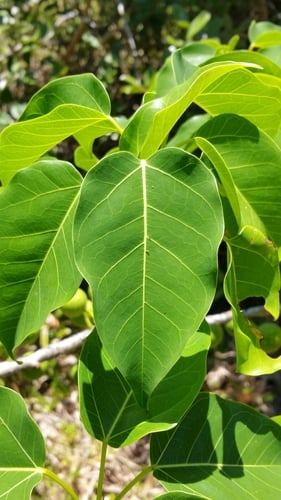
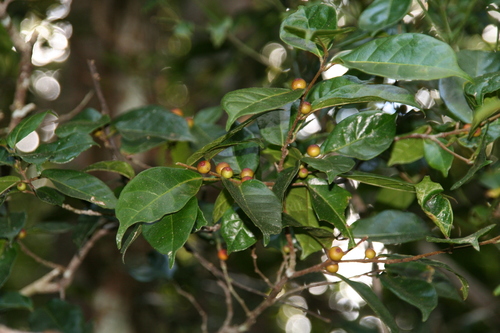
Ficus maxima
Mill.
iNaturalist· cc-by
(c) Alexis López Hernández, some rights reserved (CC BY), uploaded by Alexis López Hernández
iNaturalist· cc-by-nc
(c) Guillaume Léotard, some rights reserved (CC BY-NC)
iNaturalist· cc-by-nc
(c) winston20000511, some rights reserved (CC BY-NC)
Summary
Source: WikipediaFicus maxima is a fig tree which is native to Mexico, Central America, the Caribbean and South America south to Paraguay. Figs belong to the family Moraceae. The specific epithet maxima was coined by Scottish botanist Philip Miller in 1768; Miller's name was applied to this species in the Flora of Jamaica, but it was later determined that Miller's description was actually of the species now known as Ficus aurea. To avoid confusion, Cornelis Berg proposed that the name should be conserved for this species. Berg's proposal was accepted in 2005. Individuals may reach heights of 30 m (98 ft). Like all figs it has an obligate mutualism with fig wasps; F. maxima is only pollinated by the fig wasp Tetrapus americanus, and T. americanus only reproduces in its flowers. F. maxima fruit and leaves are important food resources for a variety of birds and mammals. It is used in a number of herbal medicines across its range.
Description
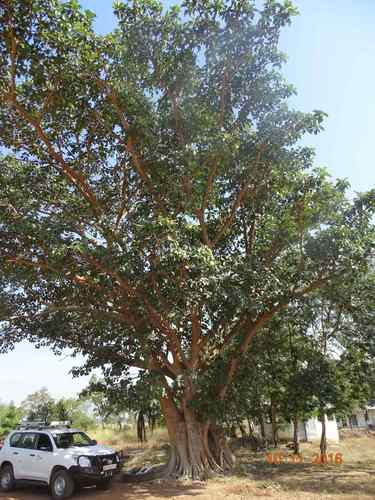
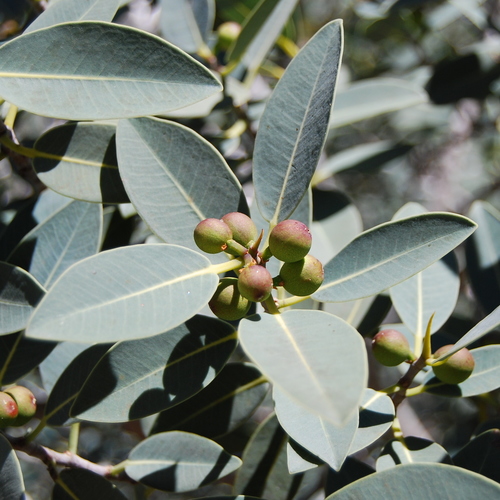
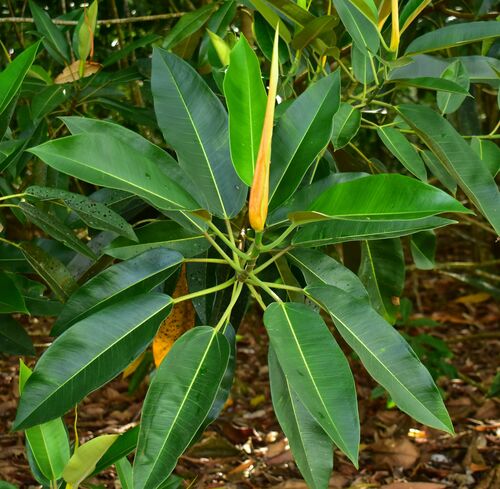
A fig. It is a tree. It can be 30 m tall. Leaves can be long and narrow or more oval. They are 6-24 cm long by 3-12 cm wide. The figs occur singly and are 1-2 cm across.
Edible Uses
The fruit is edible.
Medicinal Uses
Ficus maxima is used by the Lacandon Maya to treat snakebite. Leaves are moistened by chewing and applied to the bite. In the provinces of Loja and Zamora-Chinchipe in Ecuador, a leaf infusion is used to treat internal inflammations. The Paya of Honduras use the species for firewood, and to treat gingivitis. The Tacana of Bolivia use the latex to treat intestinal parasites, as do people in Guatemala's Petén Department. In Brazil it is used as an anthelmintic, antirheumatic, anti-anaemic and antipyretic. The latex is also used to bind limestone soils to produce cal, an adobe cement. Gaspar Diaz M. and colleagues isolated four methoxyflavones from F. maxima leaves. David Lentz and colleagues observed antimicrobial activity in Ficus maxima extracts.
Distribution
It is a tropical plant.
Where It Grows
Belize, Bolivia, Brazil, Caribbean, Central America, Colombia, Costa Rica, Cuba, Dominican Republic, Ecuador, El Salvador, French Guiana, Guatemala, Guianas, Guyana, Honduras, Jamaica, Mexico*, Nicaragua, Panama, Paraguay, Peru, South America, Suriname, Trinidad and Tobago, Venezuela, West Indies,
Cultivation
It is pollinated by the fig wasp Tetrapus americanus.
Other Uses
A fibre obtained from the bark is used for making mats and cloth.
Notes
The leaves are used in medicine.
Synonyms
Also Known As
Amak wam, Amate, Arajpi puka, Benowe, Cachimguba, Caxinguba, Hicatee fig, Higillo, Higo, Higueron, Ila chupa, Ila puchu, Jeen arajpi, Kamush, Kodotamo, Maja, Matapal, Wenyobo
References (6)
- Kermath, B. M., et al, 2014, Food Plants in the Americas: A survey of the domesticated, cultivated and wild plants used for Human food in North, Central and South America and the Caribbean. On line draft. p 369 (As Ficus anthelminthica Rich. ex DC. [Invalid])
- Kew Plants of the World Online
- Roa, J. A. G. & Boada, D. S. G., 2018, Fundación para el Fortalecimiento de la Fruticultura y Plantas Alimenticias no Convencionales en Colombia.
- Torre, de la, L., et al, 2008, Enciclopedia de las Plantas Útiles del Ecuador. Herbario QCA. Pontificia Universidad Católica del Ecuador. p 450
- Wikipedia
Show all 6 references Hide references
- World Checklist of Useful Plant Species 2020. Royal Botanic Gardens, Kew