Ficus glumosa
(Miq.) Delile
African rock fig, Hairy rock fig
iNaturalist· cc-by-nc
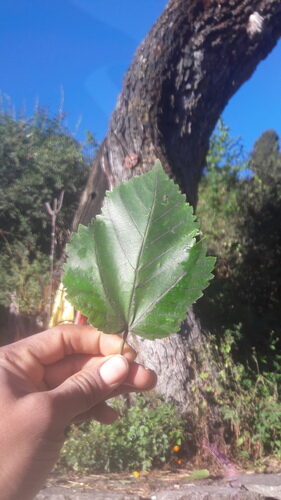
(c) Mark Hyde, Bart Wursten and Petra Ballings, some rights reserved (CC BY-NC)
iNaturalist· cc-by-nc
(c) setlhare, some rights reserved (CC BY-NC)
iNaturalist· cc-by-nc
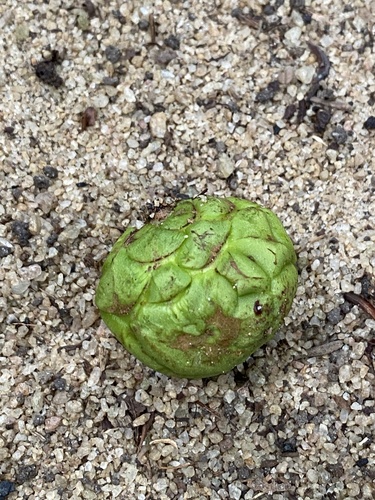
(c) alexsoethoudt, some rights reserved (CC BY-NC)
Summary
Source: WikipediaFicus glumosa, also known as the mountain fig or hairy rock fig, is an Afrotropical fig shrub or tree, growing up to 20 m tall. It is found over a range of altitudes and broken terrain types, including kopjes, outcrops, escarpments and lava flows, or in woodlands. It is for the greater part absent from the tropical rainforest zone, or the dry interior regions of Botswana, Namibia and South Africa.
Description
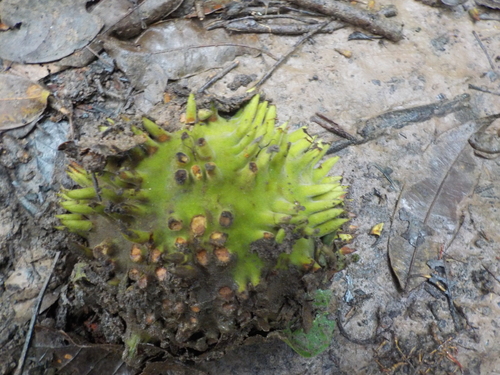
A fig. It is a shrub or tree. It loses its leaves during the year. It grows up to 10-15 m tall. It has spreading branches. It can spread 12 m wide. The bark is smooth and a grey-green. It has a few rough flaky pieces. The young shoots are hairy white. The leaves are soft and pink when young but stiff and papery when mature. They are long and oval. They are 2.5-10 cm long. The tip is rounded but with a sharp point. The base of the leaf is heart shaped. The leaf stalk is 4 cm long and thick and wavy. The leaves are hairy underneath except in one variety. The fruit are figs which are round and in pairs. They have fine silky hairs. They grow in the axils of leaves and are 7 cm across. They are green but turn red as they ripen. They are sweet and succulent.
Edible Uses
The ripe figs are eaten fresh, particularly by children. The cooked leaves are eaten as a vegetable. The gum is chewed as a masticatory.
Traditional Uses
The ripe fig fruit are eaten. The gum is also chewed as a masticatory. The leaves are cooked as a vegetable.
This uses section is brief — help expand it
Medicinal Uses
The traditional medicinal uses are numerous. The latex is diluted in water and used to treat diarrhoea. The latex is applied topically to alleviate pain from sprains and is dropped into the eyes as a treatment against sore eyes. The powdered bark, mixed with the latex, is used to plug carious teeth. A decoction of the bark is used as a mouthwash against toothache. A bark macerate is applied on the eyes of new born babies in Senegal to prevent conjunctivitis. The pounded bark is applied topically against headache. A decoction of pounded bark is used to wash sores daily until recovery. The roots and fruits are used in preparations to cure female sterility.
Distribution
A tropical plant. It is normally found in dry country in Africa. Often it is among rocks and in wooded grassland. It is sensitive to frost. It grows between 245-1,850 m above sea level. It can tolerate drought. It can grow in arid places. It suits hardiness zones 7-9.
Where It Grows
Africa, Angola, Australia, Benin, Botswana, Burkina Faso, Burundi, Cameroon, Central Africa, Central African Republic, CAR, Chad, Congo, Côte d'Ivoire, Djibouti, East Africa, Eritrea, Eswatini, Ethiopia, Gambia, Ghana, Guinea, Guinée, Guinea-Bissau, Ivory Coast, Kenya, Liberia, Malawi, Mali, Mauritania, Middle East, Mozambique, Namibia, Niger, Nigeria, Rwanda, Sahel, Saudi Arabia, Senegal, Sierra Leone, Somalia, South Africa, Southern Africa, South Sudan, Sudan, Swaziland, Tanzania, Togo, Uganda, West Africa, Yemen, Zambia, Zimbabwe,
Cultivation
Plants grow naturally from seed. Seed can be removed from figs and dried and used. Plants can also be grown from cuttings. The wasp pollinator is Elisabethiella glumosae Wiebes.
Propagation
Seed - does not require pre-treatment. It germinates best at a temperature around 20°c. Air layering. Tip cuttings around 4 - 12cm long, taken from lateral branches.
Other Uses
The bark is a source of tannins. A dye extracted from the bark is used to colour textiles. A brick-red dye, it is popular in Mali ( in the 'bogolan' dyeing process), Sierra Leone and Ghana for dyeing cloth and raffia. A fibre obtained from the bark is used to make cloth. The bark contains an abundant sticky white latex which is used as an adhesive. The wood is light in weight. The wood is a source of fuel and is also used to produce charcoal. The tree is grown as a living fence. Lines of the tree can be planted as a windbreak.
Production
It is slow growing.
Other Information
The fruit are especially eaten by children.
Notes
There are about 800-1000 Ficus species. They are mostly in the tropics. There are 120 Ficus species in tropical America.
Synonyms
Also Known As
Barach, Bergvy, Berg-rotsvy, Bukuzu, Ebiyong, Ebyong, Edalach, Eki, Eletan, Gilinziela, Halota, Inkhokho lemplophe, Inkiwane, Kadjere, Kilta, Kionywe, Kolo, Kuntsee, Kworo, Lanfane, Maginyela, Mangyea, Mountain fig, Mountain rock fig, Mutove, Nanrale, N'gaba, Nragama, Okworo, Pau-de-leite, Quequeie, Qilxaa, Rachere, Sague, Soto, Tchekehi, Tinaita, Tonri, Tshikululu, Umnyaxa
References (50)
- Abbiw, D.K., 1990, Useful Plants of Ghana. West African uses of wild and cultivated plants. Intermediate Technology Publications and the Royal Botanic Gardens, Kew. p 42
- Addis, G., Asfaw, Z & Woldu, Z., 2013, Ethnobotany of Wild and Semi-wild Edible Plants of Konso Ethnic Community, South Ethiopia. Ethnobotany Research and Applications. 11:121-141
- Addis, G., et al, 2013, The Role of Wild and Semi-wild Edible Plants in Household Food Sovereignty in Hamer and Konso Communities, South Ethiopia. Ethnobotany Research & Applications. 11:251-271
- Burkill, H. M., 1985, The useful plants of west tropical Africa, Vol. 4. Kew.
- Busson, 1965,
Show all 50 references Hide references
- Dalziel, J. M., 1937, The Useful plants of west tropical Africa. Crown Agents for the Colonies London.
- Centurie de plantes d'Afrique 63. 1826 (F. Cailliaud, Voy. Meroe 4:356. 1827)
- Cundall, P., (ed.), 2004, Gardening Australia: flora: the gardener's bible. ABC Books. p 603
- Diarra, N. et al, 2016, Etude ethnobotanique des plantes alimentaires utilisées en période de soudure dans les régions Sud du Mali. Int. J. Biol. Chem. Sci. 10(1): 184-197
- FAO, 1988, Traditional Food Plants, FAO Food and Nutrition Paper 42. FAO Rome p 281
- Fowler, D. G., 2007, Zambian Plants: Their Vernacular Names and Uses. Kew. p 49
- Fox, F. W. & Young, M. E. N., 1982, Food from the Veld. Delta Books. p 270 (As Ficus sonderi)
- Gallagher, D. E., 2010, Farming beyond the escarpment: Society, Environment, and Mobility in Precolonial Southeastern Burkina Faso. PhD University of Michigan.
- Gemedo-Dalle, T., et al, 2005, Plant Biodiversity and Ethnobotany of Borana Pastoralists in Southern Oromia, Ethiopia. Economic Botany 59(1) pp. 43-65
- Gilbert, T., et al, 2017, Diversity and local transformation of indigenous edible fruits in sahelian domain of Cameroon. Journal of Animal & Plant Sciences Vol. 26 (2): 5289-5300
- Goode, P., 1989, Edible Plants of Uganda. FAO p 30 (As Ficus sonderi)
- Grubben, G. J. H. and Denton, O. A. (eds), 2004, Plant Resources of Tropical Africa 2. Vegetables. PROTA, Wageningen, Netherlands. p 561
- Ichikawa, M., 1980, The Utilization of Wild Food Plants by the Suiei Dorobo in Northern Kenya. J. Anthrop. Soc. Nippon. 88(1): 25-48
- Jansen, P.C.M., 2005. Ficus glumosa Delile. [Internet] Record from Protabase. Jansen, P.C.M. & Cardon, D. (Editors). PROTA (Plant Resources of Tropical Africa), Wageningen, Netherlands. < http://database.prota.org/search.htm>. Accessed 16 October 2009.
- Jardin, C., 1970, List of Foods Used In Africa, FAO Nutrition Information Document Series No 2.p 78, 137
- Katende, A.B., Birnie, A & Tengnas B., 1995, Useful Trees and Shrubs for Uganda. Identification, Propagation and Management for Agricultural and Pastoral Communities. Technical handbook No 10. Regional Soil Conservation Unit, Nairobi, Kenya. p 312
- Kidane, B., et al, 2014, Ethnobotany of Wild and Semi-wild Edible Fruit Species used by Maale and Ari Ethnic Communities in South Ethiopia. Ethnobotany Research and Applications. Vol. 12, 1546-3465-12-455
- Le Houerou, H. N., (Ed.), 1980, Browse in Africa. The current state of knowledge. International Livestock Centre for Africa, Ethiopia. p 163
- Long, C., 2005, Swaziland's Flora - siSwati names and Uses http://www.sntc.org.sz/flora/
- Lulekal, E., et al, 2011, Wild edible plants in Ethiopia: a review on their potential to combat food insecurity. Afrika Focus - Vol. 24, No 2. pp 71-121
- Magwede, K., van Wyk, B.-E., & van Wyk, A. E., 2019, An inventory of Vhavenḓa useful plants. South African Journal of Botany 122 (2019) 57–89
- Martin, F.W. & Ruberte, R.M., 1979, Edible Leaves of the Tropics. Antillian College Press, Mayaguez, Puerto Rico. p 206
- Masters, T., 2021, Traditional food plants of the upper Aswa River catchment of northern Uganda—a cultural crossroads. Journal of Ethnobiology and Ethnomedicine (2021) 17:24
- Matlhare, T., et al, Vegetables in Botswana. p 21 Bioversity website.
- Mutie, F. G., 2020, Conservation of Wild Food Plants and Their Potential for Combatting Food Insecurity in Kenya as Exemplified by the Drylands of Kitui County. Plants 2020, 9, 1017
- Mutie, F. M., et al, 2023, Important Medicinal and Food Taxa (Orders and Families) in Kenya, Based on Three Quantitative Approaches. Plants 2023, 12, 1145
- Ogle & Grivetti, 1985,
- Ojelel, S. & Kakudidi, E. K., 2015, Wild edible plant species utilized by a subsistence farming community in the Obalanga sub-county, Amuria district, Uganda. Journal of Ethnobiology and Ethnomedicine. 11:7
- Palgrave, K.C., 1996, Trees of Southern Africa. Struik Publishers. p 108
- Peters, C. R., O'Brien, E. M., and Drummond, R.B., 1992, Edible Wild plants of Sub-saharan Africa. Kew. p 149
- Royal Botanic Gardens, Kew (1999). Survey of Economic Plants for Arid and Semi-Arid Lands (SEPASAL) database. Published on the Internet; http://www.rbgkew.org.uk/ceb/sepasal/internet [Accessed 4th May 2011]
- Ruffo, C. K., Birnie, A. & Tengnas, B., 2002, Edible Wild Plants of Tanzania. RELMA p 330 (As Ficus glumosa var. glaberrima)
- Ruiters-Welcome, A. K., 2019, Food plants of southern Africa. Ph.D. thesis. Univ. of Johannesburg p 79
- Schmidt, E., Lotter, M., & McCleland, W., 2007, Trees and shrubs of Mpumalanga and Kruger National Park. Jacana Media p 78
- Swaziland's Flora Database http://www.sntc.org.sz/flora
- Terra, G.J.A., 1973, Tropical Vegetables. Communication 54e Royal Tropical Institute, Amsterdam, p 46
- Tredgold, M.H., 1986, Food Plants of Zimbabwe. Mambo Press. p 101 (As Ficus sonderi)
- Venter, F & J., 2009, Making the most of Indigenous Trees. Briza. p 162
- Vivien, J., & Faure, J.J., 1996, Fruitiers Sauvages d'Afrique. Especes du Cameroun. CTA p 214
- Welcome, A. K. & Van Wyk, B.-E., 2019, An inventory and analysis of the food plants of southern Africa. South African Journal of Botany 122 (2019) 136–179
- World Checklist of Useful Plant Species 2020. Royal Botanic Gardens, Kew
- www.worldagroforestrycentre.org/treedb/
- www.figweb.org
- www.zimbabweflora.co.zw 2011
- Yimer, A., et al, 2021, Ethnobotanical study of wild edible plants used by Meinit Ethnic Community at Bench-Maji Zone, Southwest Ethiopia. Research Square. p 6