Ficus scabra
Forst. f.
Laweto, Losilosi, Oceania fig
iNaturalist· cc-by-nc
(c) juju98, some rights reserved (CC BY-NC), uploaded by juju98
iNaturalist· cc-by-nc
(c) juju98, some rights reserved (CC BY-NC), uploaded by juju98
iNaturalist· cc-by-nc
(c) juju98, some rights reserved (CC BY-NC), uploaded by juju98
Summary
Source: WikipediaFicus scabra is a fig species in the family Moraceae native to Fiji, New Caledonia, Niue, Samoa, Tonga, Vanuatu, and Wallis-Futuna Island in the southwestern Pacific.
Description
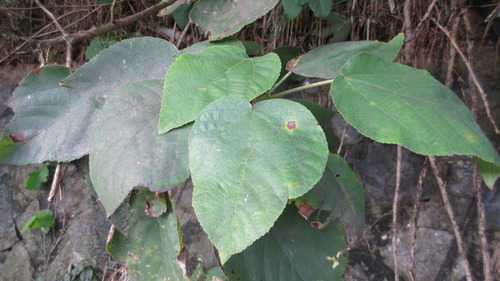
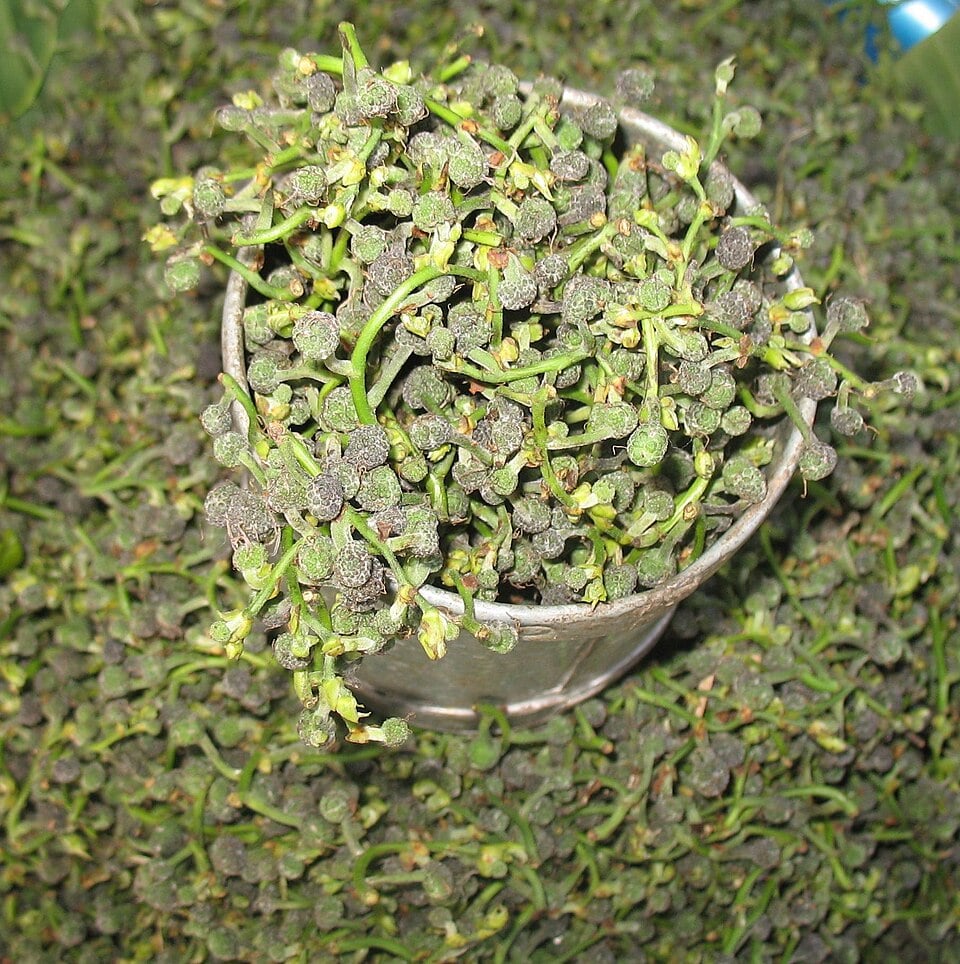
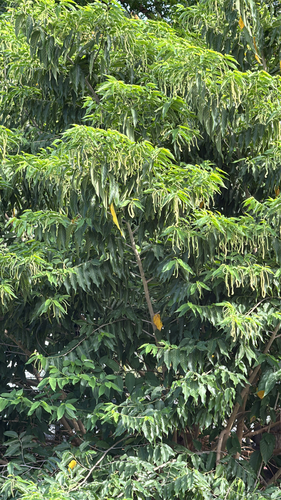
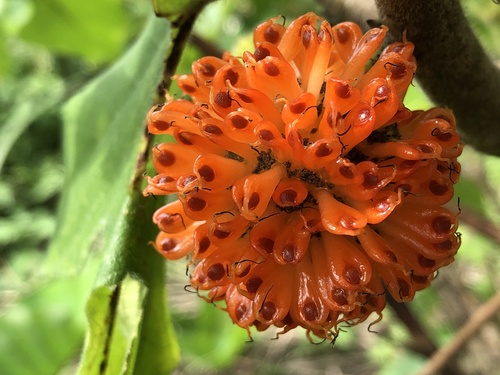
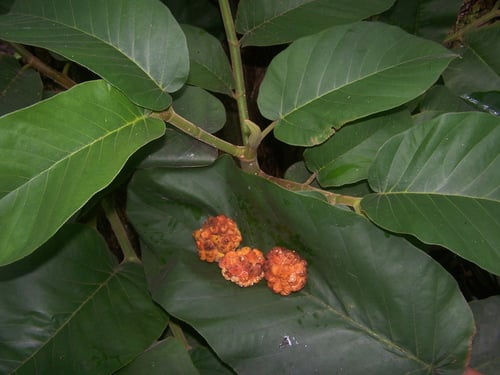
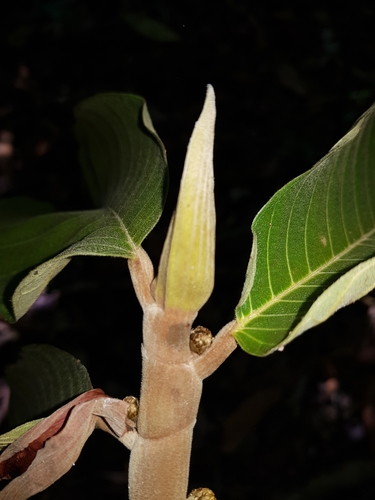
A fig. It is a tree up to 10-18 m high. It can be a spreading shrub in coastal regions. It has milky sap. It has a narrow sheath covering the growing tip. The bark is grey and fibrous. The leaves are simple and alternate. The leaf blade is rough and has unequal sides. It can be oval and 4-22 cm or more long. It can be ear shaped at the base. The leaf stalk is 1-5 cm long. The flowers are in the fig like structure. The fruit is fleshy and red or yellow. It can be 1-2.5 cm across. The fruit are on the stems or trunks.
Edible Uses
Young leaves are cooked and eaten. Young fruit are eaten raw or cooked.
Traditional Uses
The young leaves are cooked and eaten. The young fruit are also eaten raw or cooked.
This uses section is brief — help expand it
Medicinal Uses
The plant (part not specified) has the reputation of being a very efficacious stomachic medicine.
Distribution
A tropical plant. It grows from sea level to 700 m altitude in Samoa.
Where It Grows
American Samoa, Fiji, New Caledonia, Niue, Pacific*, Rotuma, Samoa, Tonga, Vanuatu,
Cultivation
The plant can flower and produce fruit all year round. Fig trees have a unique form of fertilization, each species relying on a single, highly specialized species of wasp that is itself totaly dependant upon that fig species in order to breed. The trees produce three types of flower; male, a long-styled female and a short-styled female flower, often called the gall flower. All three types of flower are contained within the structure we usually think of as the fruit. The female fig wasp enters a fig and lays its eggs on the short styled female flowers while pollinating the long styled female flowers. Wingless male fig wasps emerge first, inseminate the emerging females and then bore exit tunnels out of the fig for the winged females. Females emerge, collect pollen from the male flowers and fly off in search of figs whose female flowers are receptive. In order to support a population of its pollinator, individuals of a Ficus spp. must flower asynchronously. A population must exceed a critical minimum size to ensure that at any time of the year at least some plants have overlap of emmission and reception of fig wasps. Without this temporal overlap the short-lived pollinator wasps will go locally extinct.
Other Uses
The bark is fibrous. We have no specific information for this species, but the fibre is likely to be used for making cordage, possibly cloth and maybe also to make tapa bark cloth. The fibrous branches used to clean teeth. The leaves of some species are used to wrap food for cooking. The leaves of some species are quite rough and can be used as a sandpaper substitute and for scouring pots. The wood of plants in this genus is usually of low quality, light in weight, soft and not very durable. It is sometimes used for purposes such as light construction, digging sticks, yam stakes, etc. The wood is also used for fuel and sometimes for making fire by friction.
Notes
There are about 800-1000 Ficus species. They are mostly in the tropics. There are 120 Ficus species in tropical America.
Synonyms
Also Known As
Besh, Malu, Mati vao, Moala, Mula, Nunu
References (6)
- Blench, R., 2004, Fruits and Arboriculture in the Indo-Pacific Region. Indo-Pacific Prehistory Association Bulletin 24. (Taipei Papers Volume 2) p 37
- Lebot, V. & Sam, C., Green desert or ‘all you can eat’? How diverse and edible was the flora of Vanuatu before human introductions?. Terra australis 52 p 408
- Smith, A.C., 1981, Flora Vitiensis Nova, Lawaii, Kuai, Hawaii, Volume 2 p 180
- The Pacific Islands Food Composition Tables http://www.fao.org/docrep No E124
- Walter, A. & Sam C., 2002, Fruits of Oceania. ACIAR Monograph No. 85. Canberra. p 165, 279
Show all 6 references Hide references
- Whistler, W.A., 2004, Rainforest Trees of Samoa. Isle Botanica Honolulu, Hawaii. p 107