Ficus bakeri
Elmer
Kataupi
wikimedia· pd
Netrider1964 (via Wikimedia Commons)
wikimedia· cc-by-sa
Vinayaraj (via Wikimedia Commons)
wikimedia· cc-by-sa
Andre Abrahami (via Wikimedia Commons)
Description
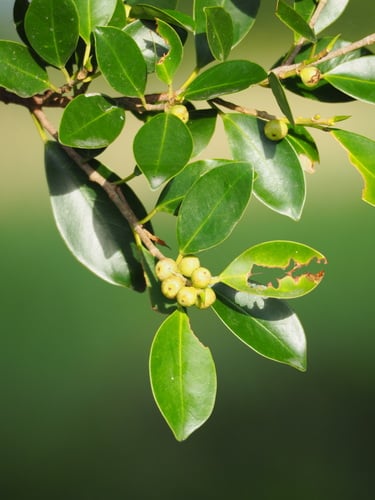
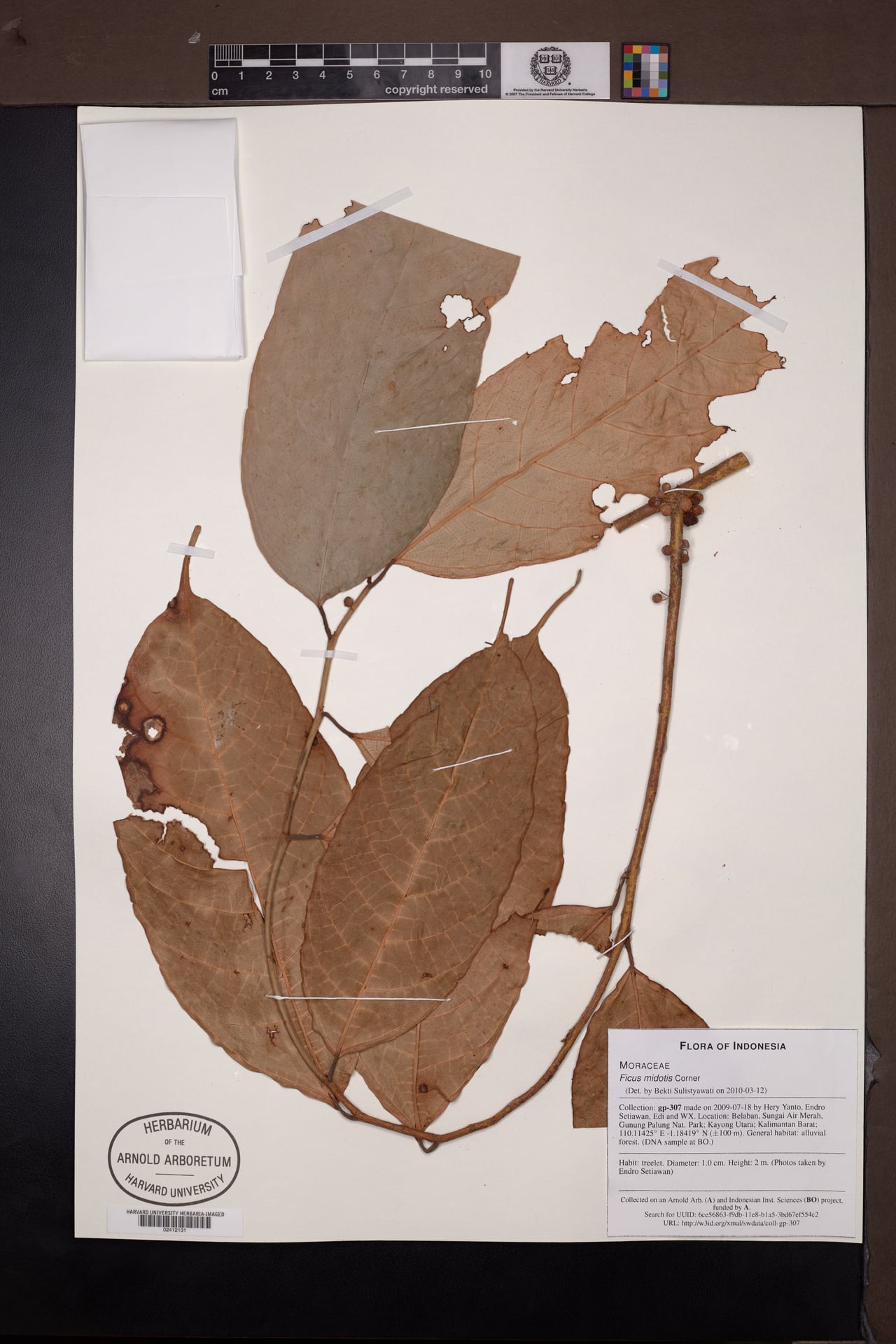
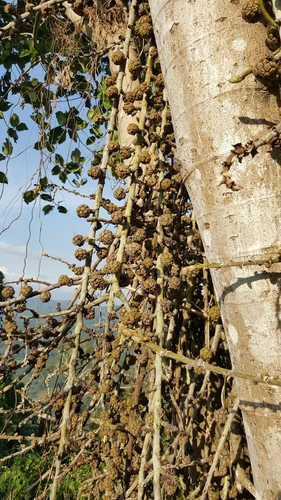
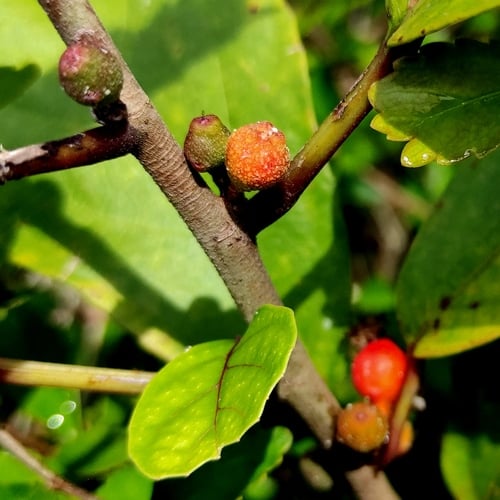
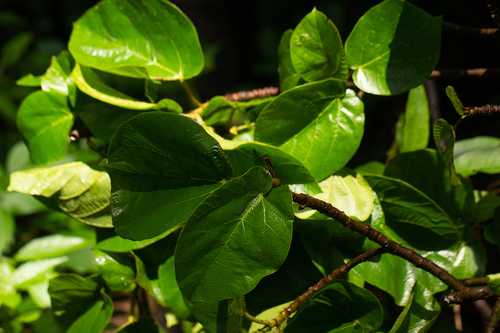
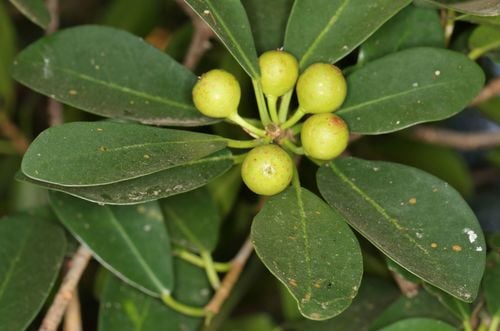
A fig. It is a lofty climbing vine. The stem is 5 to 8 cm thick and forms branched bushes towards the top. The twigs are relatively short, brown and hairless at maturity. The leaves are somewhat papery and smooth except for the nerves on the lower side. They are blunt in form and scattered one after another along the small branches. The fruit is mainly in the axils of leaves. They are oval, smooth, yellowish green and become deep red when mature.
Edible Uses
The fruit are eaten raw.
Traditional Uses
The fruit are eaten raw.
This uses section is brief — help expand it
Distribution
A tropical plant. They are found in alpine forests along the Pacific coast of the Philippines from Luzon to northern Mindanao. It grows in damp forests between 500-1,100 m above sea level.
Where It Grows
Asia, Pacific, Philippines*, SE Asia,
Cultivation
Fig trees have a unique form of fertilization, each species relying on a single, highly specialized species of wasp that is itself totaly dependant upon that fig species in order to breed. The trees produce three types of flower; male, a long-styled female and a short-styled female flower, often called the gall flower. All three types of flower are contained within the structure we usually think of as the fruit. The female fig wasp enters a fig and lays its eggs on the short styled female flowers while pollinating the long styled female flowers. Wingless male fig wasps emerge first, inseminate the emerging females and then bore exit tunnels out of the fig for the winged females. Females emerge, collect pollen from the male flowers and fly off in search of figs whose female flowers are receptive. In order to support a population of its pollinator, individuals of a Ficus spp. must flower asynchronously. A population must exceed a critical minimum size to ensure that at any time of the year at least some plants have overlap of emmission and reception of fig wasps. Without this temporal overlap the short-lived pollinator wasps will go locally extinct.
Other Uses
A fibre is obtained from the inner bark. It is used to make bow strings.
Notes
There are about 800-1000 Ficus species. They are mostly in the tropics. There are 120 Ficus species in tropical America.
References (2)
- Monsalud, M.R., Tongacan, A.L., Lopez, F.R., & Lagrimas, M.Q., 1966, Edible Wild Plants in Philippine Forests. Philippine Journal of Science. p 498
- PROSEA (Plant Resources of South East Asia) handbook, Volume 2, 1991, Edible fruits and nuts.