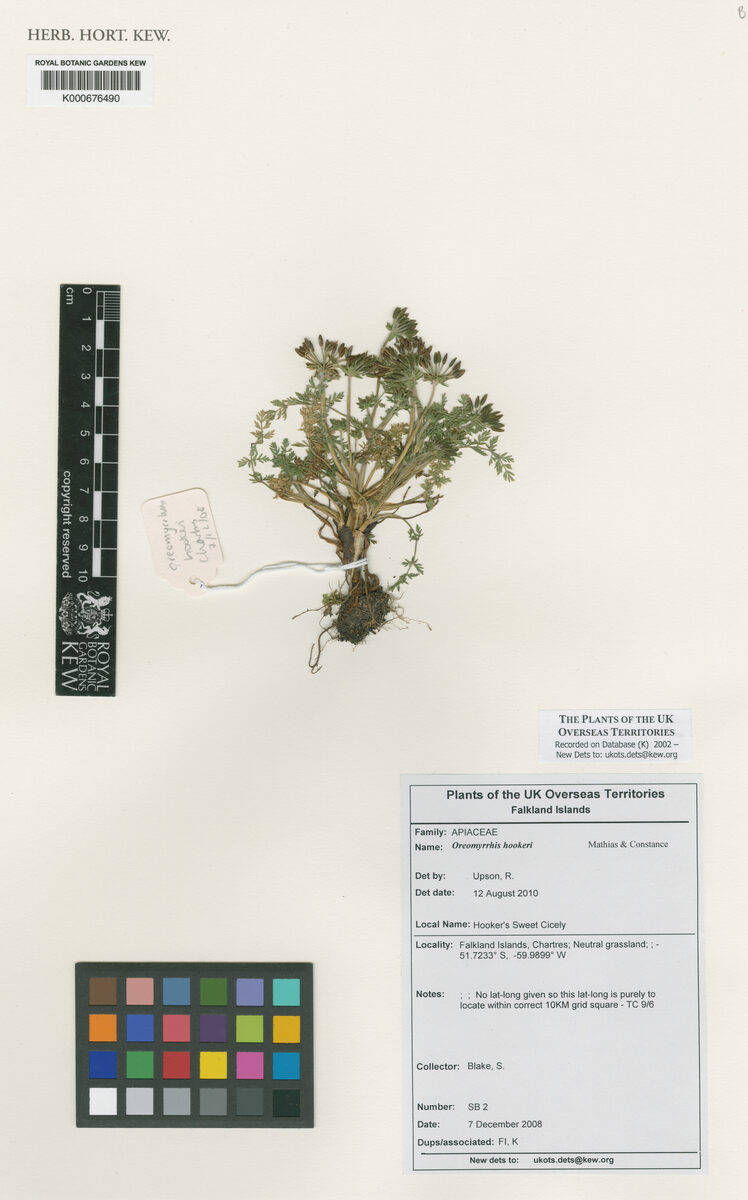
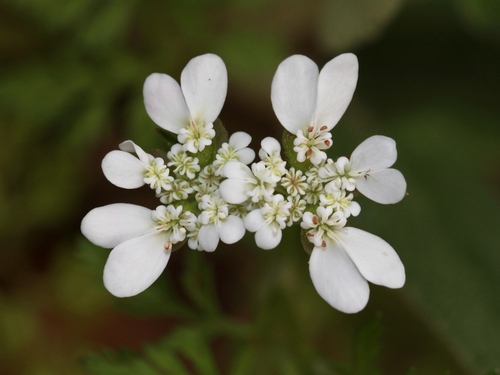
Ferula assa-foetida
L.
Asafoetida, Stinking Gum
iNaturalist· cc-by-nc
(c) Marina Nikonorova, some rights reserved (CC BY-NC), uploaded by Marina Nikonorova
iNaturalist· cc-by-nc
(c) vladimir_epiktetov, some rights reserved (CC BY-NC)
Summary
Source: WikipediaFerula assa-foetida is a species of Ferula endemic to Southern Iran. It is a source of asafoetida, but not the main source, although many sources claim so. The production of asafoetida from this species is confined to Southern Iran, especially the area near Lar. Outside its native range, other asafoetida-producing species are often misidentified as F. assa-foetida. For example, F. foetida is mistaken for F. assa-foetida in Flora of the U.S.S.R. and Flora of Pakistan. In a molecular phylogenetic study, all the plant samples of F. assa-foetida collected in Central Iran were not the true species, but F. alliacea and F. gabrielii or their close relatives instead. Chemical analyses of asafoetida samples obtained from local markets in Eastern Iran also showed that asafoetida-producing species there were F. lutensis, F. foetida, F. alliacea, etc., instead of F. assa-foetida. F. pseudalliacea and F. rubricaulis are endemic to western and southwestern Iran and are sometimes considered conspecific with F. assa-foetida.
Description
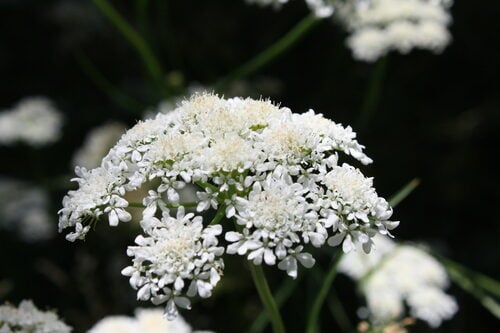
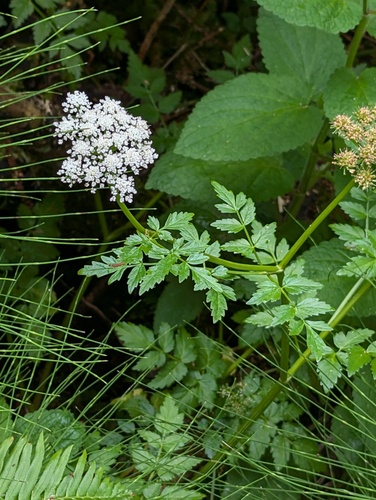
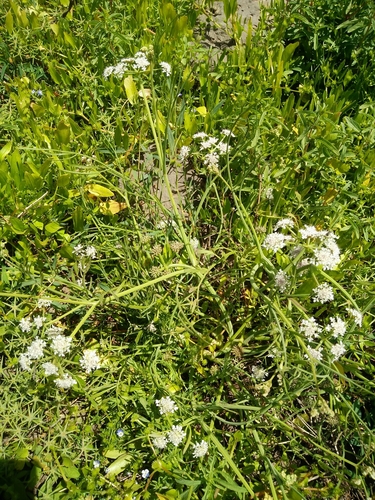
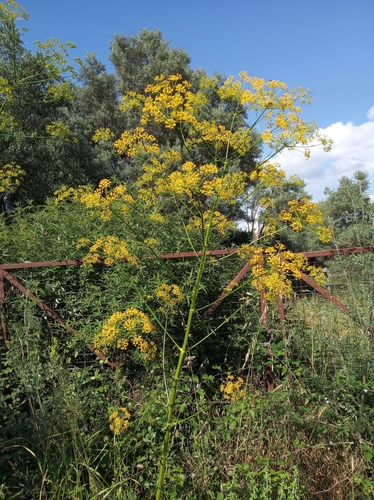
A herb. It keeps growing from year to year. It can grow 3-4 m high. The stems can be 7.5 cm across. The plant has a bad smell. The stems are thick and coarse. When wounded the stems exude a white sticky sap which turns red-yellow. The upper leaf sheath is about 9 cm long by 4 cm wide. At the base 3-4 leaves occur together. They are 3-3.5 cm long by 1.5-2.5 cm wide. The flowers occur in a rounded panicle. The flowers are bright yellow. The flowers only appear after about 5 years of growth. The fruit are in a rounded head. There are 10-50 rays.
Edible Uses
Leaves and young shoots can be cooked as a vegetable. The plant has a foetid odour that disappears with boiling. The cabbage-like folded heads are also eaten raw as a delicacy. The root can be cooked but needs to be steeped first to remove bitterness; a starch extracted from the roots is used to make porridge. A gum-resin from the root is used as a food flavouring and is an essential ingredient of Worcester sauce, as well as being used to flavour a wide range of dishes and drinks. It is popular in natural food cuisine as a garlic substitute. The resin is probably the foulest-smelling of all herbs, with a sulphurous, garlic-like odour — it has been nicknamed 'dung of the devil' for the nausea it causes some people — yet used in judicious quantities it gives a surprisingly pleasant flavour to many foods.
Traditional Uses
It is used as a seasoning. The resin is sold in lumps. It is used to flavour soups, curried fish, sauces and pickles. The leaves and stems can be cooked and eaten as a vegetable. The bad smell disappears with cooking. The spice is made from the milk like juice of the plant. It is added to meat balls and gives a truffle like flavour. It is also used in Worcestershire sauce. The young folded heads are eaten raw. The roots are roasted and eaten.
Medicinal Uses
Asafoetida is a highly effective medicinal herb acting mainly on the digestive system, cleansing and strengthening the gastro-intestinal tract, and is much used in the Ayurvedic tradition. The gum-resin contains a volatile oil as persistent in aroma as garlic; this leaves the body via the respiratory system and aids the coughing up of congested mucus. The pungent gum-resin from the root is alterative, anthelmintic, antiperiodic, antispasmodic, carminative, deobstruent, deodorant, expectorant, laxative, sedative, and stomachic. It is used to treat digestive problems including wind, bloating, indigestion, and constipation, as well as respiratory conditions such as bronchitis, bronchial asthma, and whooping cough. It also acts as a circulatory stimulant, lowering blood pressure and thinning the blood. The resin has a synergistic effect with herbal preparations such as camphor, valerian, and nux-vomica, and is used in tincture as a mild cardiotonic and as an aphrodisiac.
Known Hazards
Do not use orally. Avoid during pregnancy as possible increased bleeding. Topical use may cause skin irritation.
Distribution
It is a temperate plant. It grows in dry stony locations. It needs rich, well-drained soil. It needs to be in the sun. It grows up to 100 m altitude.
Where It Grows
Afghanistan, Asia, Bangladesh, Central Asia, China, Europe, Greece, India, Indochina, Iran, Italy, Laos, Mediterranean, Middle East, Myanmar, Pakistan, Russia, SE Asia, Sri Lanka, Turkey, Türkiye,
Cultivation
Succeeds in most soils. Prefers a deep fertile soil in a sunny position. This species is not hardy in the colder areas of the country, it tolerates temperatures down to between -5 and -10°c. Plants have a long taproot and are intolerant of root disturbance. They should be planted into their final positions as soon as possible. Monocarpic, the plant takes some years before it flowers and dies after flowering. In Britain, the plants usually flower after about 5 years. The whole plant, especially when bruised, has an unpleasant smell like stale fish.
Propagation
Seed is best sown as soon as it is ripe in autumn in a greenhouse. Alternatively, sow in April in a greenhouse. Prick seedlings into individual pots as soon as they are large enough to handle, then plant out into permanent positions while still small, as the plants dislike root disturbance. Provide a protective mulch for at least the first winter outdoors. Division can be carried out in autumn, though this may be inadvisable given the plant's sensitivity to root disturbance.
Other Uses
A gum-resin is obtained by making incisions in the roots and rhizomes. The stem is removed at the end of the growing season, the root is uncovered, and a thin slice is cut away; as the gum exudes and hardens, a fresh slice is made. An alternative method involves removing the stem as the plant begins to flower. The gum should be stored in an airtight container to prevent its strong flavour from contaminating nearby substances. It is a source of an essential oil used medicinally, as a food flavouring, and in perfumery.
Production
The sap is collected from plants that are at least 4 years old. The roots are exposed then slashed in a shady location for 4-6 weeks until the resin seeps out and hardens. The drying resin is then scraped off. The powder is made by grinding the dried resin with some form of starch.
Other Information
It is a cultivated food plant.
Notes
There are 172 Ferula species. It is anti flatulent.
Synonyms
Also Known As
Ase fetide, Assafetida, Balhika, Devil's dung, Ferule persique, Food-of-the-gods, Haltheeth, Heeng, Hengu, Hing, Hinga, Hingu, Inguva, Laser, Maha hing, Perungayam, Perunkaya, Sheingho, Shein-ngo-bin, Steckenkraut, Stinkasant, Stinkendes, Terfelsdreck, Tyib, Yang
References (20)
- Ambasta, S.P. (Ed.), 2000, The Useful Plants of India. CSIR India. p 220
- Bremness, L., 1994, Herbs. Collins Eyewitness Handbooks. Harper Collins. p 169
- Brown, D., 2002, The Royal Horticultural Society encyclopedia of Herbs and their uses. DK Books. p 211
- Facciola, S., 1998, Cornucopia 2: a Source Book of Edible Plants. Kampong Publications, 18 (As Ferula assa-foetida)
- Hedrick, U.P., 1919, (Ed.), Sturtevant's edible plants of the world. p 306
Show all 20 references Hide references
- Hemphill, I, 2002, Spice Notes. Macmillan. p 50
- Kiple, K.F. & Ornelas, K.C., (eds), 2000, The Cambridge World History of Food. CUP p 432, 1722
- Lim, T. K., 2015, Edible Medicinal and Non Medicinal Plants. Volume 9, Modified Stems, Roots, Bulbs. Springer p 42
- Mulherin, J., 1994, Spices and natural flavourings. Tiger Books, London. p 27
- Peter, K. V. (Ed.), 2004, Handbook of Herbs and Spices Vol. 2 Woodhead Publishing and CRC Press. p
- Plants for a Future database, The Field, Penpol, Lostwithiel, Cornwall, PL22 0NG, UK. http://www.scs.leeds.ac.uk/pfaf/
- PROSEA handbook Volume 13 Spices. p 255
- Raghavan, S., 2007, Handbook of Spices, Seasonings, and Flavourings. Second Edition. CRC Press p 69
- Seidemann J., 2005, World Spice Plants. Economic Usage, Botany, Taxonomy. Springer. p 156
- Solomon, C., 2001, Encyclopedia of Asian Food. New Holland. p 13
- Sp. pl. 1:248. 1753
- Tareen, N. M., et al, 2016, Ethnomedicinal Utilization of Wild Edible Vegetables in District Harnai of Balochistan Province - Pakistan. Pakistan Journal of Botany 48(3): 1159-1171
- van Wyk, B., 2005, Food Plants of the World. An illustrated guide. Timber press. p 194
- Wiersema, J. H. & Leon, B., 2013, World Economic Plants. A Standard Reference CRC Press. 2nd Ed. p 301
- World Checklist of Useful Plant Species 2020. Royal Botanic Gardens, Kew