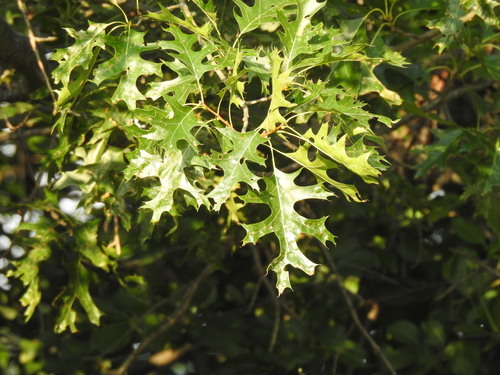
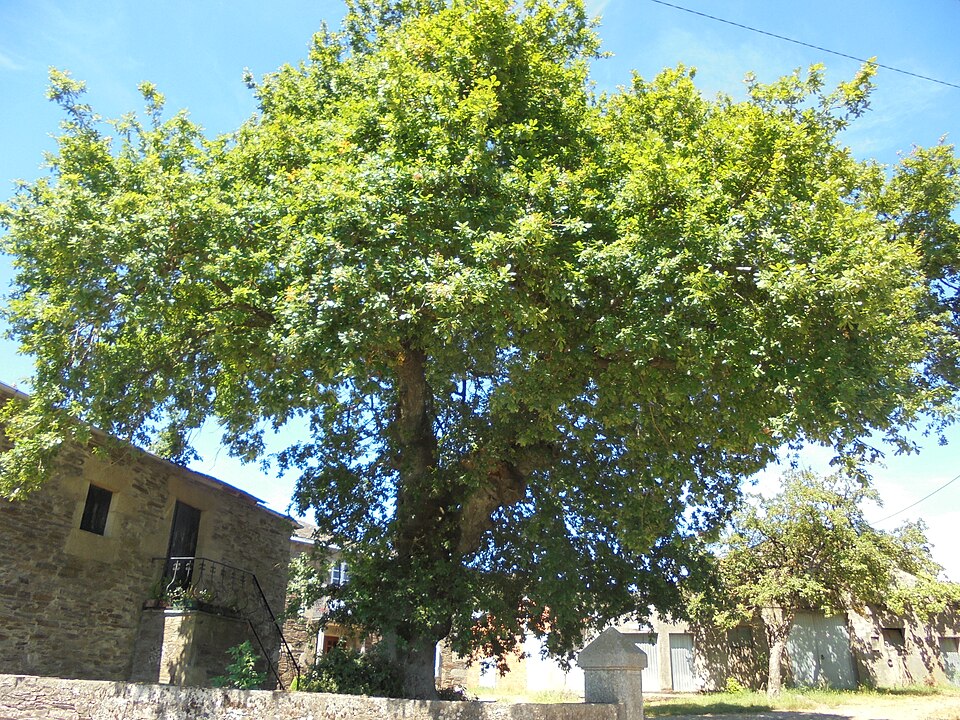
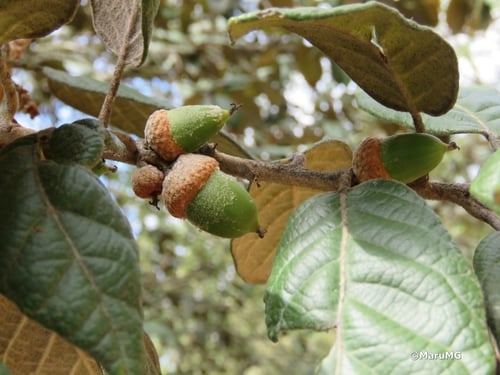
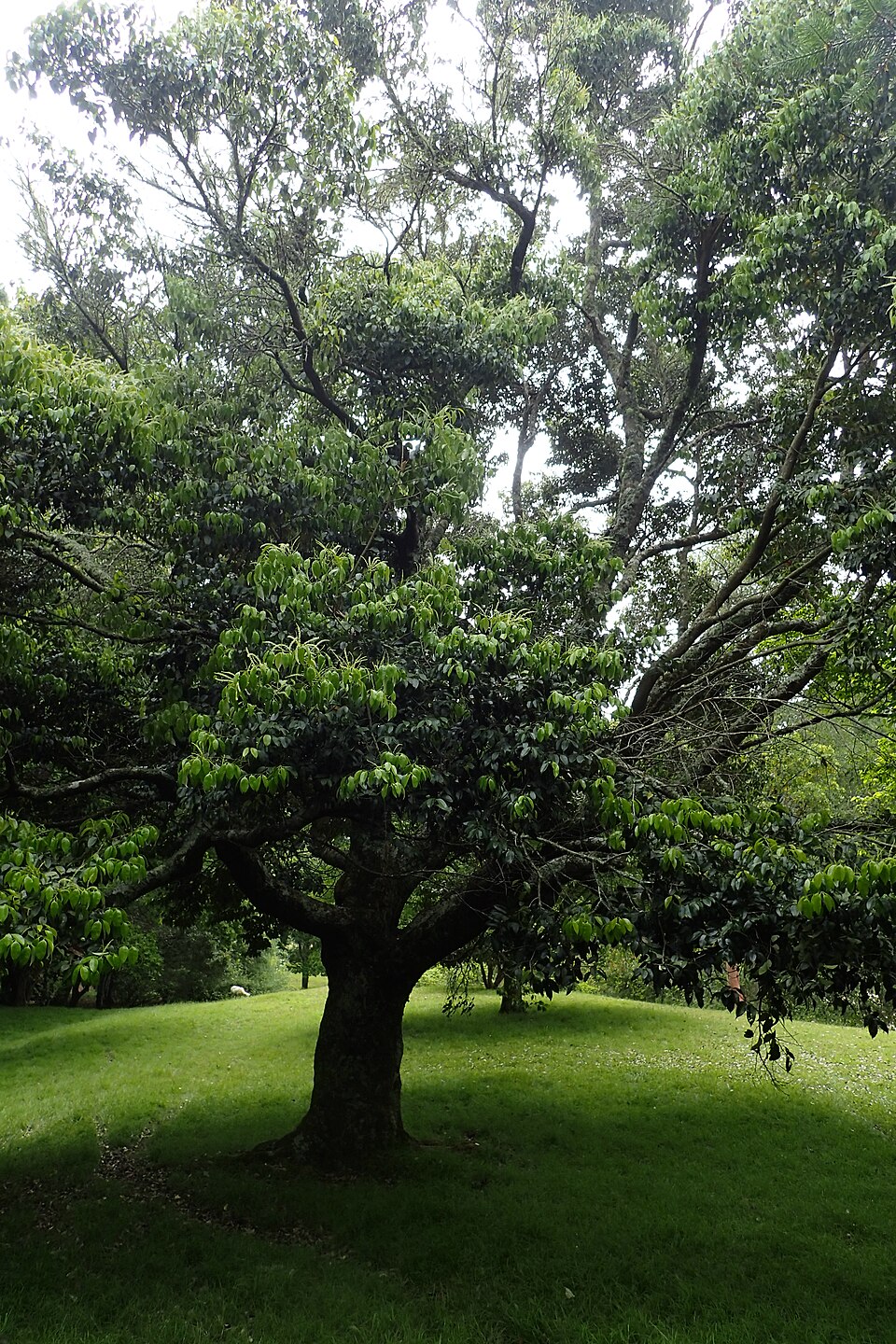
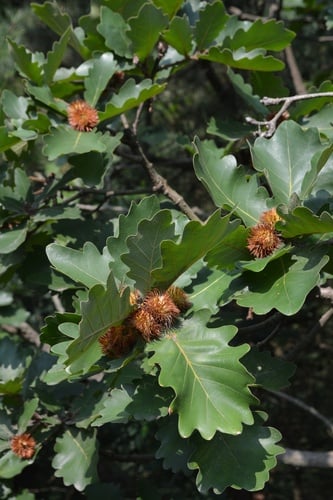
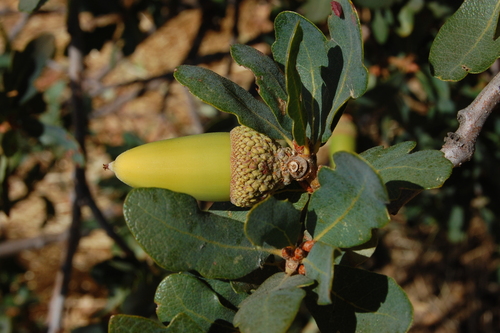
Quercus griffithii
Hook.f. & Thomson ex Miq.
iNaturalist· cc-by
(c) Siddarth Machado, some rights reserved (CC BY)
iNaturalist· cc-by
(c) Siddarth Machado, some rights reserved (CC BY)
iNaturalist· cc-by-nc
(c) WWF EH2019 group 1, some rights reserved (CC BY-NC)
Summary
Source: WikipediaQuercus griffithii, called paisang, is a species of oak native to the eastern Himalayas, Tibet, south-central and southeast China, Assam, Myanmar, Thailand, Laos, and Vietnam. It is in the subgenus Quercus, section Quercus. Some authorities feel that it could be a synonym of Quercus aliena var. acutiserrata. It is a deciduous tree reaching 25 metres (82 feet) with an oblong crown, typically found from 700 to 2,800 m (2,300 to 9,200 ft) above sea level. It is a locally important fuelwood and fodder species.
Description
A temperate tree in the Fagaceae family.
This description is brief — help expand it
Edible Uses
The seed flour is mixed with cereal flour and cooked. The nuts are edible.
Traditional Uses
The seed flour is mixed with cereal flour and cooked.
This uses section is brief — help expand it
Distribution
It is a temperate plant.
Where It Grows
Asia, Bhutan, Himalayas, India, Northeastern India,
Synonyms
Also Known As
Kra, Mon-cha-ra, Pa-sheng
References (4)
- Castillo, C., 2013, The Archaeobotany of Khao Sam Kaeo and Phu Khao Thong: The Agriculture of Late Prehistoric Southern Thailand. Ph. D. thesis University College, London p 380 (As Quercus aliena subsp. griffithii)
- Murtem, G. & Chaudhrey, P., 2016, An ethnobotanical note on wild edible plants of Upper Eastern Himalaya, India. Brazilian Journal of Biological Sciences, 2016, v. 3, no. 5, p. 63-81
- Tsering, J., et al, 2017, Ethnobotanical appraisal on wild edible plants used by the Monpa community of Arunchal Pradesh. Indian Journal of Traditional Knowledge. Vol 16(4), October 2017, pp 626-637
- Yeshi, K. et al, 2017, Taxonomical Identification of Himalayan Edible Medicinal Plants in Bhutan and the Phenolic Contents and Antioxidant Activity of Selected Plants. TBAP 7 (2) 2017 pp 89 - 106