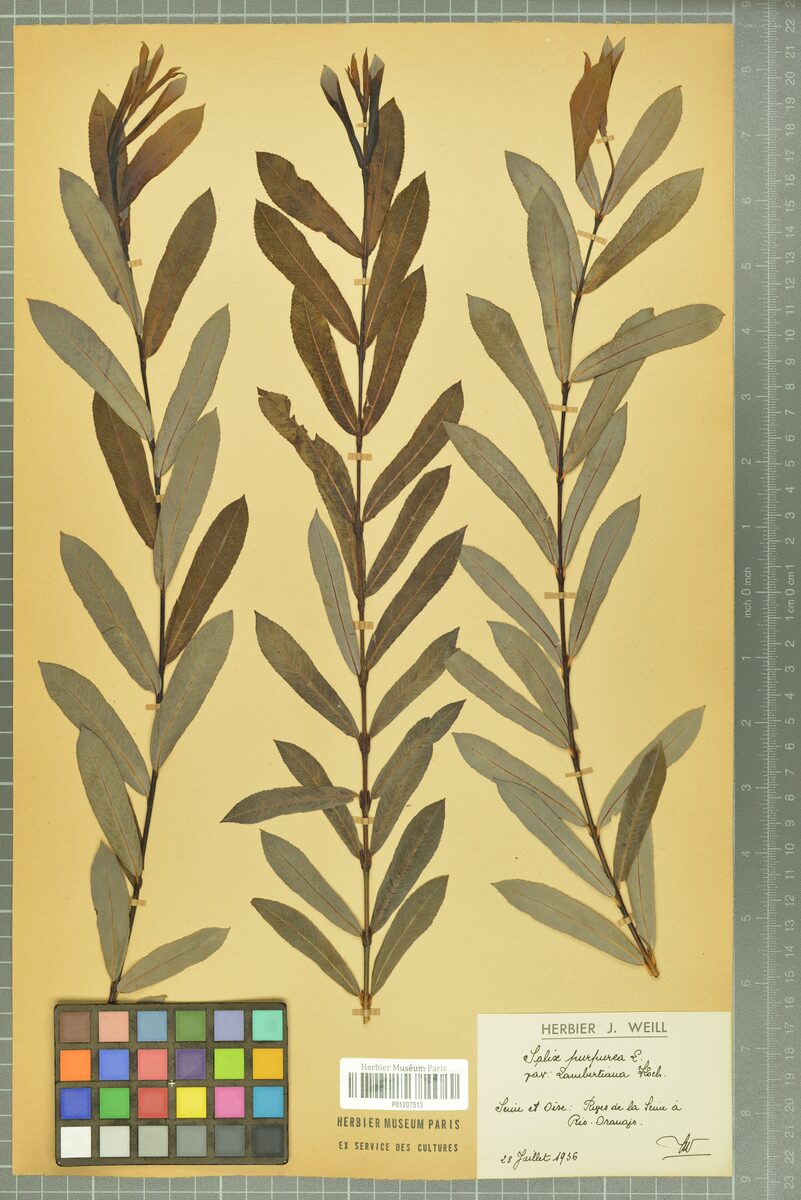
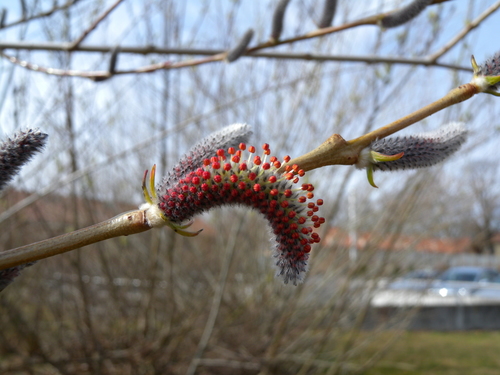
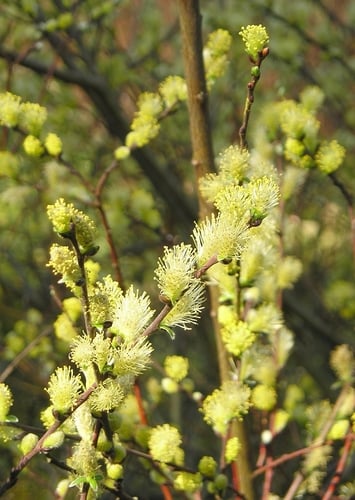
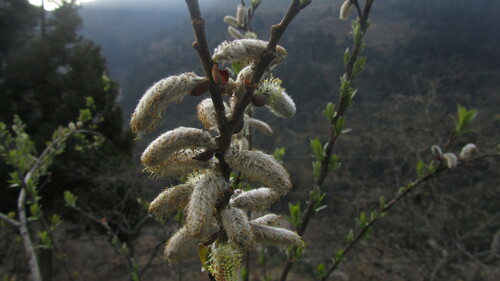
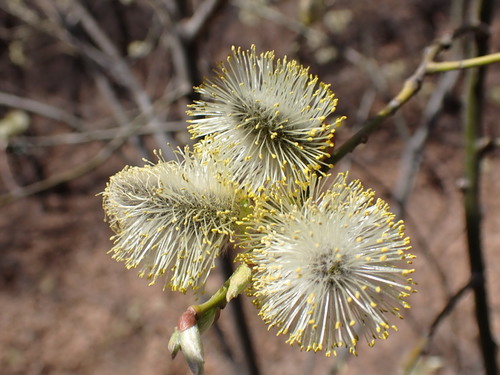
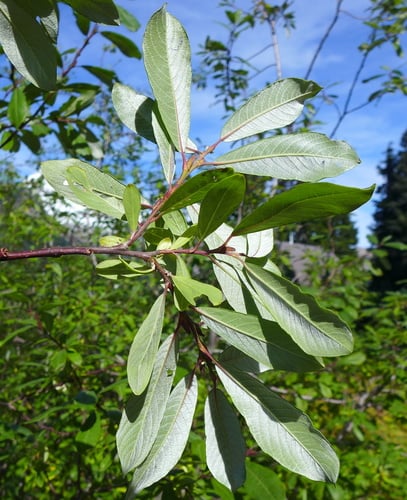
Salix x mollisima undulata - (Ehrh.)Wimm.
(Ehrh.)Wimm.
gbif· cc-by
Meise Botanic Garden
gbif· cc-by
Meise Botanic Garden
gbif· cc-by
Meise Botanic Garden
Description
Salix x mollisima undulata is a deciduous Shrub growing to 6 m (19ft 8in). See above for USDA hardiness. It is hardy to UK zone 5 and is not frost tender. The species is dioecious (individual flowers are either male or female, but only one sex is to be found on any one plant so both male and female plants must be grown if seed is required). and is pollinated by Bees. The plant is not self-fertile. Suitable for: light (sandy), medium (loamy) and heavy (clay) soils and can grow in heavy clay soil. Suitable pH: mildly acid and neutral soils. It cannot grow in the shade. It prefers moist or wet soil.
Edible Uses
Inner bark - raw or cooked. It can be dried, ground into a powder and then added to cereal flour for use in making bread etc. A very bitter flavour, it is a famine food that is only used when all else fails. Young shoots - cooked. Not very palatable.
Medicinal Uses
Anodyne Febrifuge. The fresh bark of all members of this genus contains salicin, which probably decomposes into salicylic acid (closely related to aspirin) in the human body. This is used as an anodyne and febrifuge.
Distribution
A hybrid of garden origin, S. triandra x S. viminalis.
Where It Grows
A hybrid.
Cultivation
Succeeds in most soils, including wet, ill-drained or intermittently flooded soils, but prefers a damp, heavy soil in a sunny position. Rarely thrives on chalk. This form is quite similar to S. triandra. Hybridizes freely with other members of this genus. Although the flowers are produced in catkins early in the year, they are pollinated by bees and other insects rather than by the wind. Plants in this genus are notably susceptible to honey fungus. Plants are rarely bisexual, but they are usually dioecious and then male and female plants must be grown if seed is required.
Propagation
Seed - must be surface sown as soon as it is ripe in late spring. It has a very short viability, perhaps as little as a few days. This is a hybrid species and it will not breed true from seed. Cuttings of mature wood of the current year's growth, November to February in a sheltered outdoor bed or planted straight into their permanent position and given a good weed-suppressing mulch. Very easy. Plant into their permanent positions in the autumn. Cuttings of half-ripe wood, June to August in a frame. Very easy.
Other Uses
Basketry. The stems are very flexible and are used in basket making. A valuable species. The plant is usually coppiced annually when grown for basket making, though it is possible to coppice it every two years if thick poles are required as uprights. Succeeds in wet, ill-drained or intermittently flooded soils. Dynamic accumulator.
Also Known As
Salix × mollisima var. undulata