Pyrularia pubera
Michx.
Oil Nut, Buffalo nut
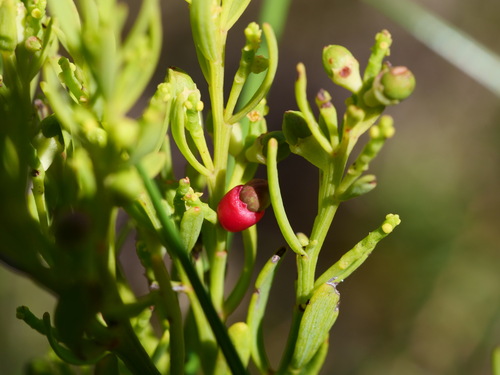
iNaturalist· cc-by
(c) Michael J. Papay, some rights reserved (CC BY), uploaded by Michael J. Papay
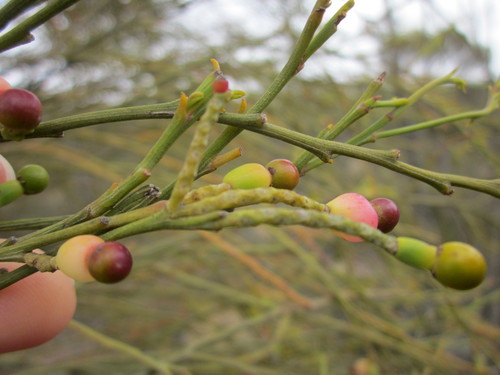
iNaturalist· cc-by
(c) Michael J. Papay, some rights reserved (CC BY), uploaded by Michael J. Papay
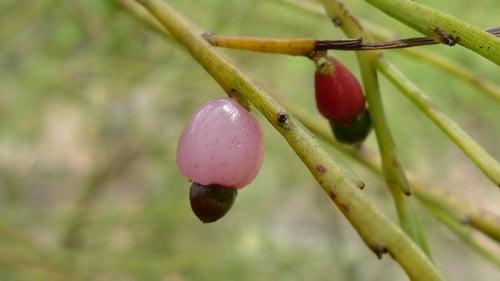
iNaturalist· cc-by-nc
(c) Joshua Doby, some rights reserved (CC BY-NC), uploaded by Joshua Doby
Description
Pyrularia pubera is a deciduous Shrub growing to 3.5 m (11ft 6in). See above for USDA hardiness. It is hardy to UK zone 4. It is in flower from May to June. The species is dioecious (individual flowers are either male or female, but only one sex is to be found on any one plant so both male and female plants must be grown if seed is required). . The plant is not self-fertile. Suitable for: light (sandy), medium (loamy) and heavy (clay) soils and prefers well-drained soil. Suitable pH: mildly acid and neutral soils. It can grow in semi-shade (light woodland). It prefers moist soil.
Edible Uses
Oil. Fruit. Caution is advised since the fruit is said to be permeated with an acrid oil. The pear-shaped fruit is about 25mm long. An edible oil is obtained from the seed. Is this different from the acrid poisonous oil of the fruit?
Medicinal Uses
Emetic Salve. The plant has been used as a salve on old sores. The seed has been chewed to cause vomiting in the treatment of colic.
Known Hazards
The whole plant, especially the fruit, contains an acrid poisonous oil.
Distribution
Eastern N. America - W. Vancouver to Alabama.
Where It Grows
NORTHERN AMERICA: United States (New York, Pennsylvania, West Virginia, Georgia, Kentucky, Tennessee, Virginia)
Cultivation
Parasitic on the roots of a range of trees and shrubs, but most commonly Tsuga carolina, this plant needs to grow close to a host tree. It requires a well-drained but moisture retentive lime-free soil.
Propagation
Seed - best sown in a cold frame as soon as it is ripe into a pot containing a small host tree. Stored seed will require 3 months cold stratification before it is sown. Grow on in a cold frame until the plant is large enough to plant out and then plant it close to a mature host tree. Remove the small host tree once the plant is well established.
Other Uses
Oil. None known