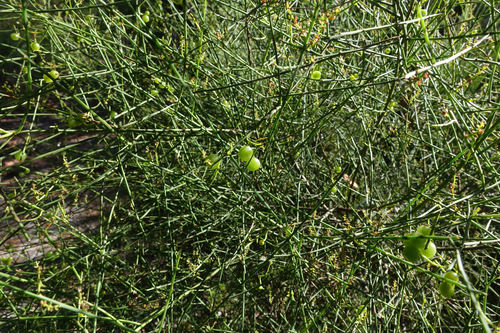
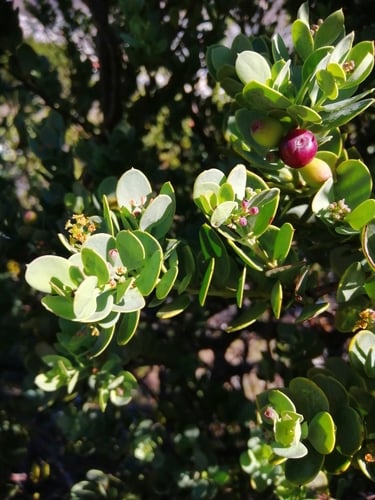
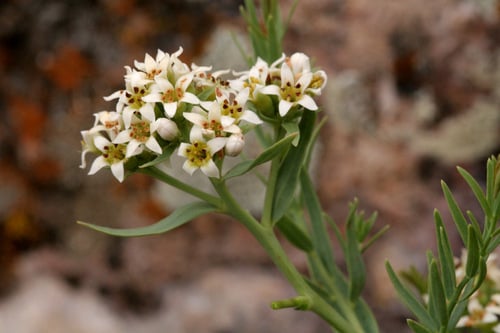
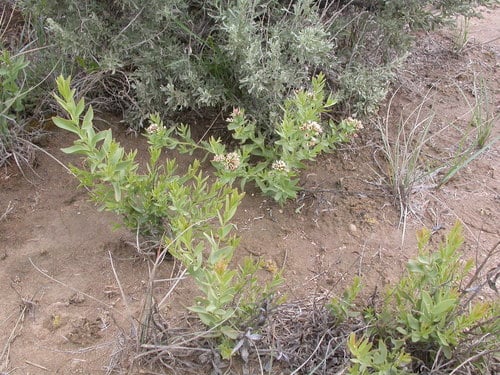
Acanthosyris spinescens
(Mart. & Eichler) Griseb.
Sombra-de-touro
iNaturalist· cc-by-nc
(c) Sebastián, some rights reserved (CC BY-NC), uploaded by Sebastián
iNaturalist· cc-by-nc
(c) Sofía González, some rights reserved (CC BY-NC), uploaded by Sofía González
iNaturalist· cc-by
(c) Alfonsina López Pérez, some rights reserved (CC BY), uploaded by Alfonsina López Pérez
Summary
Source: WikipediaAcanthosyris spinescens, locally named Sombra de touro or quebradillo is a spiny, native tree with a native range in Uruguay, Argentina, and Brazil. As a pioneer species, it grows well in new forest areas in semi-shaded areas, but grows slowly. The tree has a yellow edible fruit, and is slow growing. Traditional medicine includes uses of the leaves to treat fevers and ulcers.The tree was first documented in 1879, Abh. Königl. Ges. Wiss. Göttingen 24: 151 (1879).
Description
A shrub or small tree. It grows 5 m tall. There are prickles along the stem. The leaves are twice divided and there are 8-18 pairs of pinnae. There are up to 50 pairs of pinnules on each pinnae. The flowers are yellow. They are in large clusters at the ends of branches. The pods are flattened.
Edible Uses
Fruit - raw. The thin-skinned fruit has a very succulent pulp with a sweet, pleasant flavour. The fruits are about 3cm in diameter.
Traditional Uses
The fruit are eaten raw.
This uses section is brief — help expand it
Medicinal Uses
A decoction of the leaves is used as a treatment for high fevers. The leaves are used externally to dress ulcers.
Distribution
It is a tropical plant. It grows naturally in grasslands in Brazil.
Where It Grows
Argentina, Brazil*, South America, Uruguay,
Cultivation
Plants are grown from seed. For collecting seeds the ripe fruit are put into plastic bags to partly decompose then the seeds are washed out under running water. Seeds need to be planted fresh. Seedlings emerge in 60-80 days.
Propagation
Seed - best sown as soon as it is ripe in a semi-shaded position in a nursery seedbed. Germination rates are usually low, with the seeds sprouting within 60 - 80 days. Seedlings grow away slowly.
Other Uses
The yellowish wood is medium-textured, straight-grained, moderately heavy, hard, rather resistant to rot. Although of small dimensions, the wood is favoured for items of furniture. Of limited use because of its small dimensions, though its resistance to rot make it useful for fence posts and sleepers. The wood is a good fuel. A natural pioneer species within its native range, also producing an edible fruit, though the tree's slow growth limit its use in reforestation projects.
Production
Plants grow slowly.
Other Information
The fruit are not very popular.
Notes
There are 3 Acanthosyris species. They occur in temperate South America.
Synonyms
Also Known As
Quebracho, Quebrachillo, Quebrachoflojo, Sombra-de-touro
References (6)
- Bircher, A. G. & Bircher, W. H., 2000, Encyclopedia of Fruit Trees and Edible Flowering Plants in Egypt and the Subtropics. AUC Press. p 6
- Brack, P., et al, 2020, Frutas nativas do Rio Grande do Sul, Brasil: riqueza e potencial alimentício. Native fruits of Rio Grande do Sul, Brazil: richness and potential as food. Rodriguésia 71: e03102018
- Kinupp, V. F., 2007, Plantas alimenticias nao-convencionais da regiao metropolitana de Porto Alegre, RS, Brazil p 98
- Lorenzi, H., Bacher, L., Lacerda, M. & Sartori, S., 2006, Brazilian Fruits & Cultivated Exotics. Sao Paulo, Instituto Plantarum de Estuados da Flora Ltda. p 292
- Lorenzi, H., 2009, Brazilian Trees. A Guide to the Identification and Cultivation of Brazilian Native Trees. Instituto Plantarum de Estuados da Flora Ltda. Vol. 3 p 315
Show all 6 references Hide references
- Vignale, B., et al, 2016, Selección de frutales nativos en Uruguay. 19 Horticultura Argentina 35 (87): May.-Ago. 2016