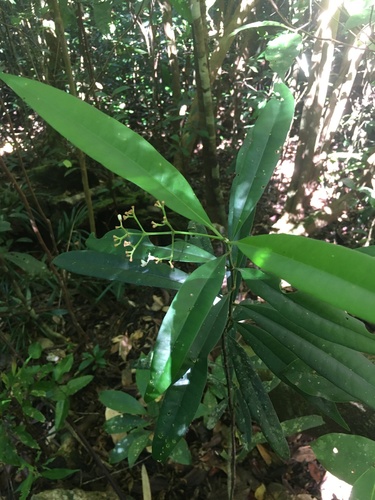
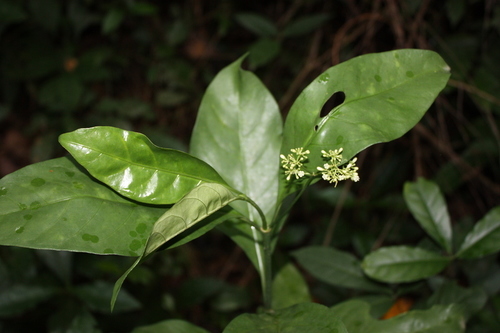
Aidia cochinchinensis
Lour.
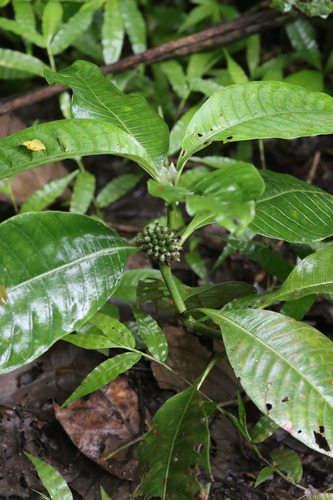
iNaturalist· cc-by-nd
(c) Lauren Gutierrez, some rights reserved (CC BY-ND)
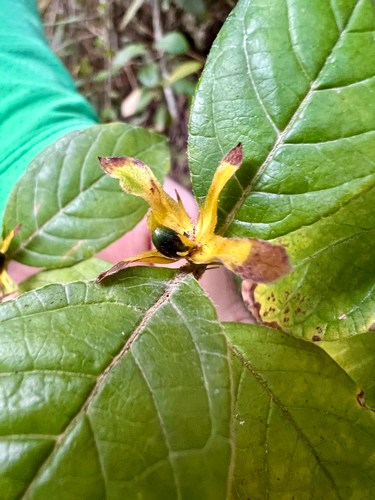
iNaturalist· cc-by-nc
(c) ctt24000, some rights reserved (CC BY-NC)
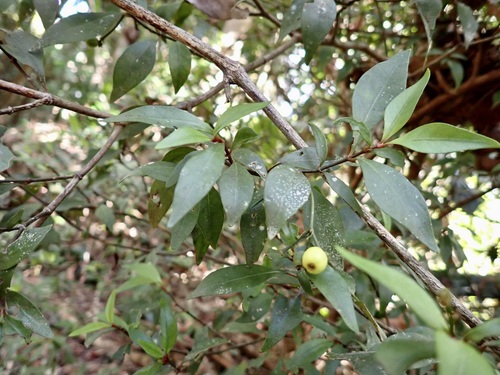
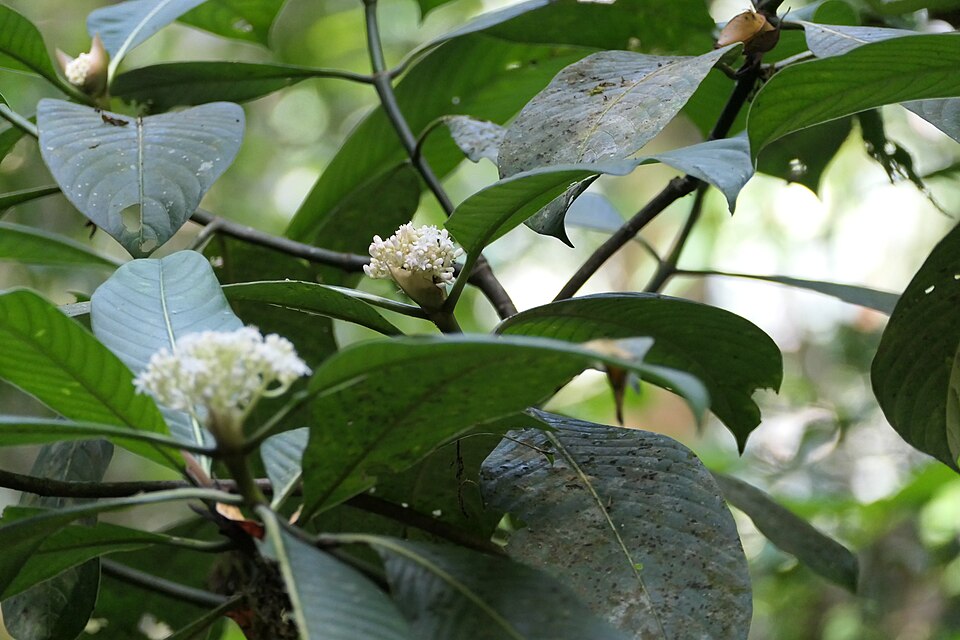
iNaturalist· cc-by-nc
(c) ctt24000, some rights reserved (CC BY-NC)
Summary
Source: WikipediaAidia cochinchinensis is the type species of the genus Aidia, in the family Rubiaceae. It is native to south-central China, including Hainan, and Vietnam. No subspecies are listed in the Catalogue of Life. Aidia cochinchinensis has commonly been reported in the Pacific Islands, although Tirvengadum noted that the specimens from the Pacific islands were distinct from Aidia cochinchinensis in Vietnam and in 1983 proposed Aidia racemosa as a unique species in the Pacific. Plants of the World Online (POWO) follows Tirvengadum in identifying the Aidia of the Pacific region, including Australia and Pacific Islands, as A. racemosa.
Description
A slender tree. It grows 5-15 m high. It has dense foliage. The branches form in layers. The leaves are oval and 7-18 cm long by 2.5-6.5 cm wide. The leaves are shiny green above ad paler beneath. The fruit are smooth berries. They are 0.5-1 cm across. They occur in clusters of up to 20. They are bright red when ripe. There are several small seeds inside the fruit.
Edible Uses
The ripe fruit are eaten raw and are popular, especially among children.
Traditional Uses
The ripe fruit are eaten raw.
This uses section is brief — help expand it
Distribution
It is a tropical plant. It grows in coastal monsoon vine forest. It grows in tropical regions in Australia. It needs a well-drained soil. In Yunnan.
Where It Grows
American Samoa, Asia, Australia, China, Indochina, Laos, Mariana Islands, Marshall Islands, Micronesia, Myanmar, Nauru, Pacific, Palau, SE Asia, Vietnam, Yap,
Cultivation
Plants can be grown from seed or from semi-hardwood cuttings. Germination can take 6-12 months.
Other Information
The fruit are popular. They are especially eaten by children.
Notes
There are 25 Aidia species.
Synonyms
Also Known As
Enga, Enguh, Kielomar, Ola mea, Sumac
References (8)
- Brock, J., 1993, Native Plants of Northern Australia, Reed. p 83
- Cherikoff V. & Isaacs, J., The Bush Food Handbook. How to gather, grow, process and cook Australian Wild Foods. Ti Tree Press, Australia p 198
- Elliot, W.R., & Jones, D.L., 1982, Encyclopedia of Australian Plants suitable for cultivation. Vol 2. Lothian. p 167
- Fl. cochinch. 1:143. 1790
- Lazarides, M. & Hince, B., 1993, Handbook of Economic Plants of Australia, CSIRO. p 11
Show all 8 references Hide references
- Levitt, D., 1981, Plants and people. Aboriginal uses of plants on Groote Eylandt. Australian Institute of Aboriginal Studies, Canberra. p 121 (As Randia cochinchinensis)
- Thaman, R. R., et al, 1994, The Flora of Nauru. Atoll Research Bulletin No. 392. Smithsonian Institute p 185
- Wightman, G. M. & Andrews, M.R., 1989, Plants of Northern Territory Monsoon Vine Forests (Vol 1). Conservation Commission of Northern Territory. p 16, 17