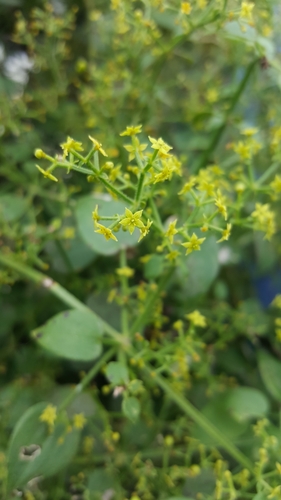
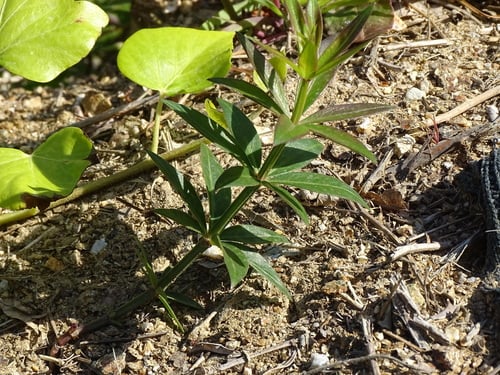
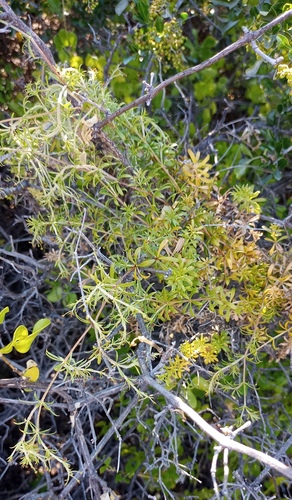
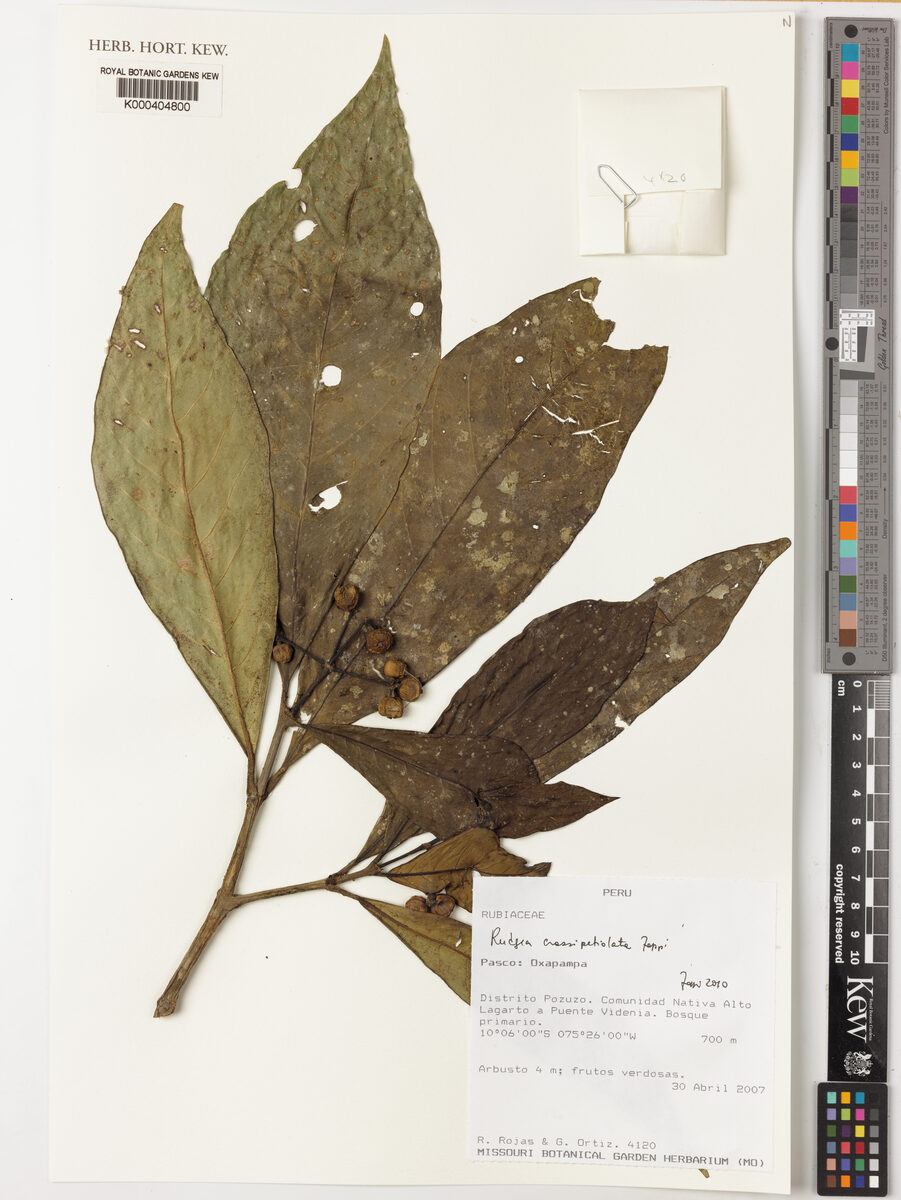
Guettarda speciosa
L.
Beach gardenia
iNaturalist· cc-by-nc
(c) juju98, some rights reserved (CC BY-NC), uploaded by juju98
iNaturalist· cc-by-nc
(c) Raphael Forns, some rights reserved (CC BY-NC)
iNaturalist· cc-by-nc
(c) Raphael Forns, some rights reserved (CC BY-NC)
Summary
Source: WikipediaGuettarda speciosa, with common names sea randia, or zebra wood, is a species of shrub in the family Rubiaceae found in coastal habitats in tropical areas around the Pacific Ocean, including the coastline of central and northern Queensland and Northern Territory in Australia, and Pacific Islands, including Micronesia, French Polynesia and Fiji, Malaysia and Indonesia, Maldives and the east coast of Africa. It reaches 6 m in height, has fragrant white flowers, and large green prominently-veined leaves. It grows in sand above the high tide mark.
Description
A shrub or small tree. It grows 6 m tall. It spreads 1-3 m wide. The bark is smooth and creamy grey. The leaves are large and green and have prominent veins. The leaves are 15-23 cm long by 10-18 cm wide. There are fine hairs under the leaves. The flowers are white and have a scent. They open at night for one night.
Edible Uses
The fruit is used for drinks.
Traditional Uses
The fruit are used for drinks.
This uses section is brief — help expand it
Medicinal Uses
The bark, leaves, flowers, and fruit are used medicinally. The flowers and young leaves are soaked in water to provide a deodorant or aphrodisiac.
Distribution
It is a tropical plant. It grows near the shore. It grows in sand above the high tide mark. It needs a sunny position and well drained soil. It grows on coral islands.
Where It Grows
Africa, American Samoa, Andamans, Asia, Australia, Brazil, British Indian Ocean Terr., BIOT, Caroline Islands, China, Christmas Island, Chuuk, Cook Islands, East Africa, Fiji, French Polynesia, FSM, India, Indochina, Indonesia, Japan, Kiribati, Madagascar, Malaysia, Maldives, Mariana Islands, Marquesas, Marshall Islands, Micronesia, Myanmar, Niue, Pacific, Palau, Philippines, Pohnpei, Rotuma, Samoa, SE Asia, Singapore, Solomon Islands, South America, Sri Lanka, Taiwan, Thailand, Tokelau, Tonga, Tuvalu, Vanuatu, Wallis and Futuna, Yap,
Cultivation
Plants can be grown by seeds. Seeds take one month to germinate.
Propagation
Seed - Cuttings. Layering.
Other Uses
The leaves have a range of uses: they are used in fires for drying pandanus leaves; as disposable plates; as a baby's wash cloth; and for toilet paper. A jet-black hair dye is obtained from the leaves. The flowers are used in garlands and for scenting coconut oil. An essential oil obtained from the flowers is used as a perfume. The wood is hard and durable. It is used locally in light construction, for pilings, fish-trap stakes, stakes to hold garden mulch in place, coconut huskers, fishing poles, floats, spears, thatching needles, fishing rods, fishnet and bird-net handles, stilts, eel traps, fruit harvesting sticks, bowls, slit-gongs, for canoe hulls, supports, steering paddles, bailers, poles for poling canoes, and floats. It is the most desired wood for tape-beating anvils in Tonga. It is used for firewood and for making fire by friction. The leaf litter is considered the most important component and source of black topsoil, which is mixed with compost for the cultivation of giant swamp taro, pandanus, and other crops in some Pacific Islands.
Production
Trees flower in October to May.
Synonyms
Also Known As
'Ano, Balaaw, Belau, Eet, Fano, Haha-hara, Hana, Hano, Ihd, Iuth, Mohor, Mosor, Mvester, Mwoosor, Mzoosor, Mwewu, Ot, Outh, Panao, Panopano, Pua, Puabano, Puapua, Puopua, Sea randa, Tambaribarisa, Te uri, Te uri rara, Uni, Ut, Utilomar, Wut, Wutu, Zebra wood
References (11)
- Live and Learn, Common Plants of the Maldives. 52pp p 15
- Cabalion, P. and Morat, P., 1983, Introduction le vegetation, la flore et aux noms vernaculaires de l'ile de Pentcoste (Vanuatu), In: Journal d'agriculture traditionnelle et de botanique appliquee JATBA Vol. 30, 3-4
- Franklin, J., Keppel, G., & Whistler, W., 2008, The vegetation and flora of Lakeba, Nayau and Aiwa Islands, Central Lau Group, Fiji. Micronesica 40(1/2): 169–225, 2008
- http://edsc.unimelb.edu.au Kiribati plants list
- Kermath, B. M., et al, 2014, Food Plants in the Americas: A survey of the domesticated, cultivated and wild plants used for Human food in North, Central and South America and the Caribbean. On line draft. p 401
Show all 11 references Hide references
- Ordas, J. A. D., et al, 2019, A checklist of Rubiaceae species from Eastern Samar, Visayas, Philippines. Check List 15 (2): 295–312
- Parham, B. E. V., 1972, Plants of Samoa. New Zealand Department of Scientific and Industrial Research. Information Series. No. 85 p 104
- Stone, B.,
- Sujanapal, P., & Sankaran, K. V., 2016, Common Plants of Maldives. FAO & Kerala FRI, p 141
- Thaman, R. R, 2016, The flora of Tuvalu. Atoll Research Bulletin No. 611. Smithsonian Institute p 109
- Topp, J. M. W., 1988, An Annotated Check List of the Flora of Diego Garcia, British Ocean Territory. Atoll Research Bulletin No. 313