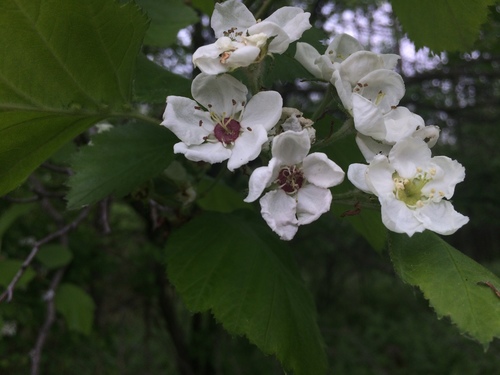
Potentilla fragarioides
L.
iNaturalist· cc-by
(c) Kim, Hyun-tae, some rights reserved (CC BY), uploaded by Kim, Hyun-tae
iNaturalist· cc-by-nc
(c) Анастасия Згонник, some rights reserved (CC BY-NC), uploaded by Анастасия Згонник
iNaturalist· cc-by-nc
(c) anatoliipomortsev, some rights reserved (CC BY-NC), uploaded by anatoliipomortsev
Description
Potentilla fragarioides is a PERENNIAL growing to 0.3 m (1ft). It is in flower from May to June, and the seeds ripen from July to September. The species is hermaphrodite (has both male and female organs) and is pollinated by Insects. The plant is self-fertile. Suitable for: light (sandy), medium (loamy) and heavy (clay) soils and prefers well-drained soil. Suitable pH: mildly acid, neutral and basic (mildly alkaline) soils. It can grow in semi-shade (light woodland) or no shade. It prefers moist soil.
Edible Uses
Leaf stem - boiled.
Medicinal Uses
Astringent. The leaves are astringent. The compound D-catechin has been isolated from the plant and is used in cases of gynaecological bleeding.
Distribution
E. Asia - China, Japan, Korea, Mongolia and Siberia.
Where It Grows
TEMPERATE ASIA: Russian Federation (Buryatia, Gorno-Altay, Tyva, Respublika, Yakutia-Sakha (south), Altay, Krasnoyarsk, Chita, Irkutsk, Kemerovskaja oblast, Novosibirsk, Tomsk), Mongolia, Russian Federation (Amur, Kurile Islands, Primorye), China (Anhui Sheng, Fujian Sheng, Gansu Sheng, Guangxi Zhuangzu Zizhiqu, Hebei Sheng, Heilongjiang Sheng, Henan Sheng, Hunan Sheng, Jiangsu Sheng, Jilin Sheng, Liaoning Sheng, Nei Mongol Zizhiqu, Shaanxi Sheng, Shandong Sheng, Shanxi Sheng, Sichuan Sheng, Yunnan Sheng, Zhejiang Sheng), Korea, Japan (Hokkaidô, Honshu, Kyushu, Shikoku)
Cultivation
We have very little information on this species and do not know if it will be hardy in Britain, though judging by its native range it should succeed outdoors in most parts of the country. The following notes are based on the general needs of the genus. Easily grown in a well-drained loam, preferring a position in full sun but tolerating shade. Prefers an alkaline soil but tolerates a slightly acid soil. Members of this genus are rarely if ever troubled by browsing deer.
Propagation
Seed - sow early spring or autumn in a cold frame. When they are large enough to handle, prick the seedlings out into individual pots and grow them on in the greenhouse for their first winter. Plant them out into their permanent positions in late spring or early summer, after the last expected frosts. Division in spring. Larger divisions can be planted out direct into their permanent positions. We have found that it is better to pot up the smaller divisions and grow them on in light shade in a cold frame until they are well established before planting them out in late spring or early summer.