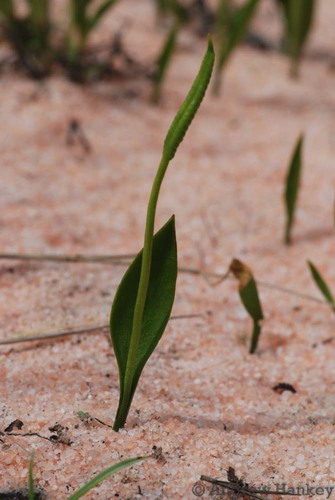
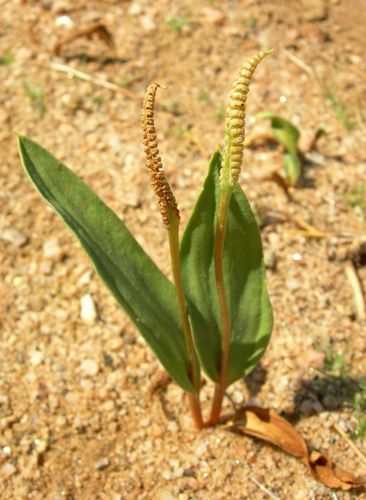
Ophioglossum vulgatum
L.
Adder's Tongue, Southern adderstongue
iNaturalist· cc-by-nc
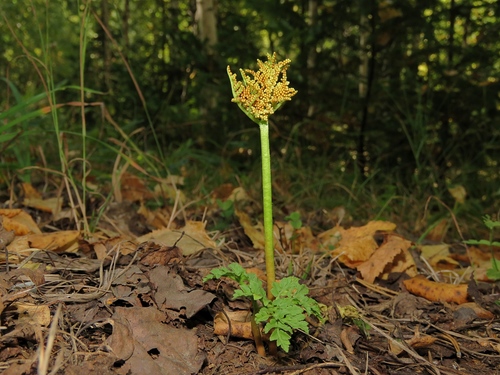
(c) Matthias Svojtka, some rights reserved (CC BY-NC), uploaded by Matthias Svojtka
iNaturalist· cc-by-nc
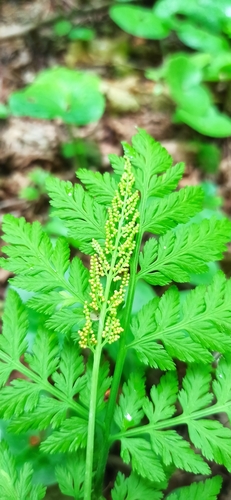
(c) Aleksandr Popov / Александр Попов, some rights reserved (CC BY-NC), uploaded by Aleksandr Popov / Александр Попов
iNaturalist· cc-by
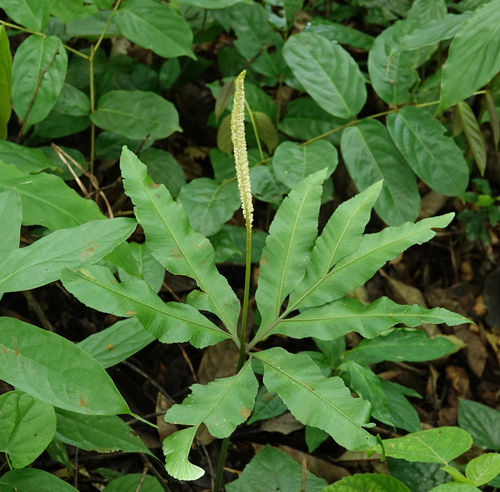
(c) Roman, some rights reserved (CC BY), uploaded by Roman
Description
Ophioglossum vulgatum is a FERN growing to 0.3 m (1ft). See above for USDA hardiness. It is hardy to UK zone 5. The seeds ripen from May to August. Suitable for: light (sandy), medium (loamy) and heavy (clay) soils and prefers well-drained soil. Suitable pH: mildly acid, neutral and basic (mildly alkaline) soils. It cannot grow in the shade. It prefers moist soil.
Edible Uses
Used as a vegetable. No more details are given.
Medicinal Uses
Emetic Skin Vulnerary. The root and the leaves are antiseptic, detergent, emetic, haemostatic, styptic and vulnerary. An ointment made from the plant is considered to be a good remedy for wounds and is also used in the treatment of skin ulcers. The expressed juice of the leaves is drunk as a treatment for internal bleeding and bruising.
Known Hazards
Although we have found no reports of toxicity for this species, a number of ferns contain carcinogens so some caution is advisable. Many ferns also contain thiaminase, an enzyme that robs the body of its vitamin B complex. In small quantities this enzyme will do no harm to people eating an adequate diet that is rich in vitamin B, though large quantities can cause severe health problems. The enzyme is destroyed by heat or thorough drying, so cooking the plant will remove the thiaminase.
Distribution
Europe, including Britain, from Iceland south and east to N. Africa, north and west Asia.
Where It Grows
TEMPERATE ASIA: Cyprus, Syria, Turkey, Russian Federation-Ciscaucasia (Ciscaucasia), Azerbaijan, Georgia, Russian Federation-Western Siberia (Western Siberia), Russian Federation (Kamcatskij kraj), China (Guizhou Sheng, Hubei Sheng, Shaanxi Sheng, Sichuan Sheng, Xizang Zizhiqu, Yunnan Sheng), Japan (Hokkaidô, Honshu, Kyushu, Shikoku), Taiwan NORTHERN AMERICA: United States (Indiana, Michigan, New Jersey, Ohio, Pennsylvania, West Virginia, Missouri, Illinois, Oklahoma, Alabama, Arkansas, Florida (northwest), Georgia, Kentucky, Louisiana, Mississippi, North Carolina, South Carolina, Tennessee, Virginia, Texas), Mexico (Chihuahua, Sonora, Chiapas, Ciudad de México, Hidalgo, Jalisco, Michoacán de Ocampo, Oaxaca, Puebla, Veracruz de Ignacio de la Llave) EUROPE: Denmark, Finland, United Kingdom, Ireland, Norway, Sweden, Austria, Belgium, Switzerland, Germany, Hungary, Netherlands, Poland, Slovakia, Russian Federation (European part), Belarus, Estonia, Lithuania, Latvia, Moldova, Russian Federation (Saratov, Volgogradskaja oblast), Ukraine (incl. Krym), Albania, Bulgaria, Bosnia and Herzegovina, Greece, Croatia, Italy (incl. Sardinia, Sicily), North Macedonia, Montenegro, Romania, Serbia, Slovenia, Spain, France (incl. Corsica), Portugal AFRICA: Algeria (north), Morocco, Kenya, Tanzania, Uganda, Cameroon, Democratic Republic of the Congo, Congo, Gabon, Côte D‘Ivoire, Ghana, Liberia, Nigeria, Angola, Mozambique, Zambia, Zimbabwe, South Africa (Cape Province, Free State, Kwa. Zulu-Natal, Transvaal)
Cultivation
Prefers a moist free-draining soil. Plants are hardy to about -15°c. The prothalli (a small plant formed when the spore germinates) of this species form a symbiotic relationship with a mycorrhizal fungus in much the same way as orchid seedlings. Members of this genus are rarely if ever troubled by browsing deer. Plants can be hard to establish, they can be naturalized in a meadow or cultivated in the border where they should be left undisturbed. Unlike most species of ferns, the fronds of this species grow up straight and not curled inward, crozier fashion.
Propagation
Spores - best sown as soon as they are ripe on the surface of a humus-rich sterilized soil. Keep the compost moist, preferably by putting a plastic bag over the pot. Pot on small clumps of plantlets as soon as they are large enough to handle and keep them in humid conditions until they are well established. Do not plant outside until the ferns are at least 2 years old. Division of underground rhizomes with care because the roots are brittle