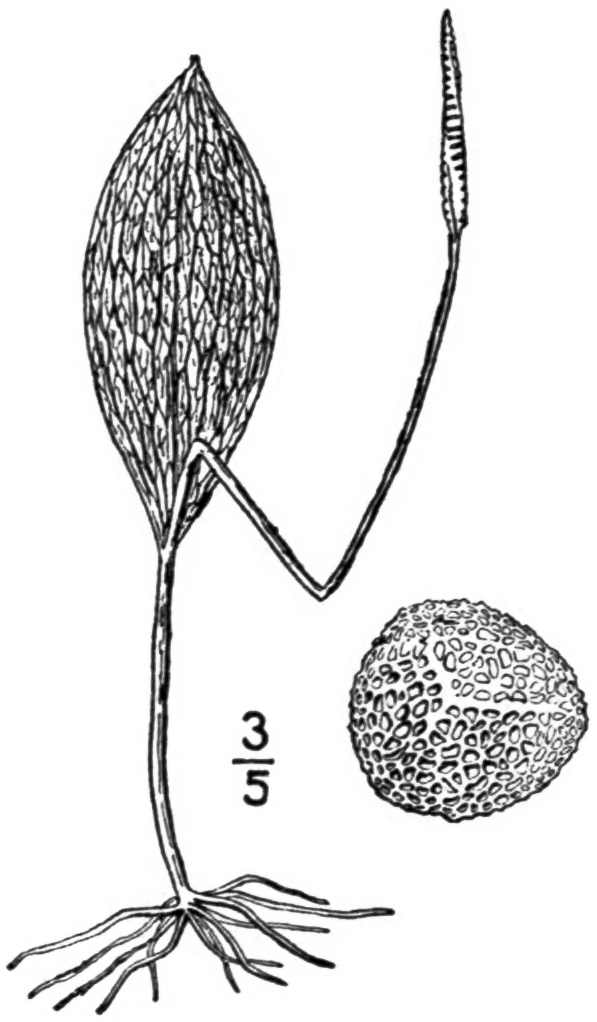
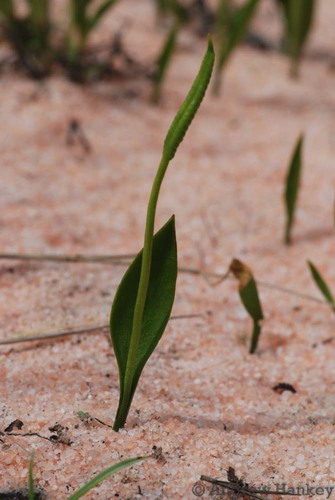
Ophioglossum reticulatum
L.
Adder's tongue fern
iNaturalist· cc-by-nc
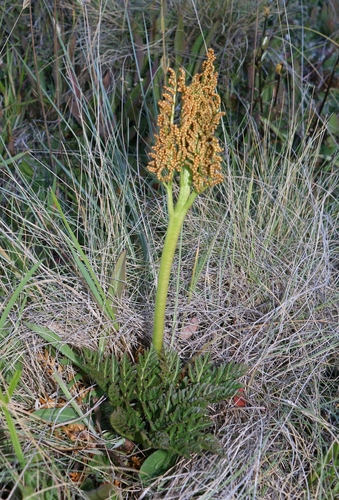
(c) Mark Hyde, Bart Wursten and Petra Ballings, some rights reserved (CC BY-NC)
iNaturalist· cc-by-nc-sa
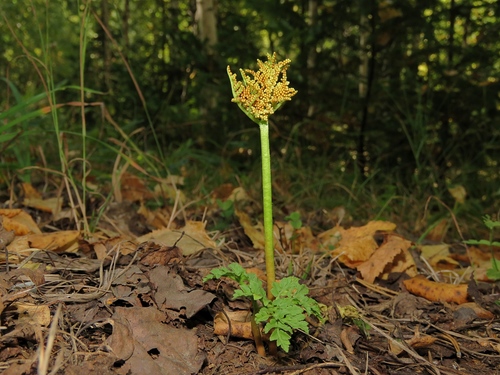
(c) Mary Keim, some rights reserved (CC BY-NC-SA)
iNaturalist· cc-by-nc-nd
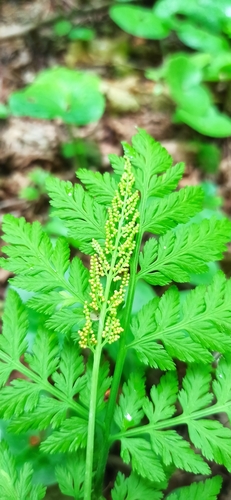
(c) David Greenberger, some rights reserved (CC BY-NC-ND), uploaded by David Greenberger
Description
Ophioglossum reticulatum is a deciduous Fern growing to 0.2 m (0ft 8in) by 0.1 m (0ft 4in) at a slow rate. See above for USDA hardiness. It is hardy to UK zone 10. The plant is self-fertile. Suitable for: light (sandy) and medium (loamy) soils. Suitable pH: mildly acid and neutral soils. It can grow in semi-shade (light woodland) or no shade. It prefers moist or wet soil.
Edible Uses
Young fronds are commonly eaten as a salad or vegetable. A sweet flavour. The leaves should be blanched only; if boiled too much they turn into slime.
Medicinal Uses
Antiinflammatory SkinA warm decoction of the rhizome is used topically on boils. The leaf juice is drunk against spasms of the heart. The leaves, boiled in oil, are applied to wounds. The plant is used as an anti-inflammatory medicine.
Known Hazards
Although we have found no reports of toxicity for this species, a number of ferns contain carcinogens so some caution is advisable. Many ferns also contain thiaminase, an enzyme that robs the body of its vitamin B complex. In small quantities this enzyme will do no harm to people eating an adequate diet that is rich in vitamin B, though large quantities can cause severe health problems. The enzyme is destroyed by heat or thorough drying, so cooking the plant will remove the thiaminase.
Distribution
Pantropical.
Where It Grows
TROPICAL ASIA: Assam, Bangladesh, Borneo, China North-Central, China South-Central, China Southeast, East Himalaya, India, Japan, Jawa, Korea, Malaya, Myanmar, Nepal, Nicobar Islands, Pakistan, Philippines, Sri Lanka, Sulawesi, Sumatera, Taiwan, Thailand, Tibet, Vietnam, NORTHERN AMERICA: Costa Rica, Cuba, Dominican Republic, El Salvador, Guatemala, Haiti, Honduras, Mexico Central, Mexico Gulf, Mexico Northeast, Mexico Northwest, Mexico Southeast, Mexico Southwest, Nicaragua, Panama, Puerto Rico, Trinidad-Tobago, United States (Puerto Rico is a US territory), SOUTHERN AMERICA: Argentina Northeast, Argentina Northwest, Bolivia, Brazil Northeast, Brazil South, Brazil Southeast, Brazil West-Central, Colombia, Ecuador, Guyana, Paraguay, Peru, Suriname, Venezuela, AFRICA: Angola, Burundi, Cameroon, Cape Provinces, Cape Verde, Central African Republic, Chad, Comoros, Equatorial Guinea, Ethiopia, Gabon, Ghana, Guinea, Ivory Coast, Kenya, Kwa. Zulu-Natal, Liberia, Madagascar, Malawi, Mali, Mauritius, Mozambique, Namibia, Nigeria, Northern Provinces, Rwanda, Réunion, Senegal, Sierra Leone, Socotra, Solomon Islands, Sudan, Swaziland, Tanzania, Uganda, Yemen, Zambia, Zaïre, Zimbabwe.
Cultivation
Widespread in tropical and subtropical areas of the Neotropics and Palaeotropics. Typically found thriving in shallow soil on rock shelves fully exposed to sunlight. However, it can also inhabit various woodland environments, whether dense forests or open woodlands. The plant can become a weed of agriculture but does little harm because of its small size. When grown from spores, plants can be harvested for their leaves after 1 - 2 years. When grown from rhizomes collected from the wild, harvesting may start after about six months. The fronds are irresistible to insects and molluscs. The Adder's tongue fern is naturally distributed in Africa, specifically in grasslands with open, damp, sandy soil, at elevations of up to 1,500 meters. It can also be found in moist sandy soils, seasonally wet soils, on termite hills, in montane grasslands among rocks and forest margins, and at various elevations ranging from sea level up to 2,500 meters. Ferns do not have flowers and are not pollinated in the traditional sense. Instead, they reproduce through spores that are released from spore-producing structures. The ferns can be harvested throughout the growing season, generally in spring and summer, when fully developed. Ferns do not flower; they reproduce via spores, which are released in the summer. Adder’s Tongue Fern has a slow growth rate, taking time to establish and spread in suitable conditions.
Propagation
Spores - very difficult to germinate. Division with care since the rhizome is brittle.
Other Uses
It is often grown in shaded areas and can provide a habitat for small wildlife. Pots. Plants are not generally cultivated as food crops but are sometimes grown in pots for medicinal use. The presence of alkaloids, arbutin, amygdalin, saponin, formic acid and oxalic acid has been shown.
Also Known As
Apatia, Bilai gangse, Chukut sadaun, Chukut siraru, Ektir, Isa nki ntana, Jibha, Jibre sag, Jukut siraru, Lai gangse, Yimuyidun, Adder’s tongue fern, herbe paille en queue, l'un dans l'autre, oreille de souris.