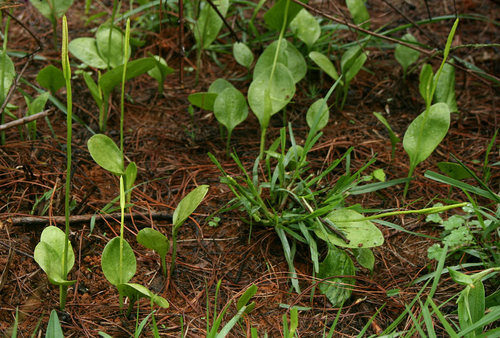
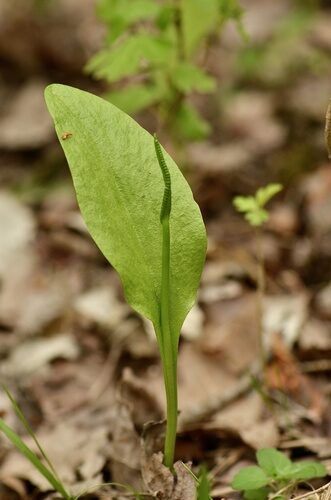
Helminthostachys zeylanica
(L.) Hook.
Kamraj
iNaturalist· cc-by
(c) Rejoice Gassah, some rights reserved (CC BY), uploaded by Rejoice Gassah
iNaturalist· cc-by
(c) Greg III Espera, some rights reserved (CC BY), uploaded by Greg III Espera
iNaturalist· cc-by
(c) Rejoice Gassah, some rights reserved (CC BY), uploaded by Rejoice Gassah
Summary
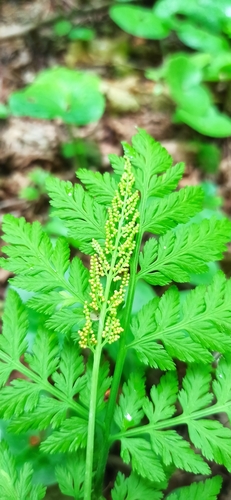
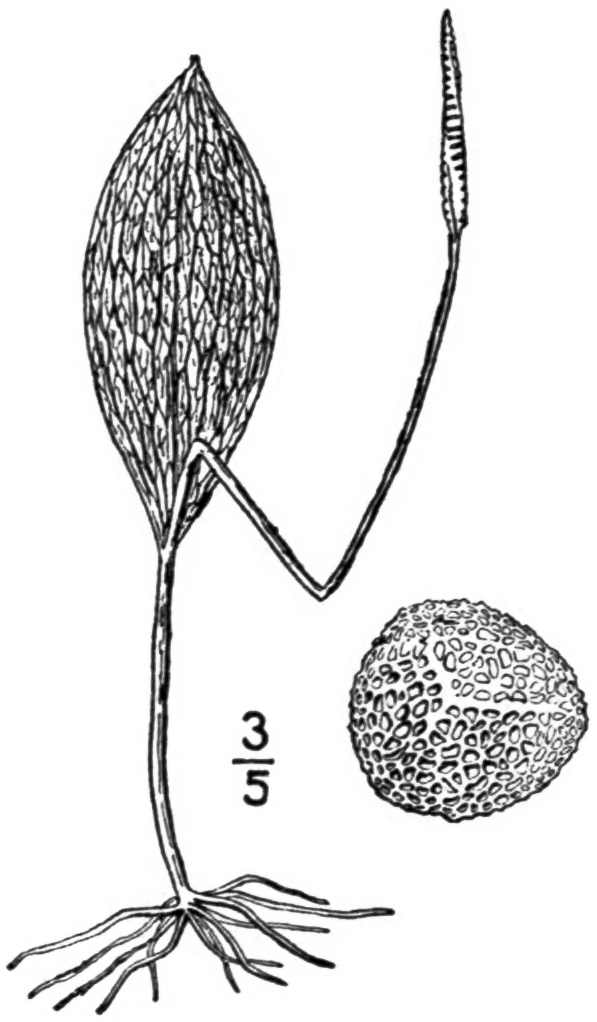
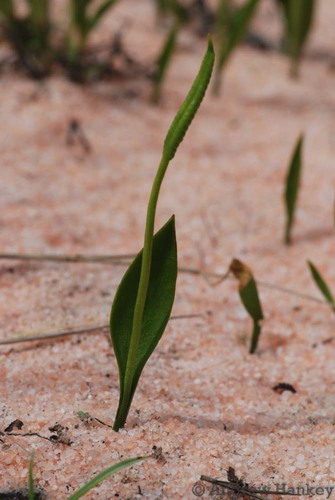
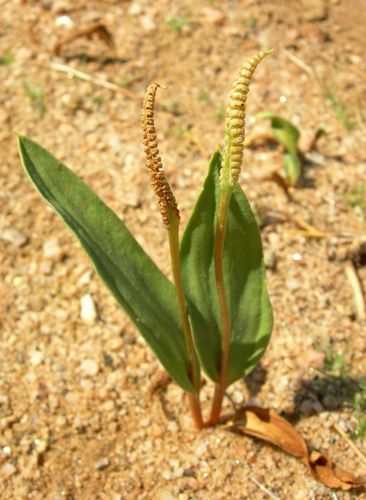
Source: WikipediaHelminthostachys zeylanica is a terrestrial, herbaceous fern of southeastern Asia and Australia, commonly known as kamraj and tunjuk-langit. The species is like the other members of its family, it has clusters of sporangia on stems of fertile, spike-like fronds. The rhizome of this annual plant is short, creeping, underground, and stout. They can bear either a solitary frond or several fronds. Leaves are lanceolate with the margins entire or irregularly serrate. The frond spike arises from the base of the leaves with its own stipe. Below the spike is a sterile leafy segment (the trophophore). Both it and the sporophore arise from a common petiole.
Description
A fern. It is erect and grows in soil. It grows 15-90 cm tall. It has a deep creeping rhizome of underground stem. There are 1-2 leaves. The leaf stalk is thick. It is 10-60 cm long. The sterile part of the leaf is divided 3 times and these each have 2-5 segments. The segments are sword shaped and taper to the tip and have fine teeth along the edge. They are 5-25 cm long by 2-5 cm wide. The fertile spike is at the top. It is on a stalk 3-30 cm long and the spike is 5-21 cm long.
Edible Uses
The young leaves are eaten raw or steamed, and the young leaf stalks are cooked and eaten like asparagus.
Traditional Uses
The young leaves are eaten raw or steamed. The young leaf stalks are cooked and eaten like asparagus.
This uses section is brief — help expand it
Medicinal Uses
The roots of this plant are a popular medicine in China, where they are known as "Di wu gong". The roots are harvested during the wet season in July–August. Only wild plants are harvested. In Malaysia, the leaves are dried and smoked to treat bleeding nose. The plant is eaten as a vegetable and used medicinally for impotence in India. It is known in the Philippines as túkod-langit.
Known Hazards
Although we have found no reports of toxicity for this species, a number of ferns contain carcinogens so some caution is advisable. Many ferns also contain thiaminase, an enzyme that robs the body of its vitamin B complex. In small quantities this enzyme will do no harm to people eating an adequate diet that is rich in vitamin B, though large quantities can cause severe health problems. The enzyme is destroyed by heat or thorough drying, so cooking the plant will remove the thiaminase.
Distribution
It is a tropical plant. In Indonesia it grows from sea level to 725 m above sea level. It grows in moist poorly drained soil. It is often along rivers and on the edge of forests.
Where It Grows
Asia, Cambodia, India, Indochina, Indonesia, Laos, Malaysia, Nepal, Northeastern India, Papua New Guinea, PNG, Philippines, SE Asia, Vietnam,
Propagation
Spores - best surface sown as soon as they are ripe and do not allow the compost to dry out. Placing the pot in a plastic bag helps to maintain a humid atmosphere which promotes germination and growth. Prick out small clumps into pots when they are large enough to handle and keep moist until established. Grow on until large enough to plant out.
Synonyms
Also Known As
Asi bisi, Feciruk, Han votar, Majur goda, Manon, Olipien, Pakis urang, Paku manis, Paku payung, Paku tunjuk langit, Pantjar bumi, Musitop, Sam dat, Tapak chalak, Tungkod-langit
References (16)
- Alegado, A. M. & De Guzman, R. B., 2014, Indigenous food crops of the Aetas tribe in the Philippines and their traditional methods of food preparation. in Promotion of Underutilized Indigenous Food Resources for Food Security and Nutrition in Asia and Pacific. FAO. Bangkok p 160
- Avinash, B. K., Kumar, R., et al, 2013, Ethnoboptany of Tharus of Dudhwa National Park, India. Mintage journal of Pharmaceutical & Medical Science 6-11
- Chai, P. P. K. (Ed), et al, 2000, A checklist of Flora, Fauna, Food and Medicinal Plants. Lanjak Entimau Wildlife Sanctuary, Sarawak. Forestry Malaysia & ITTO. p 161
- Croft, J., 1982, Ferns and Man in New Guinea
- Hoare, A., 2003, Food use of the Lundayeh SW Sabah. Borneo Research Council.
Show all 16 references Hide references
- Leach, G., 1972,
- Leach, G. J., 1988, Bush Food Plants of the Blackwater and Karawari Rivers Area, East Sepik Province, Papua New Guinea. Science in New Guinea 14(2). p 98
- Plants of Papua New Guinea LAE herbarium record
- Ochse, J. J. et al, 1931, Vegetables of the Dutch East Indies. Asher reprint. p 544
- Ojha, R. & Devkota, H. P., 2021, Edible and Medicinal Pteridophytes of Nepal: A Review. Ethnobotany Research & Applications 22:16
- Sakar, A. & Das, A. P., 2018, The traditional knowledge on edible wild leafy vegetables of Rabha Tribe in Duars of North Bengal: a potential reinforcement to food security. Pleione 12(2): 275 - 281. 2018.
- Sang, D. T., & Mizoue, K. O. N., 2012, Use of Edible Forest Plants among Indigenous Ethnic Minorities in Cat Tien Biosphere Reserve, Vietnam. Asian Journal of Biodiversity Vol. 3 (1), p 23-49
- Taram, M., et al, 2018, Wild Food Plant Resources of Komkar Adi Tribe of Upper Siang District in Arunachal Pradesh, India. Bulletin of Arunachal Forest Research, Vol. 33(2), 27-35
- Teron, R. & Borthakur, S. K., 2016, Edible Medicines: An Exploration of Medicinal Plants in Dietary Practices of Karbi Tribal Population of Assam, Northeast India. In Mondal, N. & Sen, J.(Ed.) Nutrition and Health among tribal populations of India. p 153
- World Checklist of Useful Plant Species 2020. Royal Botanic Gardens, Kew
- Yusuf, U. K., 2010, Ferns of Malaysian Rain Forest. A Journey Through the Fern World. Universiti Putra Malaysia Press p 32