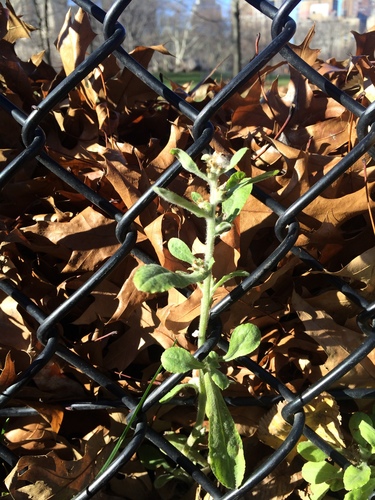
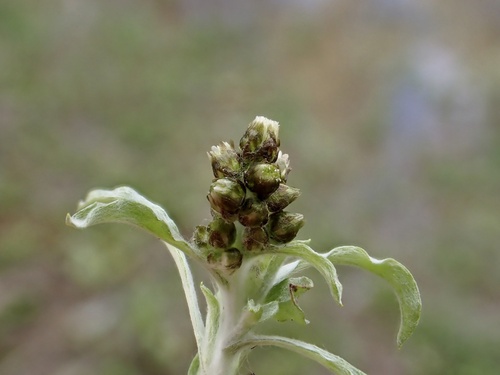
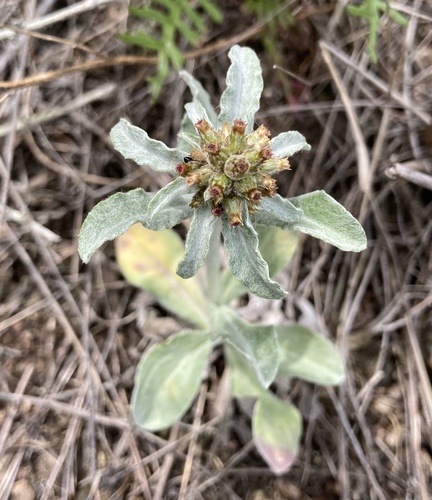
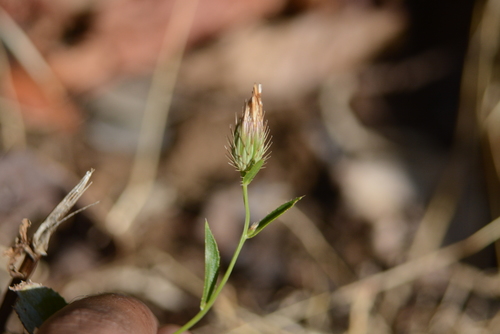
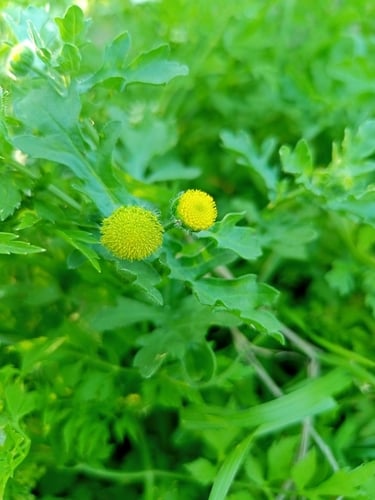
Matricaria matricarioides - (Less.)Porter.
(Less.)Porter.
Pineapple Weed
gbif· cc0
Carnegie Museum of Natural History
Description
Matricaria matricarioides is a ANNUAL growing to 0.3 m (1ft). See above for USDA hardiness. It is hardy to UK zone 6 and is not frost tender. It is in flower from June to July, and the seeds ripen from July to August. The species is hermaphrodite (has both male and female organs) and is pollinated by Bees, flies. Suitable for: light (sandy), medium (loamy) and heavy (clay) soils and prefers well-drained soil. Suitable pH: mildly acid, neutral and basic (mildly alkaline) soils. It cannot grow in the shade. It prefers dry or moist soil.
Edible Uses
Tea. Flower heads - raw or cooked. A tasty nibble. The dried flowers are used to make herb teas. They are pineapple scented when steeped in hot water.
Medicinal Uses
Antispasmodic Carminative Galactogogue Sedative Skin Vermifuge. The flowering plant is antispasmodic, carminative, galactogogue, sedative, skin and vermifuge. This plant is rarely used medicinally, though it is sometimes employed as a domestic remedy in the treatment of intestinal worms and also as a sedative. The plant is harvested when in flower in the summer and is dried for later use. Some caution is advised since some individuals are allergic to this plant.
Known Hazards
Some people are allergic to this plant.
Distribution
N.E. Asia. An introduced and increasing weed in Britain.
Where It Grows
TEMPERATE ASIA: Russian Federation-Far East (Far East) NORTHERN AMERICA: Canada (Northwest Territories, Yukon, Québec, Nova Scotia, Ontario, Prince Edward Island, New Brunswick, Newfoundland and Labrador, Alberta, Manitoba, British Columbia), United States (Alaska, Connecticut, Indiana, Maine, Massachusetts, Michigan, New Hampshire, New Jersey, New York, Ohio, Pennsylvania, Rhode Island, Vermont, West Virginia, Iowa, Kansas, Minnesota, Missouri, North Dakota, South Dakota, Illinois, Oklahoma, Wisconsin, Colorado, Idaho, Montana, Oregon, Washington, Wyoming, Arkansas, Delaware, Kentucky, Louisiana, Maryland, Mississippi, North Carolina, South Carolina, Tennessee, Virginia, New Mexico, Texas, Arizona, California, Nevada, Utah)
Cultivation
Succeeds in any well-drained soil in a sunny position. The bruised or sun-warmed leaves emit the appealing odour of ripe apples.
Propagation
Seed - sow spring or late summer in situ. Germination should take place within 3 weeks.
Other Uses
Repellent. The plant repels insects. The dried flowers are used as an insect repellent.