Marsilea drummondii
A.Braun.
Common Nardoo, Nardoo
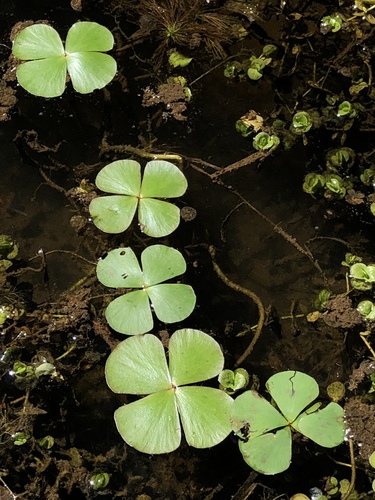
iNaturalist· cc-by-nc
(c) lilyperry, some rights reserved (CC BY-NC)
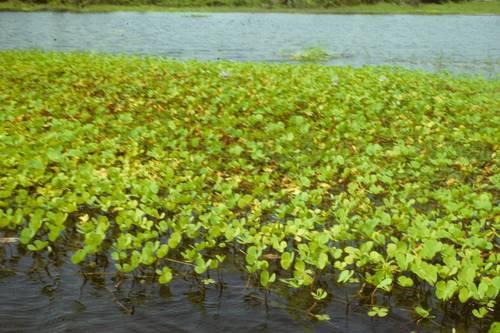
iNaturalist· cc-by-nc
(c) khamo22, some rights reserved (CC BY-NC)
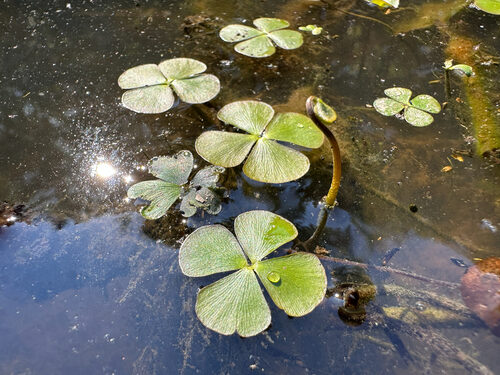
iNaturalist· cc-by-nc
(c) Darren Fielder, some rights reserved (CC BY-NC), uploaded by Darren Fielder
Description
Marsilea drummondii is a FERN growing to 0.3 m (1ft). See above for USDA hardiness. It is hardy to UK zone 9 and is frost tender. The species is hermaphrodite (has both male and female organs). Suitable for: light (sandy), medium (loamy) and heavy (clay) soils. Suitable pH: mildly acid, neutral and basic (mildly alkaline) soils. It can grow in semi-shade (light woodland) or no shade. It prefers wet soil and can grow in water.
Edible Uses
Spores - cooked. A source of starch, the spores can be ground into a powder and used like flour. They are astringent and highly indigestible. The spores are contained in a sporocarp.
Known Hazards
Although we have found no reports of toxicity for this species, a number of ferns contain carcinogens so some caution is advisable. The sporocarps of this species also contain thiaminase, an enzyme that robs the body of vitamin B1. In small quantities this enzyme will do no harm to people eating an adequate diet that is rich in vitamin B, though large quantities can cause severe health problems. Fairly resistant to heat, the quantity of enzyme can be greatly reduced by thoroughly drying or cooking the plant.
Distribution
Australia.
Where It Grows
AUSTRALASIA: Australia (New South Wales, Queensland, South Australia (southeast), Victoria, Western Australia (s. & w.), Northern Territory)
Cultivation
Plants are hardy to about -7°c in Australian gardens, though this cannot be translated directly to British gardens due to our cooler summers and longer, colder and wetter winters.
Propagation
Spores. The plant produces sporocarps, these need to be lightly abraded and then immersed in water. The sporocarps will then swell and burst to release the spores. The spores germinate immediately, the highly developed prothallus remains inside the large seed-like spores. The gametophyte generation is completed in 24 hours and the first roots and shoots appear in 2 - 3 days. Mature plants bearing sporocarps can develop in as little as 3 months. Spore germination in the family occurs after rupture of the sporocarp wall allows the sporocarp contents to be hydrated. A gelatinous structure emerges from the sporocarp, breaking it into valves and carrying the sori into the water. Spore germination (gametophyte growth) and fertilization occur immediately. Division.