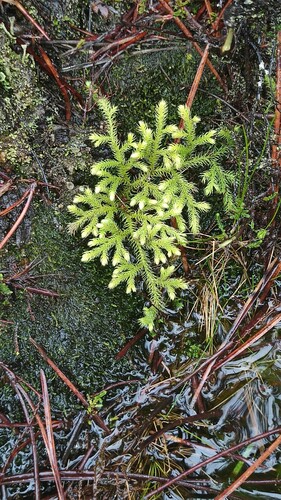
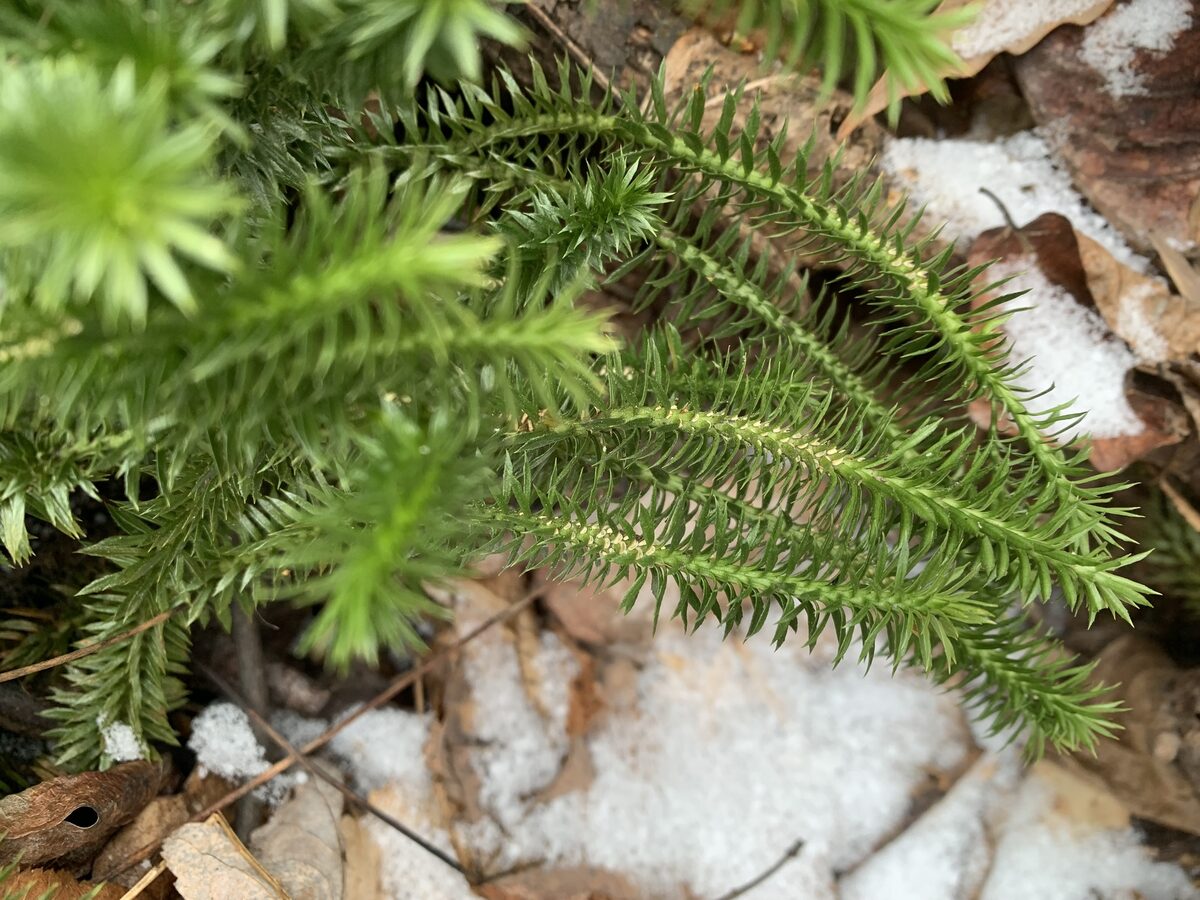
Lycopodium selago
L.
Fir Clubmoss
gbif· cc-by
The New York Botanical Garden
Description
Lycopodium selago is a FERN growing to 0.3 m (1ft). See above for USDA hardiness. It is hardy to UK zone 2. Suitable for: light (sandy) and medium (loamy) soils, prefers well-drained soil and can grow in nutritionally poor soil. Suitable pH: mildly acid, neutral and basic (mildly alkaline) soils. It can grow in full shade (deep woodland) or semi-shade (light woodland). It prefers moist soil.
Edible Uses
The plant is edible. Caution is advised, see the notes above on toxicity.
Medicinal Uses
Analgesic Emetic Homeopathy Hypnotic Purgative. The plant is hypnotic. Chewing three stems is said to induce mild intoxication whilst eight can cause unconsciousness. The plant has been used as a fast-acting emetic and purgative. A poultice of the whole plant has been applied to the head in the treatment of headaches. A homeopathic remedy is made from the whole plant, collected during the summer. It is used as a laxative and to kill worms.
Known Hazards
The plant is an active narcotic poison.
Distribution
Arctic and N. temperate zone, including Britain, south to Spain, the Himalayas and Oregon.
Where It Grows
TEMPERATE ASIA: Japan NORTHERN AMERICA: Canada (Northwest Territories, Yukon, Québec, Nova Scotia, Ontario, Prince Edward Island, New Brunswick, Newfoundland and Labrador, Saskatchewan, Alberta, Manitoba, British Columbia), United States (Connecticut, Maine, Massachusetts, Michigan, New Hampshire, New York, Ohio, Vermont, Minnesota, Wisconsin) EUROPE: Denmark, Finland, United Kingdom, Iceland, Norway, Austria, Belgium, Switzerland, Germany, Poland, Lithuania, Russian Federation (Karelia, Neneckij avtonomnyj okrug), Greece, Spain
Cultivation
Thrives in a rough spongy peat in a shady position. Requires a humid atmosphere. Terrestrial members of this genus are hard to establish. The roots are delicate and liable to rot, most water being absorbed through the foliage. Members of this genus are rarely if ever troubled by browsing deer. Although looking more like a moss, this genus is closely related to the ferns.
Propagation
Spores - best sown as soon as they are ripe on the surface of a humus-rich sterilized soil. Keep the compost moist, preferably by putting a plastic bag over the pot. Pot on small clumps of plantlets as soon as they are large enough to handle and keep humid until they are well established. Do not plant outside until the ferns are at least 2 years old and then only in a very well sheltered position. The spores are generally produced in abundance but are difficult to grow successfully. The spores of this species are not functional, the plant reproduces only by gemmae. Layering of growing tips.
Other Uses
Mordant. The plant can be used as a mordant in dyeing.