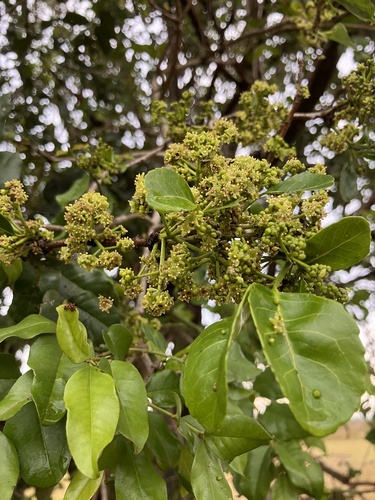
Euonymus alatus
(Thunb.) Siebold
Winged spindle tree, Cork bush, Winged Euonymus, Burning bush
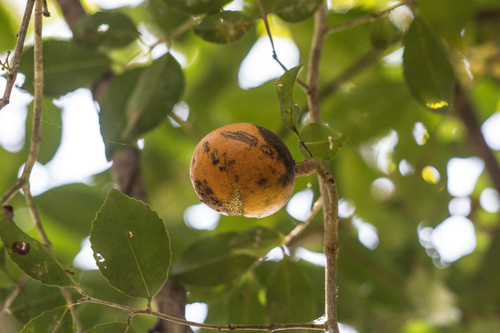
iNaturalist· cc-by-nc
(c) Mark Kluge, some rights reserved (CC BY-NC), uploaded by Mark Kluge
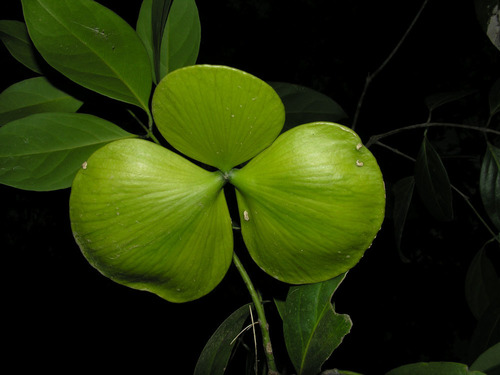
iNaturalist· cc-by-sa
(c) Douglas Goldman, some rights reserved (CC BY-SA), uploaded by Douglas Goldman
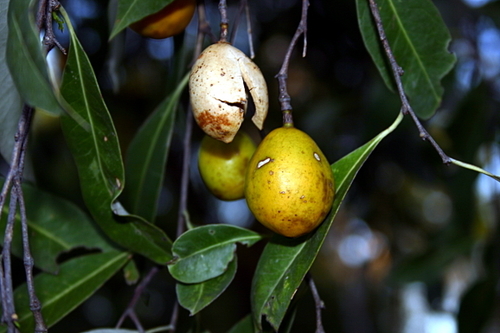
iNaturalist· cc-by-nc
(c) walt_reutzel, some rights reserved (CC BY-NC)
Summary
Source: WikipediaEuonymus alatus, known variously as burning bush, winged euonymus, winged spindle, and winged spindle-tree, is a species of flowering plant in the family Celastraceae, native to central and northern China, Japan, and Korea. It is a popular ornamental plant in gardens and parks due to its bright pink or orange fruit and attractive autumn color: The common name "burning bush" refers to its bright red autumn color. The cultivars 'Compactus' and 'Fire Ball' have gained the Royal Horticultural Society's Award of Garden Merit.
Description
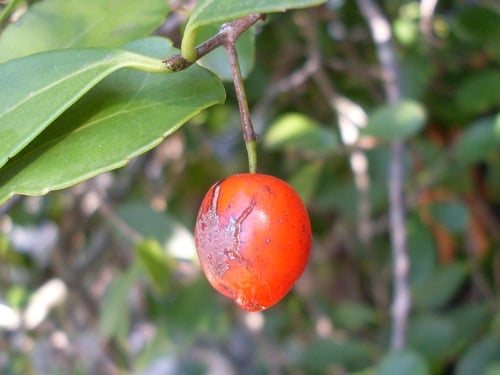
A shrub 1.8-2.2 m tall and spreading 2.5-3 m wide. The branches have corky wings. There is a dense coverage of leaves. The leaves are opposite or almost so and 3-7 cm long. They are often widest above the middle. They taper to the base and have fine teeth along the edge. The leaves turn pink and crimson in the autumn. The flowers are small and green. They occur in sprays. The fruit are purple-red. The fruit burst open to reveal orange-coated seeds.
Edible Uses
Young leaves can be eaten after boiling. The flowers serve as a tea substitute. The fruit may be edible — it is about 8mm in diameter — though no further details are given and caution is advised given the toxicity concerns associated with this genus. The seed contains 20.5% protein, 44.4% fat, and 3.9% ash. These reports of edibility should be treated with caution.
Traditional Uses
Caution: The young shoots are eaten in spring. The stem is used to make a tea drink.
This uses section is brief — help expand it
Medicinal Uses
The stem and branches are alterative, analgesic, anodyne, anthelmintic, anticoagulant, antiphlogistic, antipruritic, astringent blood tonic, carminative, emmenagogue, hypoglycaemic, and purgative. In Korea it is used to treat intestinal worms, suppressed menstruation, and cancer. In China, a decoction is used for cold headache, general body aches, pruritis, irregular menstruation, and other gynaecological diseases. The plant contains the anticancer compound dulcitol.
Distribution
It is a temperate plant. It is frost hardy. In China it grows from sea level to 2,700 m above sea level. It suits hardiness zones 3-9. Arboretum Tasmania. In Sichuan.
Where It Grows
Asia, Australia, Canada, China, Europe, Japan, Korea, North America, Russia, Tasmania, USA,
Cultivation
Plants can be grown from seed or cuttings.
Propagation
Seed is best sown as soon as it is ripe in a cold frame. Stored seed requires 8–12 weeks of warm stratification followed by 8–16 weeks of cold stratification before sowing in a cold frame. When seedlings are large enough to handle, prick them out into individual pots and grow on in the greenhouse for at least their first winter. Plant out into permanent positions in late spring or early summer, after the last expected frosts. Cuttings of half-ripe wood, 5–8cm long, taken at a node or with a heel, can be rooted in July or August in a frame. Very easy.
Other Uses
This species can be grown as a hedge; the var. compactus is normally used for this purpose.
Notes
There are about 130-175 Euonymus species. It can be invasive.
Synonyms
Also Known As
Bamu, Bashu, Hwasalnamu
References (17)
- Chon, S. et al., 2009, Total Phenolics Level, Antioxidants Activity and Cytotoxicity of Young Sprouts of Some Traditional Korean Salad Plants. Plant Foods for Human Nutrition. 64:25-31
- Cundall, P., (ed.), 2004, Gardening Australia: flora: the gardener's bible. ABC Books. p 580
- Etherington, K., & Imwold, D., (Eds), 2001, Botanica's Trees & Shrubs. The illustrated A-Z of over 8500 trees and shrubs. Random House, Australia. p 311
- Farrar, J.L., 1995, Trees of the Northern United States and Canada. Iowa State University press/Ames p 192
- Hibbert, M., 2002, The Aussie Plant Finder 2002, Florilegium. p 99
Show all 17 references Hide references
- Hwang, H., et al, 2013, A Study on the Flora of 15 Islands in the Western Sea of Jeollanamdo Province, Korea. Journal of Asia-Pacific Biodiversity Vol. 6, No. 2 281-310
- Hwang, HS, et al, 2014, Distribution characteristics of plant in the Ungseokbong Mountain, Gyeongsangnam-do, Korea. Journal of Asia-Pacific Biodiversity. 7(2014) e164-e178
- Joyce, D., 1998, The Garden Plant Selector. Ryland, Peters and Small. p 139
- Kang, Y., et al, 2012, Wild food plants and wild edible fungi in two valleys on the Qinling Mountains (Shaanxi, central China) Journal of Ethnobiology and Ethnomedicine; 9:26
- Kim, H. & Song, M., 2013, Ethnobotanical analysis for traditional knowledge of wild edible plants in North Jeolla Province (Korea). Genetic. Resour. Crop Evol. (2013) 60:1571-1585
- Lord, E.E., & Willis, J.H., 1999, Shrubs and Trees for Australian gardens. Lothian. p 227
- Marinelli, J. (Ed), 2004, Plant. DK. p 454
- Pemberton, R. W. & Lee, N. S., 1996, Wild Food Plants in South Korea: Market Presence, New Crops, and Exports to the United States. Economic Botany, Vol. 50, No. 1, pp. 57-70
- Plants for a Future database, The Field, Penpol, Lostwithiel, Cornwall, PL22 0NG, UK. http://www.scs.leeds.ac.uk/pfaf/
- Ryan, S., 2008, Dicksonia. Rare Plants Manual. Hyland House. p 25
- Verh. Batav. Genootsch. Kunsten 12:49. 1830
- Young, J., (Ed.), 2001, Botanica's Pocket Trees and Shrubs. Random House. p 366