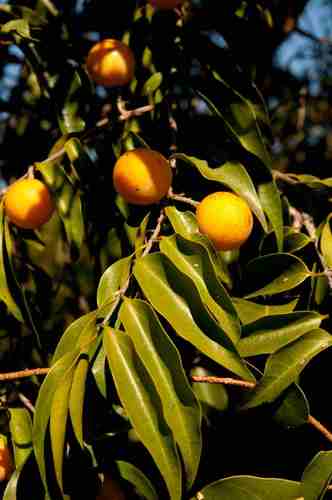
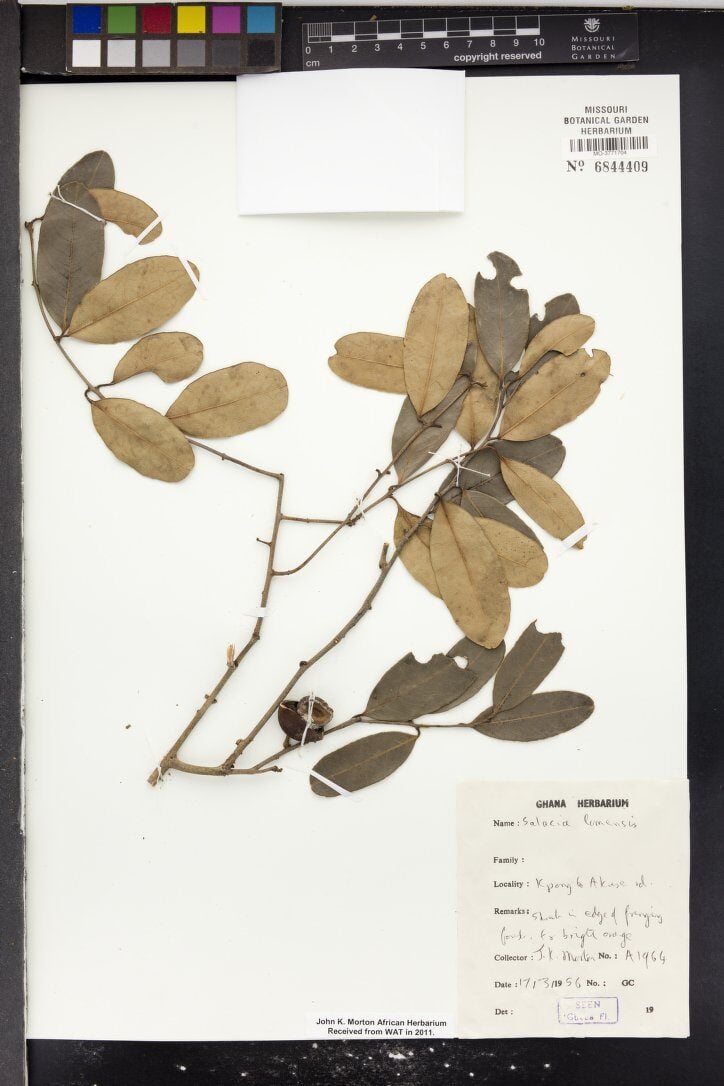
Elaeodendron australe
Vent.
Red Olive-berry, Red Olive-plum, Scarlet Olive-wood
iNaturalist· cc-by
(c) John Tann, some rights reserved (CC BY)
iNaturalist· cc-by-nc
(c) Nicholas John Fisher, some rights reserved (CC BY-NC)
Summary
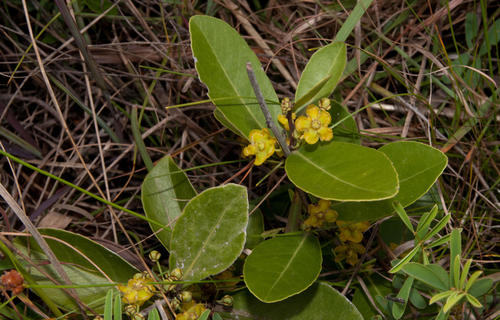
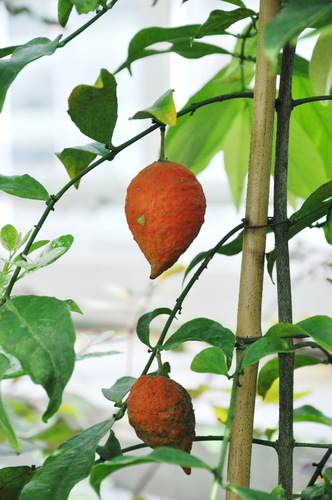
Source: WikipediaElaeodendron australe, commonly known as red olive-berry, red-fruited olive plum, or blush boxwood, is a species of flowering plant in the family Celastraceae and is endemic to eastern Australia. It is a shrub or small tree with egg-shaped to oblong leaves with a wavy margin, yellowish green male and female flowers on separate plants and fleshy orange-red fruit.
Description
A tall shrub or small tree. It grows 5-10 m high and spreads 3-5 m wide. The bark is dark brown and wrinkled. The young shoots are bright green and shiny. The leaves are 4-11 cm long by 2-4 cm wide. The leaves are dark green and shiny above and paler underneath. They are thick and leathery. The edges can have teeth. The flowering groups are 2-5 cm long and in the axils of leaves. The flowers are 0.4-0.6 cm across. They are greenish. Male and female flowers are separate. The fruit is fleshy with a hard stone inside. It is 1.2-1.6 cm long and oval and bright red or orange.
Edible Uses
The fruit is potentially edible.
Medicinal Uses
Stem bark material of this species has exhibited anti-tumour activity.
Distribution
A tropical plant. It grows in drier rainforests and moist open forest in Queensland and New South Wales in Australia. It can grow in tropical, subtropical and temperate locations. It needs a well drained soil. It is damaged by frost or drought. Adelaide Botanical Gardens. Melbourne Botanical gardens.
Where It Grows
Australia*,
Cultivation
Plants are grown from fresh seed. They take about 6 months to germinate. It can be grown from cuttings.
Propagation
Seed - best sown fresh, it generally germinates easily though can take a number of months. Cuttings are slow to take root.
Other Uses
The wood is white veined, hard, close-textured. It is used especially for cabinet making. Used for the manufacture of staves, oars and shingles.
Production
Plants grow quite quickly.
Notes
There are about 40 Elaeodendron species.
Synonyms
References (6)
- Bodkin, F., 1991, Encyclopedia Botanica. Cornstalk publishing, p 377
- Cooper, W. and Cooper, W., 2004, Fruits of the Australian Tropical Rainforest. Nokomis Editions, Victoria, Australia. p 115
- Elliot, W.R., & Jones, D.L., 1984, Encyclopedia of Australian Plants suitable for cultivation. Vol 3. Lothian. p 390 (Photo)
- Jard. Malmaison 2: ad t. 117. 1805
- Lord, E.E., & Willis, J.H., 1999, Shrubs and Trees for Australian gardens. Lothian. p 15
Show all 6 references Hide references
- Melzer, R. & Plumb, J., 2011, Plants of Capricornia. Belgamba, Rockhampton. p 94