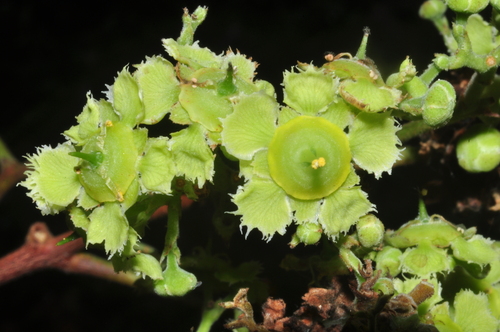
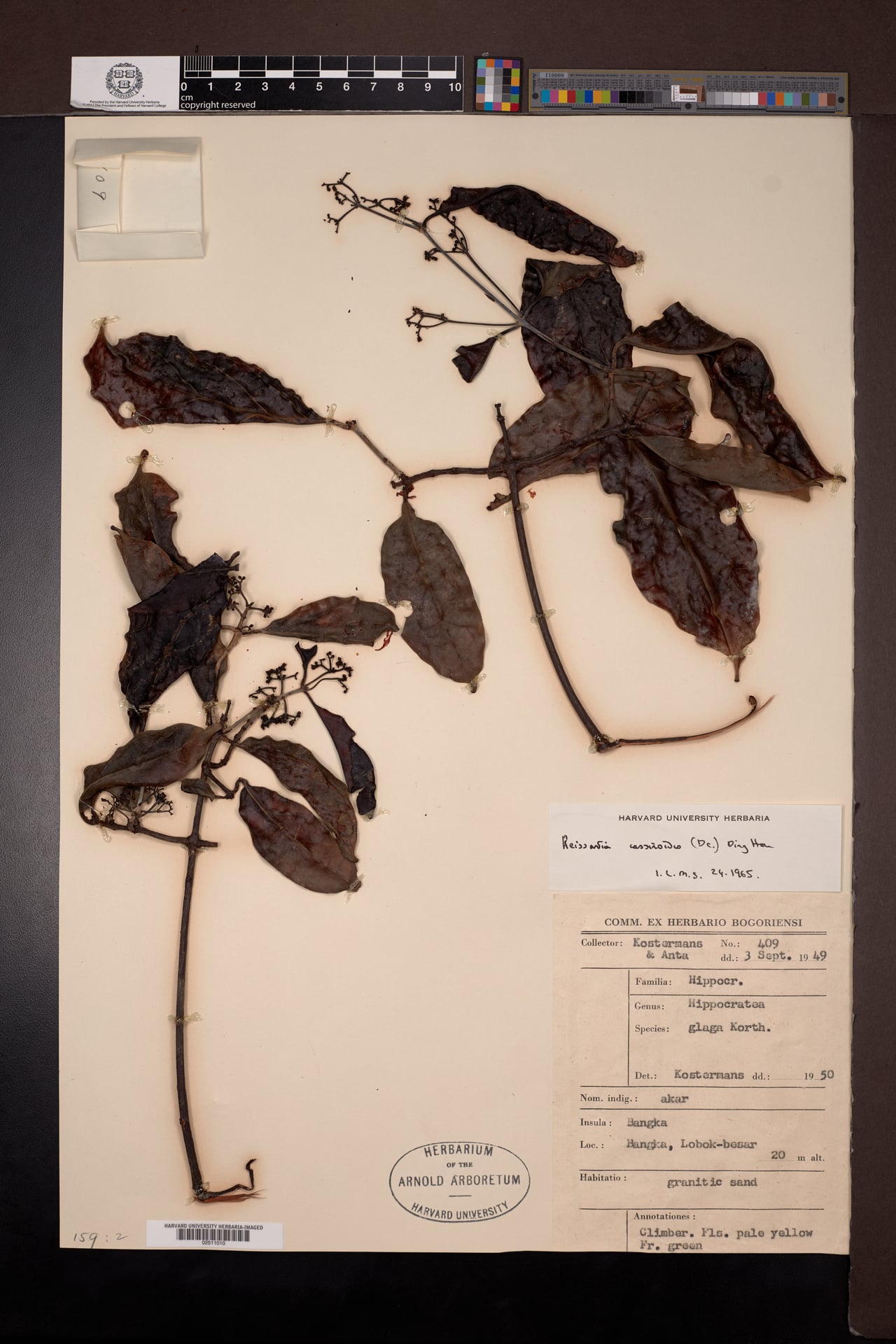
Denhamia obscura
(A. Rich.) Meisner
Emu tucker, Weeping Denhamia
iNaturalist· cc-by-nc
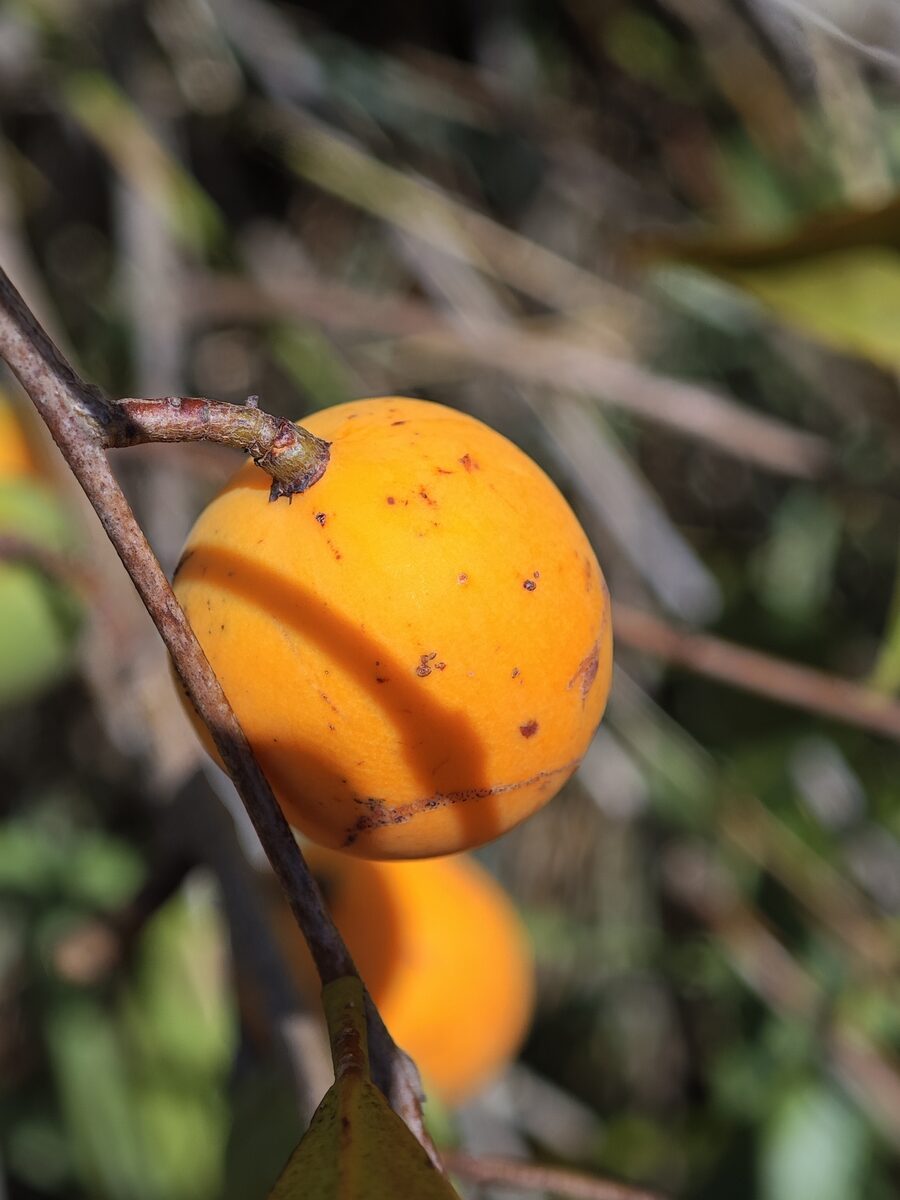
(c) Pete Woodall, some rights reserved (CC BY-NC), uploaded by Pete Woodall
iNaturalist· cc-by-nc
(c) troppo_tangent_tania, some rights reserved (CC BY-NC)
Description
A tall shrub. It grows 5-10 m high and spreads 2-4 m wide. The bark has grey or white patches. The branches can be erect or hang down. They are slender. The leaves are 5-10 cm long by 1-3 cm wide. They are oblong or sword shaped. They are dull green above and pale underneath. They are leathery and the edges can be wavy. The flowers are in groups in the axils of upper leaves. The flowers are 0.6 cm across and yellow. The fruit is a capsule 2-2.5 cm long and white or yellow with bright orange seeds.
Edible Uses
The fruit are eaten, though they are bitter.
Traditional Uses
The fruit are eaten but are bitter.
This uses section is brief — help expand it
Known Hazards
The fruit are bitter.
Distribution
A tropical plant. They suit tropical and subtropical locations. It grows in open forest and rocky slopes. They need a sunny position and a well drained soil.
Where It Grows
Australia*,
Cultivation
Plants can be grown from seed. They can also be grown from root or stem cuttings.
Production
Trees are slow growing when young but are long lived.
Notes
There are 7 Denhamia species. They grow in Australia.
Synonyms
References (9)
- Bodkin, F., 1991, Encyclopedia Botanica. Cornstalk publishing, p 335
- Elliot, W.R., & Jones, D.L., 1984, Encyclopedia of Australian Plants suitable for cultivation. Vol 3. Lothian. p 252
- Hearne, D.A., & Rance, S.J., 1975, Trees for Darwin and Northern Australia. AGPS, Canberra p 51, Pl 13
- Hibbert, M., 2002, The Aussie Plant Finder 2002, Florilegium. p 85
- Levitt, D., 1981, Plants and people. Aboriginal uses of plants on Groote Eylandt, Australian Institute of Aboriginal Studies, Canberra. p 87
Show all 9 references Hide references
- Morley, B.D., & Toelken, H.R., (Eds), 1983, Flowering Plants in Australia. Rigby. p 223
- Paczkowska, G. & Chapman, A.R., 2000, The Western Australian Flora. A Descriptive Catalogue. Western Australian Herbarium. p 197
- Wheeler, J.R.(ed.), 1992, Flora of the Kimberley Region. CALM, Western Australian Herbarium, p 583
- Wightman, Glenn et al. 1992, Mangarrayi Ethnobotany: Aboriginal Plant Use from the Elsey Area Northern Australia. Northern Territory Botanical Bulletin No 15. Parks and Wildlife Commission of the Northern Territory. p 18, 19