Evodia fraxinifolia
(Don.) Hook.f.
American beech
wikimedia· cc-by-sa
Alka Vaidya <chitralka(at)yahoo.co.in> (via Wikimedia Commons)
wikimedia· pd
Frederic Moore (text); F. C. Moore (art) (via Wikimedia Commons)
wikimedia· cc-by-sa
Didier Descouens (via Wikimedia Commons)
Description
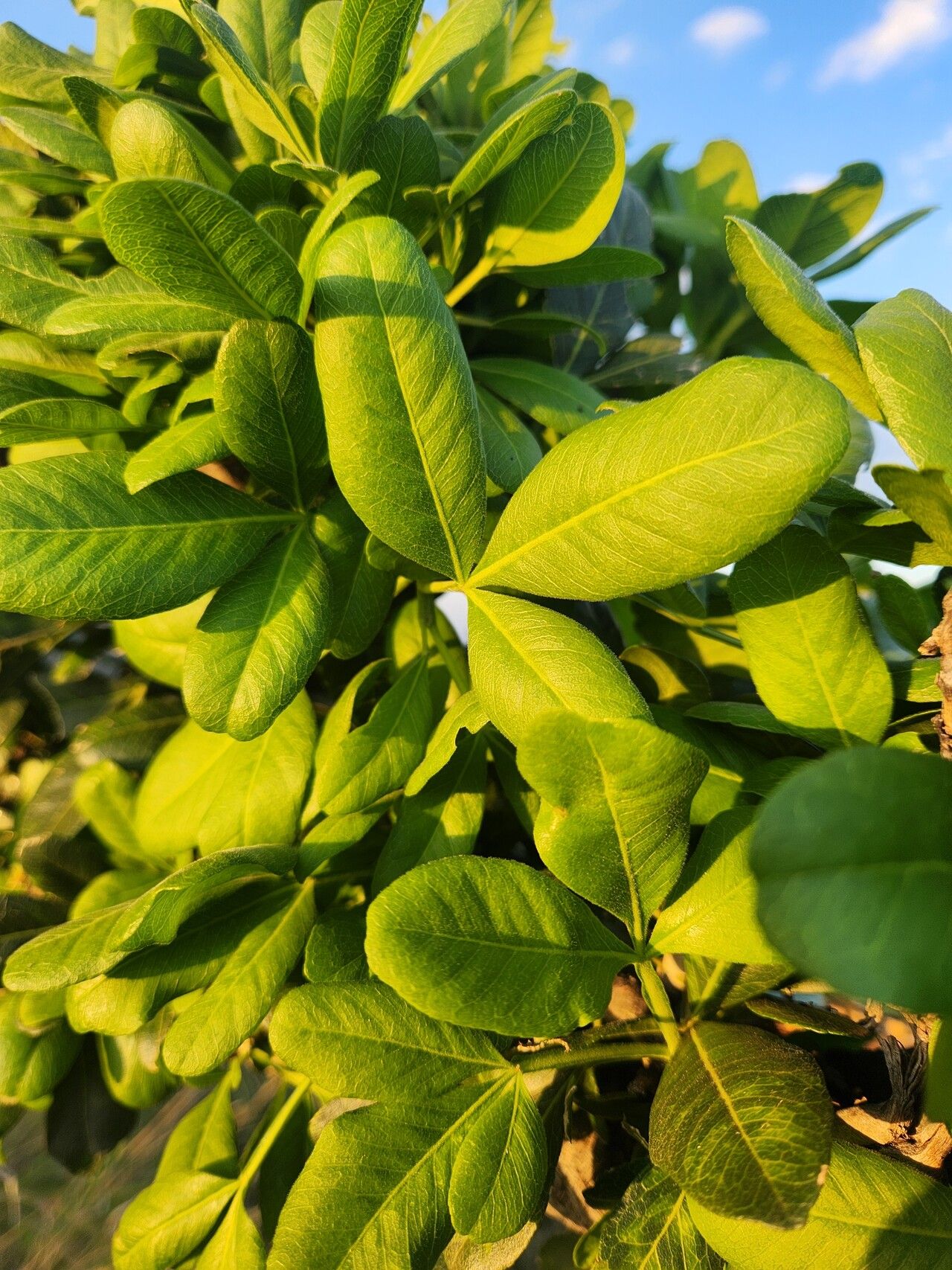
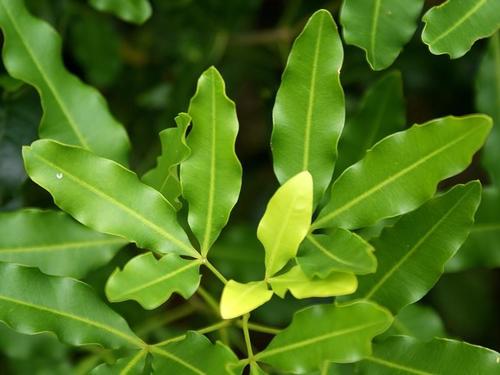
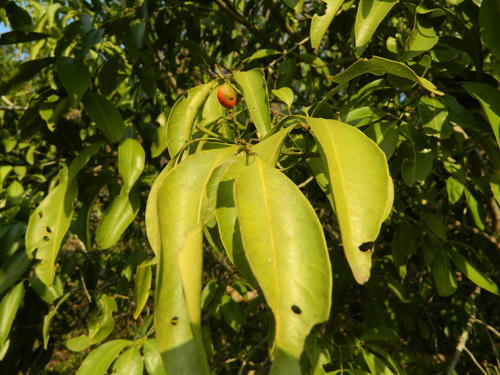
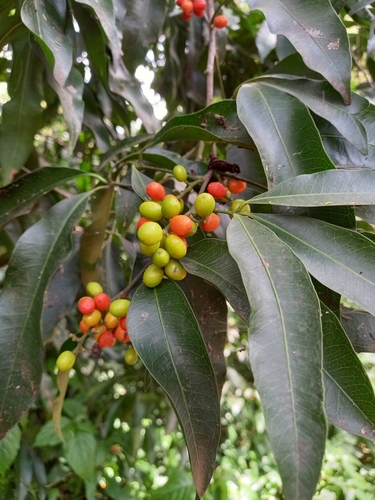
A small tree. The bark is dark brown or ash grey. The young shoots are hairy. The leaves are 20-30 cm long. They have an odd number (9 or 11) of leaflets. These are 8-20 cm long by 3-7.5 cm wide. They are sword shaped and have rounded teeth along the edge. The flowers are yellow. The fruit is a capsule. It is red.
Edible Uses
The fruit is eaten fresh. The seeds are used in soups, pickles, curries, and vegetable dishes for flavour. An oil is extracted from the fruit and seeds.
Traditional Uses
The seeds are used in soup, pickles, curries and vegetables for flavour and taste. An oil is extracted from the fruit and the seeds. The fruit is eaten.
Medicinal Uses
The seeds are traditionally used to flavour and enhance taste in various dishes.
Distribution
It is a temperate plant. In Nepal they grow between 1000-2400 m altitude. They grow on open hillsides.
Where It Grows
Asia, China, Himalayas, India, Indochina, Nepal, Northeastern India, Sikkim,
Cultivation
Plants are grown from seed.
Notes
There are about 150 Euodia species. An unresolved name in The Plant List.
Synonyms
Also Known As
Bokumba, Dieng-borapram, Diengsngiyat, Kalu kung, Kankpa, Kanu, Kanukpa, Khanakpa
References (12)
- Ambasta, S.P. (Ed.), 2000, The Useful Plants of India. CSIR India. p 215
- Burkill, I.H., 1966, A Dictionary of the Economic Products of the Malay Peninsula. Ministry of Agriculture and Cooperatives, Kuala Lumpur, Malaysia. Vol 1 (A-H) p 1004
- Chettri, N. & Sharma, E., Non-timber Forest Produce: Utilization, Distribution and Status in the Khangchendzonga Biosphere Reserve, Sikkim, India.
- Manandhar, N.P., 2002, Plants and People of Nepal. Timber Press. Portland, Oregon. p 226
- Martin, F. W., et al, 1987, Perennial Edible Fruits of the Tropics. USDA Handbook 642 p 75
Show all 12 references Hide references
- Plants for a Future database, The Field, Penpol, Lostwithiel, Cornwall, PL22 0NG, UK. http://www.scs.leeds.ac.uk/pfaf/
- Savita, et al, 2006, Studies on wild edible plants of ethnic people in east Sikkim. Asian J. of Bio Sci. (2006) Vol. 1 No. 2 : 117-125
- Singh, H.B., Arora R.K.,1978, Wild edible Plants of India. Indian Council of Agricultural Research, New Delhi. p 59
- Singh, V. B., et al, (Ed.) Horticulture for Sustainable Income and Environmental Protection. Vol. 1 p 216
- Sundriyal, M., et al, 1998, Wild edibles and other useful plants from the Sikkim Himalaya, India. Oecologia Montana 7:43-54
- Sundriyal, M. & Sundriyal, R. C., 2004, Structure, Phenology, Fruit Yield, and Future Prospects of some Prominent Wild Edible Plant Species of the Sikkim Himalaya, India. Journal of Ethnobiology 24(1): 113-138
- Wild edible plants of Himachal Pradesh