Eugenia stipitata
McVaugh
Araza, Araca-boi
iNaturalist· cc-by-nc
(c) fcisneros, some rights reserved (CC BY-NC)
iNaturalist· cc-by-nc-sa
(c) Reinaldo Aguilar, some rights reserved (CC BY-NC-SA)
iNaturalist· cc-by-nc
(c) Sally Adam, some rights reserved (CC BY-NC), uploaded by Sally Adam
Summary
Source: WikipediaEugenia stipitata (Araza, Portuguese common names araçá, araçá-boi Portuguese pronunciation: [ɐɾɐˈsa ˈboj], Spanish common name arazá, from Guarani arasa; also known as membrillo in Ecuador) is a fruit tree native to the Amazon rainforest in Brazil, Colombia, Peru and Ecuador.
Description
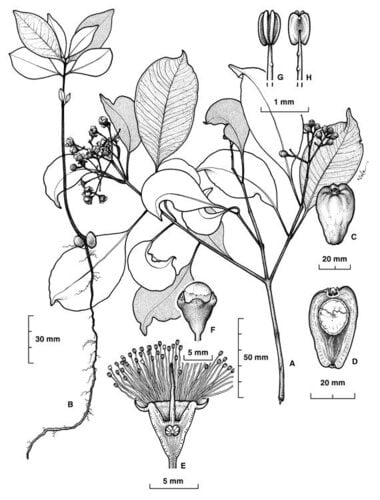
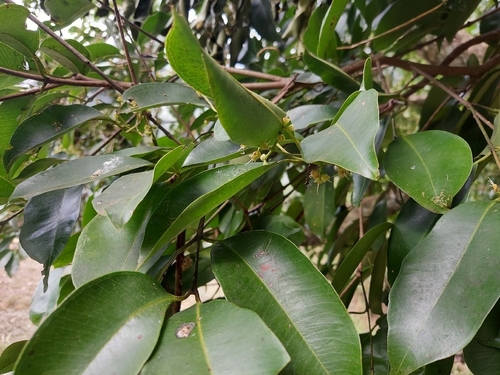
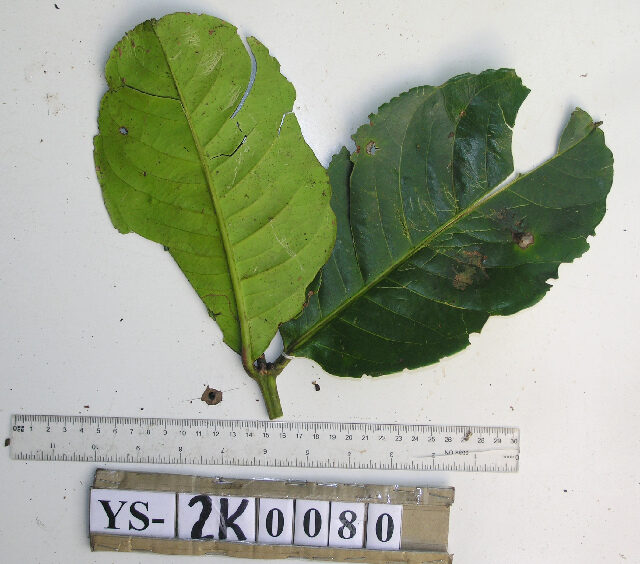
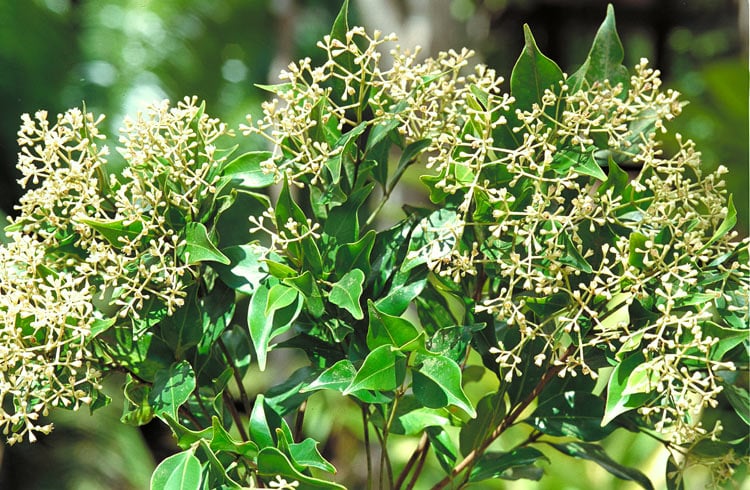
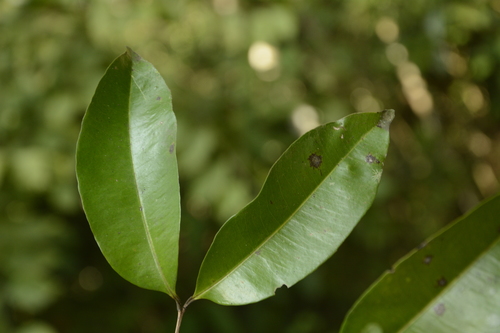
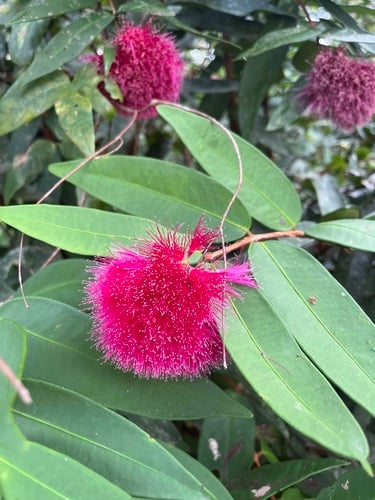
A shrub or small tree. It is 2-5 m tall. The tree branches from the base. The leaves are simple, opposite and oval. They are 6-18 cm long by 3.5-9.5 cm wide. The base is rounded or slightly heart shaped. The flowers are in the axils of leaves in groups. There are usually 2-5 yellow flowers 1 cm wide. The fruit is the size of a large sized guava. They can be 12-14 cm wide. They are bright yellow. The pulp is sour-acid and pleasant. Pollination is by insects. Fruit contain 8-10 irregular shaped seeds.
Edible Uses
The fresh fruit can be used directly but is best with the addition of sugar because of its high acidity. In Colombia, the economic interest of this fruit has increased since the end of the 20th century, and the fruit is at present sold by growers’ associations and even in supermarkets, while the exports to the UK have just started. The USA is in the process of registering arazá to be sold fresh. Another use of this fruit tree is to rehabilitate exhausted land and also for ornamental purposes.
Traditional Uses
The fruit are sometimes eaten fresh but they are acidic. They are more commonly used to flavour sweets, ice-cream and drinks. Normally the fruit need to be sweetened before eating.
Medicinal Uses
Some people eat the fruit when unripe in order to eliminate parasites. The bark is used medicinally. No more information.
Distribution
A tropical plant. It grows best in a dry tropical climate. It can stand some cold for short periods. It grows naturally in the non flooding areas of the Amazon in Brazil. It grows in regions with a temperature of 26°C. The rainfall is 2000-2500 mm per year. It suits an open location.
Where It Grows
Amazon, Australia, Bolivia, Brazil, Central America, Colombia, Costa Rica, Ecuador, Peru, South America, USA, Venezuela,
Cultivation
Plants can be grown from seed, air-layering, grafting or budding. Fresh seed should be used. Stored seeds are difficult to get to germinate.
Propagation
Seed - pre-soaking the seeds in water or peeling them will help germination. The seeds lose more than 70% of their viability after 40 days in cold storage.
Other Uses
The fibrous bark is used to make clothes. This is a small tree whose size and shape allow it to mix well with many tree crops. Some specimens are bushy, while others have an architecture similar to cacao trees. Although relatively slow growing, it is a suitable species for rehabilitating exhausted land.
Production
Seedlings grows slowly at first. Fruit mature quickly so need to be harvested readily. A fruit can weigh 740 g. The production can be 20-30 tonnes per hectare per year.
Other Information
It is sold in local markets. It is a cultivated fruit tree.
Notes
They are high in Vitamin C - 2x oranges. There are about 550 Eugenia species. They are mostly in tropical and subtropical South America. It has high antioxidant activity.
Nutrition
| Part | Moisture | kJ | kcal | Protein | Vit A | Vit C | Iron | Zinc |
|---|---|---|---|---|---|---|---|---|
| Fruit | 90.3 | 135 | 32 | 0.5 | — | 27.7 | 0.1 | 0.1 |
Synonyms
Also Known As
Arari, Arasa, Araza, Guayaba brasilera, Jo'yaarari, Kamush, Membrillo del oriente, Membrillo silvestre, Pichi, Uba-caxi
References (25)
- Bennett, B. C., 1990, Useful Plants of Amazonian Ecuador. US Agency for International Development. Fifth Progress Report. New York Botanical Gardens. p 39
- Brazil: Biodiversity for Food and Nutrition. http://www.b4fn.org/countries/brazil/
- Facciola, S., 1998, Cornucopia 2: a Source Book of Edible Plants. Kampong Publications, p 158
- Fieldiana, Bot. 29:219. 1956
- Grandtner, M. M. & Chevrette, J., 2013, Dictionary of Trees, Volume 2: South America: Nomenclature, Taxonomy and Ecology. Academic Press p 243
Show all 25 references Hide references
- Hermandez Bermejo, J.E., and Leon, J. (Eds.), 1994, Neglected Crops. 1492 from a different perspective. FAO Plant Production and Protection Series No 26. FAO, Rome. p16, 198, 230
- Hunter, D., et al, 2019, The potential of neglected and underutilized species for improving diets and nutrition. Planta (2019) 250:709-729
- INFOODSUpdatedFGU-list.xls
- Kermath, B. M., et al, 2014, Food Plants in the Americas: A survey of the domesticated, cultivated and wild plants used for Human food in North, Central and South America and the Caribbean. On line draft. p 358
- Kiple, K.F. & Ornelas, K.C., (eds), 2000, The Cambridge World History of Food. CUP p 1721
- Lorenzi, H., Bacher, L., Lacerda, M. & Sartori, S., 2006, Brazilian Fruits & Cultivated Exotics. Sao Paulo, Instituto Plantarum de Estuados da Flora Ltda. p 212
- Morton, Julia F., 1987, Fruits of Warm Climates. Creative Resources Systems, Inc. . p. 366
- Paz, F. S., et al, 2021, Edible Fruit Plant Species in the Amazon Forest Rely Mostly on Bees and Beetles as Pollinators. Journal of Economic Entomology, XX(XX), 2021, 1–13
- Penafield Anchundia, D. D., 2017, Traditional food consumption and its nutritional contribution in Guasaganda, Central Ecuador. PhD Ghent University p 72
- Roa, J. A. G. & Boada, D. S. G., 2018, Fundación para el Fortalecimiento de la Fruticultura y Plantas Alimenticias no Convencionales en Colombia.
- Smith, N., Mori, S.A., et al, 2004, Flowering Plants of the Neotropics. Princeton. p 266
- Tomchinsky, B., et al, 2021, Food Composition Data: Edible Plants from the Amazon. in M. C. M. Jacob, U. P. Albuquerque (eds.), Local Food Plants of Brazil, Ethnobiology, Springer p 276
- Torre, de la, L., et al, 2008, Enciclopedia de las Plantas Útiles del Ecuador. Herbario QCA. Pontificia Universidad Católica del Ecuador. p 467
- USDA, ARS, National Genetic Resources Program. Germplasm Resources Information Network - (GRIN). [Online Database] National Germplasm Resources Laboratory, Beltsville, Maryland. Available: www.ars-grin.gov/cgi-bin/npgs/html/econ.pl (10 April 2000)
- Vasquez, R. and Gentry, A. H., 1989, Use and Misuse of Forest-harvested Fruits in the Iquitos Area. Conservation Biology 3(4): 350f
- Villachica, H., (Ed.), 1996, Frutales Y hortalizas promisorios de la Amazonia. FAO, Lima. p 27
- Wiersema, J. H. & Leon, B., 2013, World Economic Plants. A Standard Reference CRC Press. 2nd Ed. p 290
- www.colecionandofrutas.org
- www.worldagroforestrycentre.org/treedb/
- Zaldivar, M. E., et al, 2002, Species Diversity of Edible Plants Grown in Homegardens of Chibehan Amerindians from Costa Rica. Human Ecology, Vol. 30, No. 3, pp. 301-316 (As Eugenia estipitata)