Jasminum auriculatum
Vahl
Juhi
iNaturalist· cc0
no rights reserved, uploaded by arunagamuz
iNaturalist· cc-by
(c) Chayant Gonsalves, some rights reserved (CC BY), uploaded by Chayant Gonsalves
iNaturalist· cc-by-nc
(c) Kobita Dass Kolli, some rights reserved (CC BY-NC), uploaded by Kobita Dass Kolli
Summary
Source: WikipediaJasminum auriculatum is a species of jasmine, in the family Oleaceae. It is found in India, Nepal, Sri Lanka, Bhutan and the Andaman Islands. Due to essential oil contained in the flowers, it is cultivated commercially in India and Thailand. It is used for decorative purposes and festivals in India.
Description
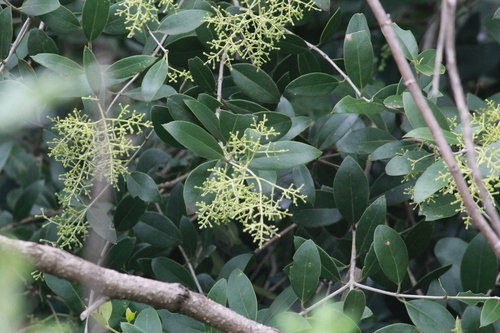
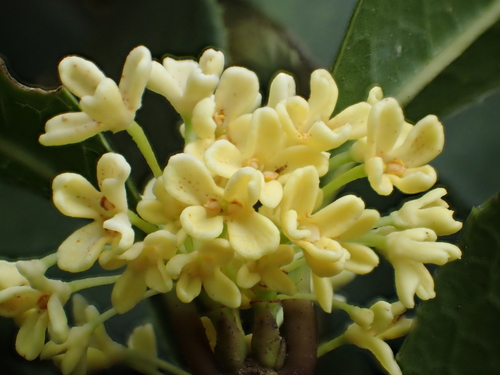
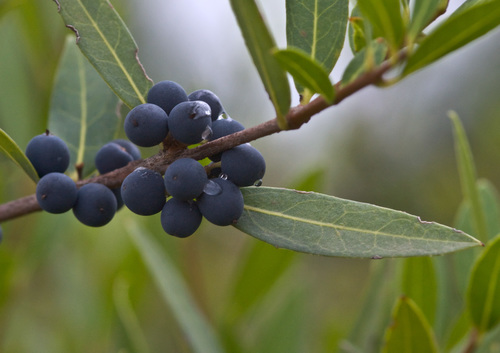
A small climbing shrub. The leaves are opposite. They have one leaflet or small side lobes. The flowers are white with 6 petals spreading wide. There are many flowers in a group. The flowers have a scent. The fruit is a berry 5 mm across.
Edible Uses
The leaves are eaten, though caution is advised.
Medicinal Uses
The flowers are used for oil in traditional medicine.
Known Hazards
Caution advised with leaf consumption.
Distribution
It is a tropical plant.
Where It Grows
Andaman Islands, Asia, Bhutan, Himalayas, India, Indochina, Myanmar, Nepal, SE Asia, Sri Lanka, Thailand,
Cultivation
Succeeds in full sun and in moderate shade. An easy to grow plant, it tolerates dry to moist soils. Prefers a fertile, humus-rich, moist but well-drained soil. The flower is held sacred to all forms of Goddess Devi, and is used as sacred offerings during Hindu religious ceremonies. The annual average flower yield in India ranges from 2 - 9 tonnes per hectare, with average yield of the essential oil 0.3 - 0.4%. Jasmine flowers are picked manually between dawn and 10 a.m., during the hot season in India even between 3 - 8 a.m. Preferably only half-opened and fresh fully opened flowers must be picked, not buds or old (yellowish) flowers, as these will depress the quality of the essential oil. Although rain makes the flowers almost useless, picking flowers in the rain should continue, to promote further flowering. An experienced picker can harvest 0.5 kg flowers per hour, but the pickers are usually young women and children, who achieve 2 kg in 5 hours. Jasmine flowers must be quickly processed, since delay substantially reduces essential oil content. Flowers should be kept shaded and cool between picking and processing and the processing facility should be close to the plantation. Freshly picked flowers can be stored in polythene bags at 15°c without loss of yield, quality or odour. Jasmine oil can be obtained from flowers by steam distillation but the yield is very low. Jasmine concrete is obtained from flowers, formerly by enfleurage, currently by solvent extraction. In solvent extraction, flowers are washed up to 3 times with petroleum ether or, preferably, with hydrocarbon-free food-grade hexane; the extract is then distilled to remove the solvent, resulting in the concrete. Concrete is usually produced at the plantation, but absolute is produced where convenient, often in another country.
Propagation
Seed - it does not require pre-treatment and is best sown in a partially shaded position as soon as it is ripe. Cuttings 12 - 20cm long should be taken from terminal shoots; treatment with a root stimulator increases the strike rate. Semi-ripe cuttings, 8cm long, places in a sandy medium, usually root within 4 weeks. Cuttings taken from shoot tips have given better results than semi-ripe cuttings. They are usually treated with a fungicide, placed in prepared planting holes and watered. Layering in the field is done with one-year-old shoots; a slanting cut is made approximately half-way through the shoot some 50cm from the end; the cut is buried about 10 - 15cm deep with the top remaining above ground. After about 4 - 6 months the rooted layers can be separated from the parent plant and transplanted.
Other Uses
An essential oil is obtained from the flowers. It is used in perfumery.
Notes
The flowers are used for oil in medicine.
Synonyms
Also Known As
Adavimalle, Banamallika, Kattumullai, Sanna malige, Uccimalligai, Yuthika, Zun-pan
References (2)
- Arinathan, V., et al, 2007, Wild edibles used by Palliyars of the western Ghats, Tamil Nadu. Indian Journal of Traditional Knowledge. 6(1) pp 163-168
- Sarvalingam, A., et al, 2014, Wild edible plant resources used by the Irulas of the Maruthamalai Hills, Southern Western Ghats, Coimbatore, Tamil Nadu. Indian Journal of Natural Products and Resources 5(2):198-201