Syzygium mananquil
(Blanco) Merr.
Manangkil
iNaturalist· cc-by-nc
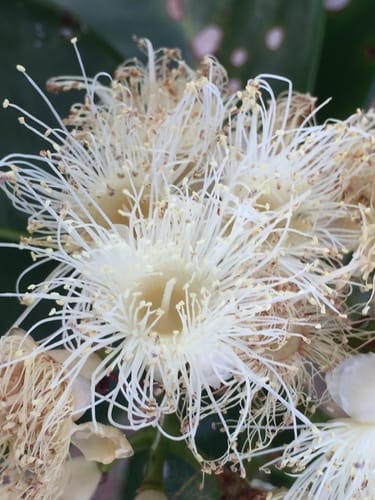
(c) Laurent Quéno, some rights reserved (CC BY-NC), uploaded by Laurent Quéno
Description
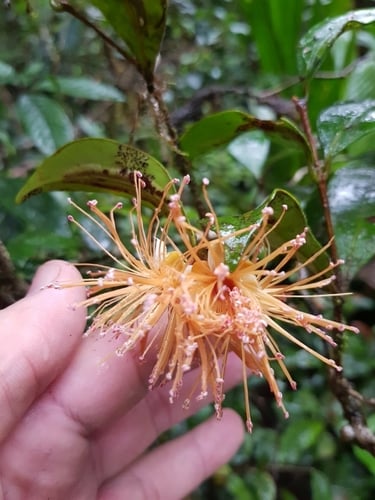
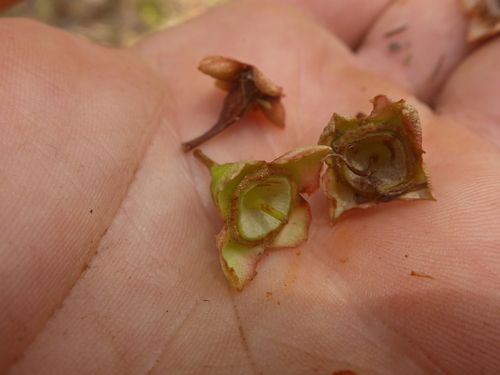
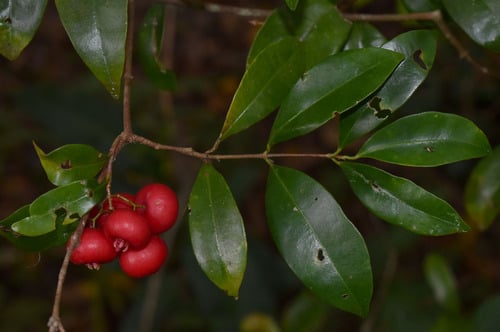
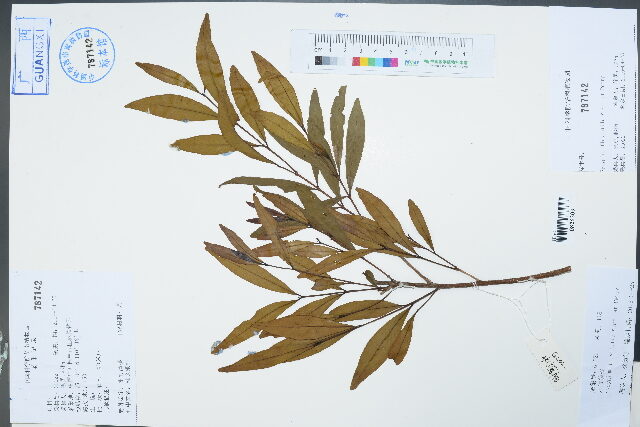
A slender tree about 10 m high. The bark of the stem is yellowish grey and deeply checked. The leaves are opposite, scattered and rather variable in size. They are leather like and paler green underneath. They are oblong with a tapering to a point at the tip and with a sharp point at the base. They have short stalks. The flowers are clustered in arrangements where the end flower develops first then the end one on a side stalk and so on. They are on unusual woody growths from the stem. The flower petals are yellowish white. The fruit are about 1.5 cm thick and flattened and round. They are squeezed below the outer layer of sepals. They vary from white to light red or purple.
Edible Uses
Fruit - raw. The fleshy fruit is acid, with a good flavour. The red, ovoid fruit can be around 4cm in diameter.
Traditional Uses
The fruit are eaten raw.
This uses section is brief — help expand it
Distribution
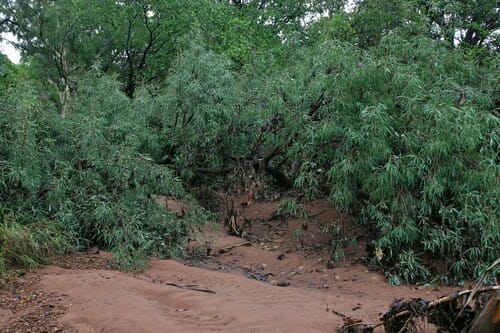
A tropical plant. They are very common and widely distributed in primary forest at low and medium altitudes throughout the Philippines.
Where It Grows
Asia, Pacific, Philippines, SE Asia,
Cultivation
The tree is cauliflorous, the flowers and fruit being produced in clusters along the trunk and larger branches.
Synonyms
References (2)
- Brown, W.H., 1920, Wild Food Plants of the Philippines. Bureau of Forestry Bulletin No. 21 Manila. p 136
- Monsalud, M.R., Tongacan, A.L., Lopez, F.R., & Lagrimas, M.Q., 1966, Edible Wild Plants in Philippine Forests. Philippine Journal of Science. p 508