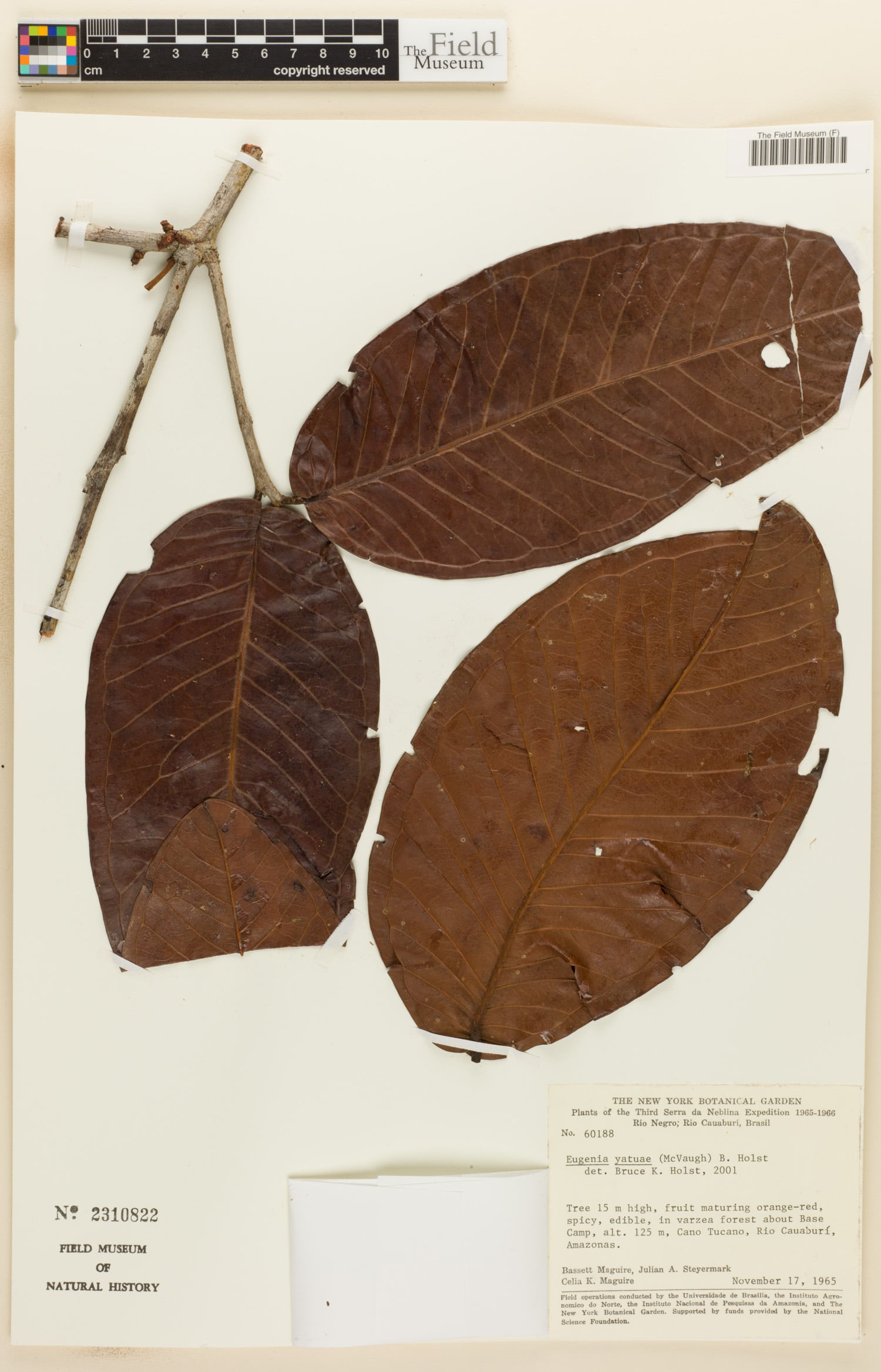
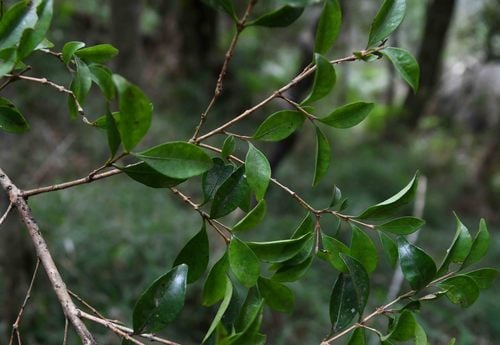
Eugenia involucrata
DC.
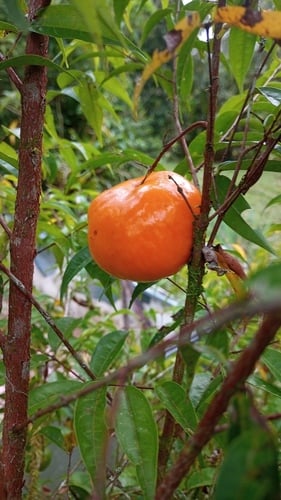
Cherry of the Rio Grande
iNaturalist· cc-by
(c) Alec McClay, some rights reserved (CC BY), uploaded by Alec McClay
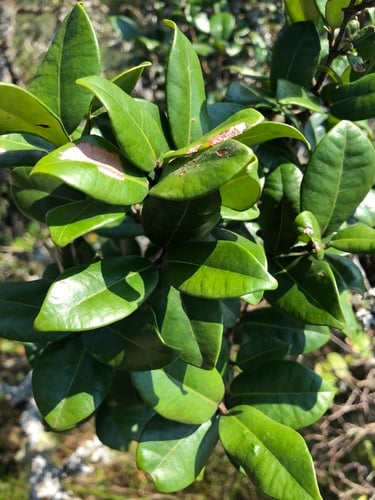
iNaturalist· cc-by
(c) Bruno Henrique Aranda, some rights reserved (CC BY)
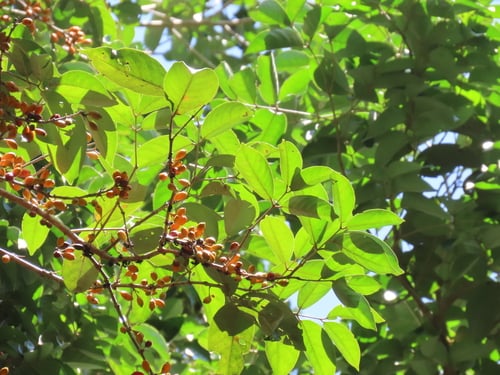
iNaturalist· cc-by
(c) Bruno Henrique Aranda, some rights reserved (CC BY)
Summary
Source: WikipediaEugenia involucrata, the Cherry of the Rio Grande, is an evergreen shrub native to Brazil which bears small fruits that are dark red to purple in color and have a sweet cherry-like flavor. They are hardy to 20 °F (−7 °C) when mature, though younger plants should be protected from frosts.
Description
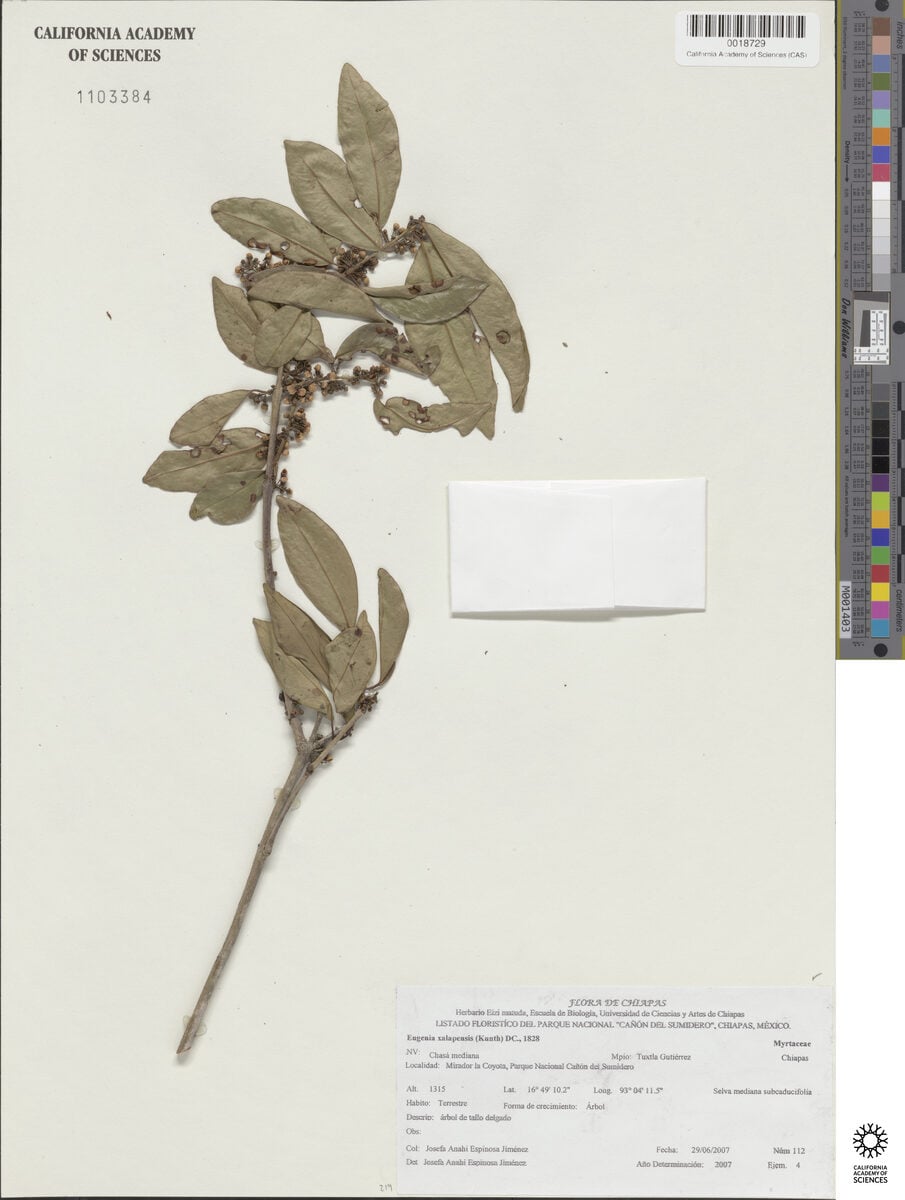
A small tree. It grows 5-8 m high. It grows 10-15 m high in forest. The crown is oval. The trunk is 30-40 cm across. The bark is thin and peels off. The leaves are simple and opposite. They have short leaf stalks. They are 5-9 cm long by 2-3 cm wide. The flowers occur singly in the axils of leaves. They have long stalks. The fruit are narrowly oval and bright red. They are shiny and have a green stalk. The pulp is sweet and juicy and with 1 or 2 large seeds.
Edible Uses
Fruit - raw and made into jams and jellies. Rich in pectin. The fruits are eaten fresh out of hand, juiced, preserved, or used to make liqueurs. A thick, fleshy, succulent pulp with a very pleasant, sweet or subacid flavour. The reddish-purple fruit is about 30mm long and 20mm wide.
Traditional Uses
The fruit are eaten raw. The fruit are used for jellies, ice cream and liqueurs. They are also used for jam.
This uses section is brief — help expand it
Distribution
A tropical plant. In Brazil if grows in semi-deciduous broadleaf forest. In Argentina it grows between sea level and 1,200 m above sea level.
Where It Grows
Argentina, Bolivia, Brazil*, Mexico, Paraguay, South America, Uruguay,
Cultivation
Plants are grown from seeds. The ripe fruit are harvested and the seeds removed. The seeds are dried in the shade. Seed can only be stored for 2 weeks. The fresh seed are planted and germinate in 30-40 days.
Propagation
Seed - best sown as soon as it is ripe in a partially shaded position in a nursery seedbed or in individual containers. A high germination rate can be expected, with the seed sprouting within 30 - 40 days. Seedlings grow away slowly.
Other Uses
The wood is compact, moderately heavy, elastic, of good natural durability. It is used for making tool handles and other agricultural implements. The wood is used for making charcoal.
Production
Plants grow slowly.
Other Information
It is a cultivated fruit tree. The fruit are popular.
Notes
There are about 550 Eugenia species. They are mostly in tropical and subtropical South America.
Nutrition
| Part | Moisture | kJ | kcal | Protein | Vit A | Vit C | Iron | Zinc |
|---|---|---|---|---|---|---|---|---|
| Fruit | 91.6 | 127 | 30 | 0.8 | — | 2.5 | 1.3 | 0.2 |
Synonyms
Also Known As
Arcazeiro, Araza-hay, Cereja-da-terra, Cereja, Cerejeira, Cerajeira-do-mato, Cereja-do-mato, Cerejeira, Cerejo-do-rio-grande, Cerella, Ceresa, Cereza, Cereza del monte, Dzika, Guaviyu, Sanguinto, Wisnia
References (21)
- Alimenticias - FloraSBS
- Brack, P., et al, 2020, Frutas nativas do Rio Grande do Sul, Brasil: riqueza e potencial alimentício. Native fruits of Rio Grande do Sul, Brazil: richness and potential as food. Rodriguésia 71: e03102018.
- Brazil: Biodiversity for Food and Nutrition. http://www.b4fn.org/countries/brazil/
- Grandtner, M. M. & Chevrette, J., 2013, Dictionary of Trees, Volume 2: South America: Nomenclature, Taxonomy and Ecology. Academic Press p 238
- Hunter, D., et al, 2019, The potential of neglected and underutilized species for improving diets and nutrition. Planta (2019) 250:709-729
Show all 21 references Hide references
- INFOODSUpdatedFGU-list.xls
- Kermath, B. M., et al, 2014, Food Plants in the Americas: A survey of the domesticated, cultivated and wild plants used for Human food in North, Central and South America and the Caribbean. On line draft. p 354
- Kinupp, V. F., 2007, Plantas alimenticias nao-convencionais da regiao metropolitana de Porto Alegre, RS, Brazil p 85
- Kinupp, V. F. & Bergman, I., 2008, Protein and minerals of native species, potential vegetables and fruits. Cienc.Tecnol. Aliment. Vol. 28 No. 4 Campinas Oct/Dec.
- Kujawska, M. & Luczaj, L., 2015, Wild Edible Plants Used by the Polish Community in Misiones, Argentina. Human Ecology 43:855-869
- Lorenzi, H., 2002, Brazilian Trees. A Guide to the Identification and Cultivation of Brazilian Native Trees. Vol. 01 Nova Odessa, SP, Instituto Plantarum p 275
- Lorenzi, H., Bacher, L., Lacerda, M. & Sartori, S., 2006, Brazilian Fruits & Cultivated Exotics. Sao Paulo, Instituto Plantarum de Estuados da Flora Ltda. p 198
- Peres, M. K., 2011, Diasporos do Cerrado Atrativos para Fauna: Chave Interativa Caracterizacao Visual e Relacoes Ecologicas. Masters thesis. Universidade de Brasilia.
- Prodr. 3:264. 1828
- Segura, S., et al, 2018, The edible fruit species in Mexico. Genet Resour Crop Evol (2018) 65:1767–1793 (As Eugenia aggregata)
- Silva, S y H. Tassara,1996, Frutas no Brasil. Empresa das Artes. São Paulo
- USDA, ARS, National Genetic Resources Program. Germplasm Resources Information Network - (GRIN). [Online Database] National Germplasm Resources Laboratory, Beltsville, Maryland. Available: www.ars-grin.gov/cgi-bin/npgs/html/econ.pl (10 April 2000)
- Vignale, B., et al, 2016, Selección de frutales nativos en Uruguay. 19 Horticultura Argentina 35 (87): May.-Ago. 2016
- Wiersema, J. H. & Leon, B., 2013, World Economic Plants. A Standard Reference CRC Press. 2nd Ed. p 290
- World Checklist of Useful Plant Species 2020. Royal Botanic Gardens, Kew
- www.colecionandofrutas.org