Eugenia axillaris
(Sw.) Willd.
Black cherry, White stopper
iNaturalist· cc-by-nc
(c) Kim and Peter Connolly, some rights reserved (CC BY-NC), uploaded by Kim and Peter Connolly
iNaturalist· cc-by-nc
(c) Kim and Peter Connolly, some rights reserved (CC BY-NC)
iNaturalist· cc-by-nc-nd
(c) Danny Barron, some rights reserved (CC BY-NC-ND)
Summary
Source: WikipediaEugenia axillaris, the white stopper, is a species of flowering plant in the family Myrtaceae. It is native to central and southern Florida, the Caribbean, Bermuda, eastern Mexico, and Central America. An evergreen shrub or tree reaching 20 to 30 ft (6 to 9 m) but often shorter, it is typically found in partly shady coastal hammocks and other sandy areas.
Description
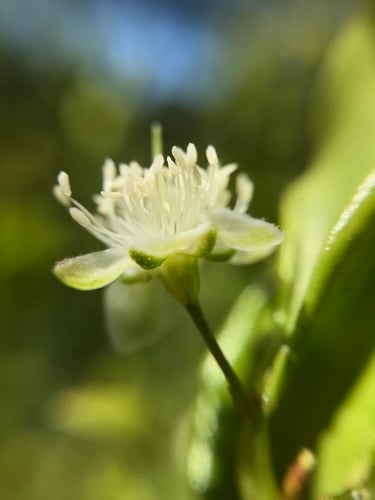
A shrub or small tree. It grows 5 m tall. It keeps its leaves throughout the year. The leaves are oval and dull green. They are more pale underneath. They can be 8 cm long. The flowers are white and have 4 lobed petals. These are in small tight clusters. The fruit are round and smooth. They are purple to black when ripe. They are 12 mm across.
Edible Uses
Fruit - raw. Juicy, sweet and aromatic, but there is only a thin layer of flesh. The pear-shaped fruits are quite juicy. The dark red to black, globose fruit is about 10 - 12mm in diameter.
Traditional Uses
The pulp of the fruit is eaten raw.
This uses section is brief — help expand it
Medicinal Uses
The leaves are used in the treatment of diarrhoea.
Distribution
A tropical plant. It grows in wet forests. It grows in sandy coastal areas. It can grow in a variety of soils. Once established it can tolerate drought. In Puerto Rico it grows up to 800 m above sea level.
Where It Grows
Antilles, Asia, Bahamas, Belize, Bermuda, Brazil, Caribbean, Central America*, Colombia, Costa Rica, Cuba, Dominican Republic, El Salvador, Guatemala, Haiti, Honduras, Indonesia, Jamaica, Martinique, Mexico, Nicaragua, North America, Panama, Puerto Rico, SE Asia, South America, USA, West Indies,
Cultivation
It can be grown from seeds or cuttings. It can be grown as a hedge.
Other Uses
The heartwood is brown or reddish-brown, the sapwood is light brown. The wood is hard, heavy, strong and very close-grained. It is used locally for cabinet work. The plant can be easily trimmed to become a hedge.
Notes
There are about 550 Eugenia species. They are mostly in tropical and subtropical South America.
Synonyms
Also Known As
Basamo guajillo, Chamiso, Escobo, Escobon colorado, Grajo, Granada cimarrona, Guairaje, Jambu bgabus putih, Krum berry, Palo de hueso, Pohon jambu gabus putih
References (11)
- Ekman Herbarium records Haiti
- Fouqué, A., 1972, Espèces fruitières d'Amérique tropicale. Institut français de recherches fruitierès outre-mer
- Grandtner, M. M., 2008, World Dictionary of Trees. Wood and Forest Science Department. Laval University, Quebec, Qc Canada. (Internet database http://www.wdt.qc.ca)
- Grandtner, M. M. & Chevrette, J., 2013, Dictionary of Trees, Volume 2: South America: Nomenclature, Taxonomy and Ecology. Academic Press p 235
- Kermath, B. M., et al, 2014, Food Plants in the Americas: A survey of the domesticated, cultivated and wild plants used for Human food in North, Central and South America and the Caribbean. On line draft. p 350
Show all 11 references Hide references
- Little, E. L., et al, 1974, Trees of Puerto Rico and the Virgin Islands. USDA Handbook 449. Forestry Service. p 632
- NYBG herbarium "edible"
- Plants of Haiti Smithsonian Institute http://botany.si.edu/antilles/West Indies
- Segura, S., et al, 2018, The edible fruit species in Mexico. Genet Resour Crop Evol (2018) 65:1767–1793
- Sukarya, D. G., (Ed.) 2013, 3,500 Plant Species of the Botanic Gardens of Indonesia. LIPI p 274, 625
- www.tradewindsfruit.com
More from Myrtaceae
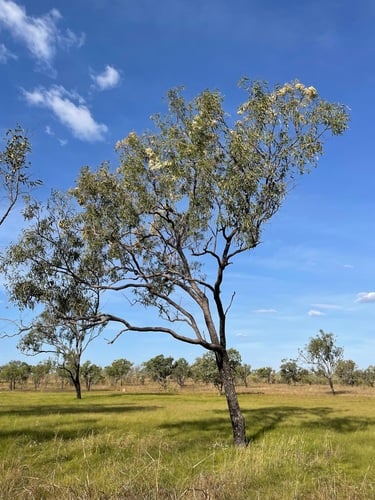
Corymbia polycarpa
Long fruited Bloodwood, Red Bloodwood
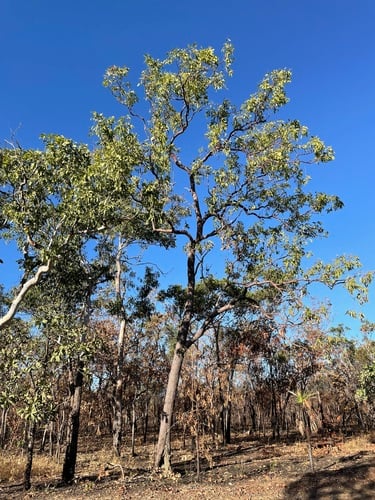
Corymbia porrecta
Grey Bloodwood
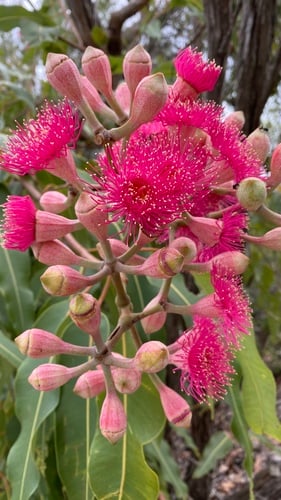
Corymbia ptychocarpa
Swamp Bloodwood, Spring Bloodwood
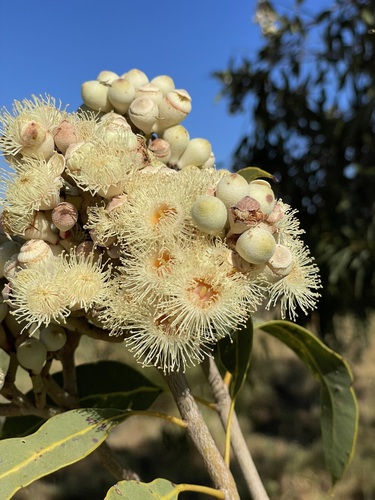
Corymbia terminalis
Inland Bloodwood, Western Bloodwood
Curitiba prismatica
Curitiba
Decaspermum fruticosum
Shrubby decaspermum, Tailor tree, Polynesian myrtle