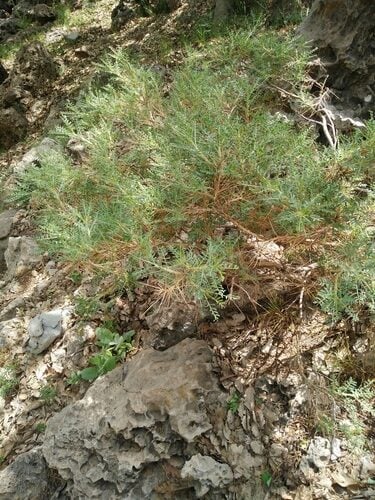
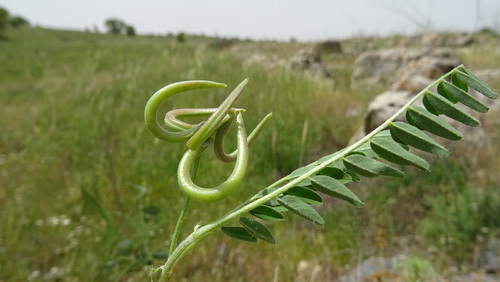
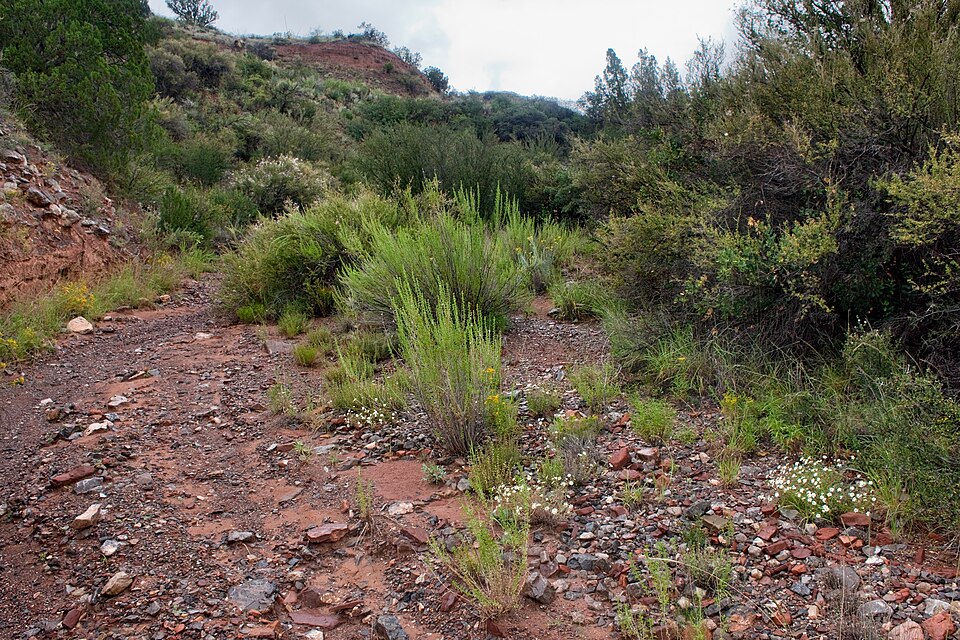
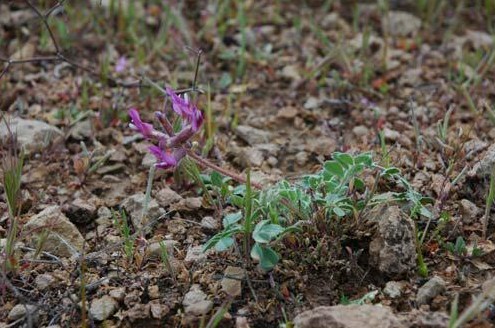
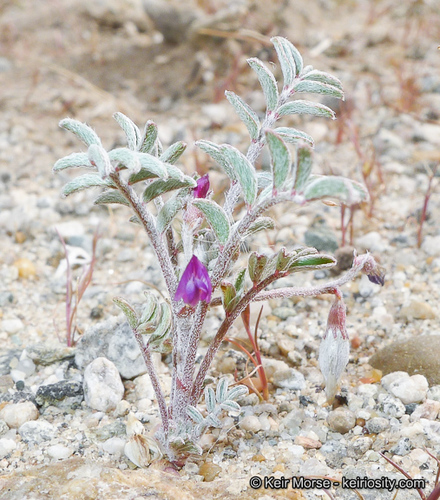
Vachellia constricta - (Benth.) Seigler & Ebinger
(Benth.) Seigler & Ebinger
Mescat Acacia
gbif· cc0
Craig Martin
gbif· cc0
Craig Martin
gbif· cc0
lightbed
Description
Vachellia constricta is a TREE growing to 5 m (16ft) by 5 m (16ft) at a slow rate. See above for USDA hardiness. It is hardy to UK zone 8 and is not frost tender. The flowers are pollinated by Bees, Insects. The plant is self-fertile. It can fix Nitrogen. It is noted for attracting wildlife. Suitable for: light (sandy) and medium (loamy) soils, prefers well-drained soil and can grow in nutritionally poor soil. Suitable pH: neutral and basic (mildly alkaline) soils and can grow in very alkaline soils. It cannot grow in the shade. It prefers dry or moist soil and can tolerate drought.
Edible Uses
Native Americans of Arizona and New Mexico used whitethorn acacia fruits to make pinole. The seeds average about 3mm wide, 5 - 6mm long, and weigh an average of 19.1g. Whitethorn acacia (Acacia constricta = Vachellia constricta) is a thorny shrub native to the deserts and arid regions of the southwestern United States and northern Mexico. Of its parts, only the seeds are reported to be edible, and even then they were of limited importance as a food source. Seeds are produced from July to November and require thorough cooking to neutralize the high levels of tannins, alkaloids, and cyanide-based compounds typical of the genus. Historical accounts suggest that the seeds were consumed rarely and were more often used medicinally, for treating stomach upsets, diarrhea, and skin problems, rather than as a staple food. The single available sample described in your notes was too small to evaluate properly, but overall, the seeds appear to lack promise as a useful wild food.
Medicinal Uses
Seri Native Americans of Sonora, Mexico, used the seeds and leaves of whitethorn acacia, pulverized and heated in water, to treat stomach aches and diarrhoea. When ground into a powder, the leaves and pods can stop bleeding, relieve diaper rashes and chafed skin, and may be used as an antimicrobial wash. A similar powder has been used by Native Americans to soothe aching back muscles of people and flank muscles of horses. A tea from the flowers and leaves has sedative properties and eases hangovers. The root, when made into a tea, treats sore throats, coughing, and mouth inflammations.
Distribution
Southwestern N. Aserica - Arizona, New Mexico, Texas, south through Mexico to Oaxaca, Puebla, Queretaro, Veracruz
Where It Grows
Native to: Arizona, Mexico Central, Mexico Northeast, Mexico Northwest, Mexico Southwest, New Mexico, Texas. Introduced into: Maryland.
Cultivation
Vachellia constricta is a plant of arid and semi-arid regions of southwestern N. America at elevations up to 2,000 metres. It can experience summer temperatures as high as 43°c with winter lows falling to -12°c. Annual precipitation can range from 90 - 500mm, most of it falling in intense (summer) or more moderate (winter) storms. Requires a sunny position in a well-drained soil. Sandy to loamy soils are most often described in association with whitethorn acacia. An impervious caliche or lime layer is also commonly associated with most of these soils. Whitethorn acacia was found on soils with 6.3% to 10.9% moisture content during the period of most intense drought conditions, and dominated where the moisture content was 6.3%. Soil moisture, nitrate, ammonium, and phosphorus concentrations are higher when shrubs have ant nests beneath their canopies. Following top-kill, this species sprouts from the root crown. A fairly long-lived tree that can live more than 70 years. Flowers are short-lived, and bees only pollinate flowers on the day flower buds open. This species has a symbiotic relationship with certain soil bacteria; these bacteria form nodules on the roots and fix atmospheric nitrogen. Some of this nitrogen is utilized by the growing plant, but some can also be used by other plants growing nearby. This species is adapted to hot, dry environments, thriving in desert scrub and thorny thickets, and is best suited to USDA Hardiness Zones 7–10, where it can withstand heat and drought but not severe frost. It is not considered invasive or aggressively weedy. While it can form dense, spiny stands in its native range, these are natural growth habits rather than signs of unwanted spread.
Propagation
Seed - best sown as soon as it is ripe in a sunny position in a warm greenhouse. Stored seed should be scarified, pre-soaked for 12 hours in warm water and then sown in a warm greenhouse in early spring. The seed germinates in 3 - 4 weeks at 25°c. As soon as the seedlings are large enough to handle, prick them out into individual pots and grow them in a sunny position in the greenhouse for their first winter. Plant them out in late spring or early summer, after the last expected frosts, and consider giving them some protection from the cold for their first winter outdoors. Cuttings of half-ripe wood with a heel, mid-summer in individual pots in a frame. Overwinter in a greenhouse for the first winter and plant out in their permanent positions in late spring or early summer. Fair percentage.
Other Uses
Whitethorn acacia protects newly revegetated areas from grazing. It also provides erosion control and tolerates saline soils. Revegetation of a pipeline corridor in Arizona in 1986, using whitethorn acacia among several other native species, successfully resembled undisturbed sites after 10 years. Whitethorn acacia's success in revegetation of mine reclamation sites depended on the protection of the revegetated sites. Whitethorn acacia seedlings suffered 100% mortality on the revegetated exposed east slopes of copper mine waste areas of Tucson, Arizona. On the more protected north slopes, some seedlings survived for at least 7 years following the initial seeding. However, actual survival rates were unclear.
Synonyms
Also Known As
Whitethorn acacia, Whitethorn, Mescat Acacia, Acacia constricta, Vachellia constricta