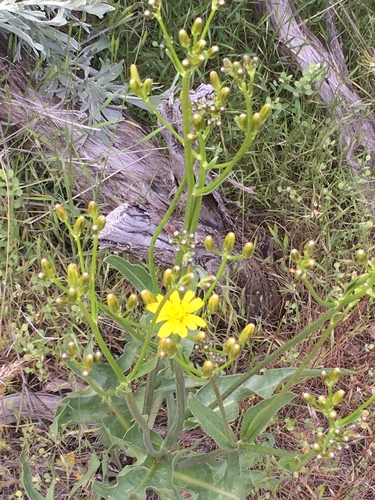
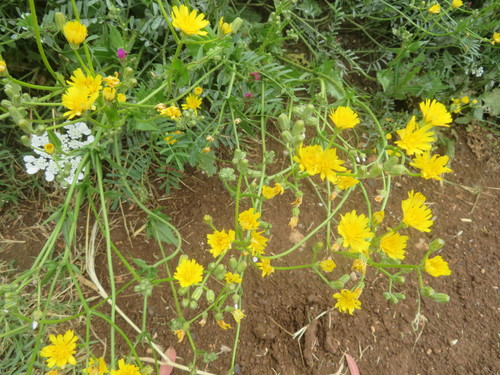
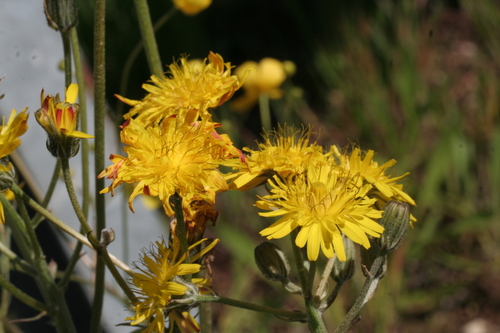
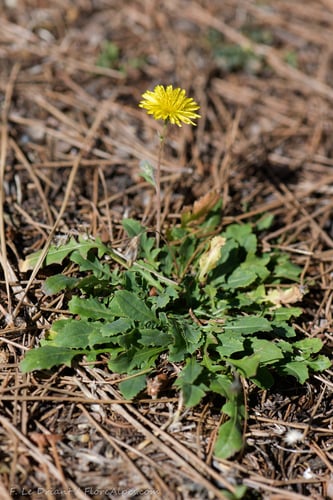
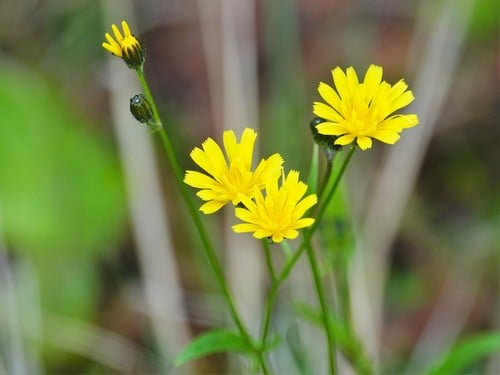
Tagetes tenuifolia
Cav.
Lemon Marigold, Striped Mexican Marigold, Signet Marigold
iNaturalist· cc-by-nc
(c) mvz-juangonzalezromero, some rights reserved (CC BY-NC), uploaded by mvz-juangonzalezromero
iNaturalist· cc-by-nc
(c) Bodo Nuñez Oberg, some rights reserved (CC BY-NC), uploaded by Bodo Nuñez Oberg
iNaturalist· cc-by
(c) Neptalí Ramírez Marcial, some rights reserved (CC BY), uploaded by Neptalí Ramírez Marcial
Description
Tagetes tenuifolia is a ANNUAL growing to 0.8 m (2ft 7in) by 0.8 m (2ft 7in) at a medium rate. See above for USDA hardiness. It is hardy to UK zone 3. The species is hermaphrodite (has both male and female organs) and is pollinated by Insects. Suitable for: light (sandy), medium (loamy) and heavy (clay) soils, prefers well-drained soil and can grow in heavy clay soil. Suitable pH: mildly acid, neutral and basic (mildly alkaline) soils. It cannot grow in the shade. It prefers dry or moist soil.
Edible Uses
Condiment. The flowers of some cultivars have a pleasant citrus-like flavour and can be used sparingly as a flavouring in salads, sandwiches, wines etc or used as a garnish.
Distribution
C. and S. America - Mexico to Guatemala.
Where It Grows
NORTHERN AMERICA: Mexico (Chihuahua, Durango, San Luis Potosí, Sonora, Chiapas, Guanajuato, Hidalgo, Jalisco, México, Michoacán de Ocampo, Morelos, Nayarit, Oaxaca, Puebla, Querétaro, Tlaxcala, Veracruz de Ignacio de la Llave, Yucatán) SOUTHERN AMERICA: Costa Rica, Guatemala, Honduras, Nicaragua, El Salvador
Cultivation
Requires a well-drained moderately fertile soil in a sunny position. Grows well in heavy clay soils and in sandy soils. There are some named forms, selected for their ornamental value. The bruised foliage is perhaps more refreshingly aromatic than any other plant. The lemon verbena-like smell remaining on the fingers for an hour or more after touching the plant. Removing dead flowers before the seed is formed will extend the flowering season. Plants are prone to slugs, snails and botrytis. Grows well with tomatoes.
Propagation
Seed - sow March in a greenhouse. Only just cover the seed. Germination usually takes place within 2 weeks. When they are large enough to handle, prick the seedlings out into individual pots and plant them out after the last expected frosts.
Other Uses
Companion. There are some named forms, selected for their ornamental value. Secretions from the roots of growing plants have an insecticidal effect on the soil, effective against nematodes and to some extent against keeled slugs, they also have an effect against some persistent weeds such as couch grass. The plant also has an effect on asparagus beetle and bean weevils. These secretions are produced about 3 - 4 months after sowing. A yellow dye is obtained from the flowers. Dynamic accumulator.