Salsola tragus
L.
Prickly Russian Thistle
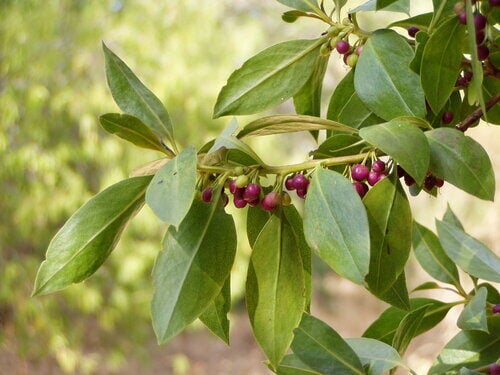
iNaturalist· cc-by-nc
(c) Alexander Baransky, some rights reserved (CC BY-NC), uploaded by Alexander Baransky
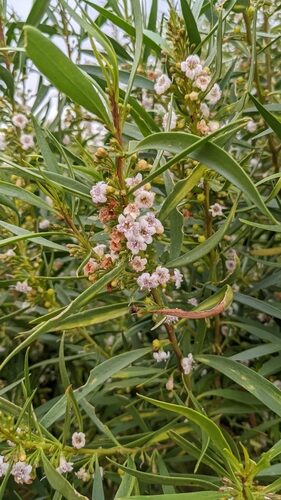
iNaturalist· cc-by-nc
(c) mbourne1, some rights reserved (CC BY-NC)
iNaturalist· cc-by-nc
(c) Вадим, some rights reserved (CC BY-NC), uploaded by Вадим
Description
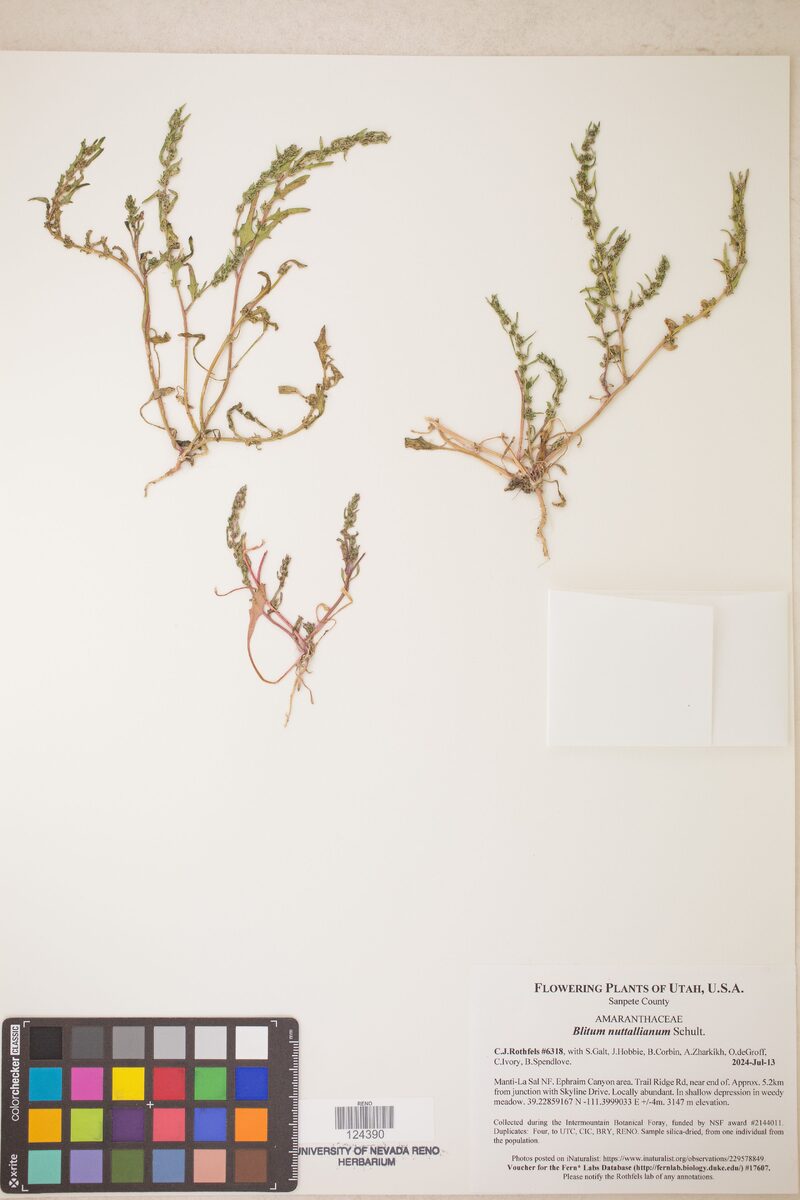
Salsola tragus is a ANNUAL growing to 0.5 m (1ft 8in). The species is hermaphrodite (has both male and female organs). Suitable for: light (sandy) and medium (loamy) soils. Suitable pH: mildly acid, neutral and basic (mildly alkaline) soils and can grow in very alkaline and saline soils. It cannot grow in the shade. It prefers dry or moist soil. The plant can tolerate maritime exposure.
Edible Uses
Young leaves and stems - raw or cooked. The very young shoots are chopped up and eaten in salads, older shoots are cooked as greens or as a salty flavouring for other foods. Seed - cooked. Roasted and used as food.
Medicinal Uses
A poultice of the chewed plants has been applied to ant, bee and wasp stings. An infusion of the plant ashes has been used both internally and as a wash in the treatment of smallpox and influenza.
Distribution
Europe, Naturalized in Northern N. America.
Where It Grows
TEMPERATE ASIA: Saudi Arabia, Afghanistan, Iran, Iraq, Israel, Jordan, Lebanon, Syria, Turkey, Russian Federation-Ciscaucasia (Ciscaucasia), Armenia, Azerbaijan, Georgia, Russian Federation (Dagestan), Russian Federation-Western Siberia (Western Siberia (south)), Russian Federation-Eastern Siberia (Eastern Siberia (south)), Kazakhstan, Turkmenistan, Uzbekistan, Mongolia, China (Heilongjiang Sheng, Hebei Sheng, Gansu Sheng (north), Jiangsu Sheng, Jilin Sheng, Liaoning Sheng, Shanxi Sheng, Shandong Sheng, Shaanxi Sheng, Qinghai Sheng, Nei Mongol Zizhiqu, Ningxia Huizi Zizhiqu, Xinjiang Uygur Zizhiqu, Xizang Zizhiqu) TROPICAL ASIA: India (Jammu and Kashmir), Nepal, Pakistan EUROPE: Finland (south), United Kingdom, Austria, Belgium, Czech Republic, Germany, Hungary, Netherlands, Poland, Slovakia, Russian Federation-European part (European part (south)), Ukraine (incl. Krym), Albania, Bulgaria, Bosnia and Herzegovina, Greece (incl. Crete), Croatia, Italy (incl. Sardinia, Sicily), North Macedonia, Montenegro, Romania, Serbia, Slovenia, Spain (incl. Baleares), France (incl. Corsica), Portugal AFRICA: Spain (Canarias), Portugal (Azores), Algeria (north), Egypt (north), Libya (northeast), Morocco, Tunisia
Cultivation
We have very little information on this species and do not know if it will be hardy in Britain, though judging by its native range it should succeed outdoors in many parts of this country. The following notes are based on the general needs of the genus. Requires a very sunny position in a light or medium well-drained soil, it tolerates salty soils, occasional inundation by salt water and maritime exposure. Succeeds in poor soils and grows more vigorously on alkaline soils.
Propagation
Seed - sow spring in situ. The seed has a short viability and should be stored cool over the winter.