Rhamnus carolinianus
Walter.
Indian Cherry, Oak, Carolina Buckthorn
gbif· cc-by-nc
roxmostafavi
gbif· cc-by-nc
Guillaume Martin
gbif· cc-by-nc
Louis Rimmer
Description
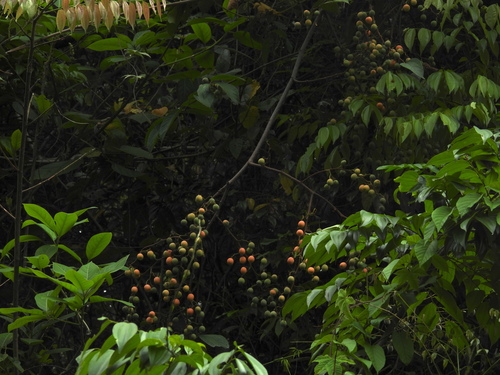
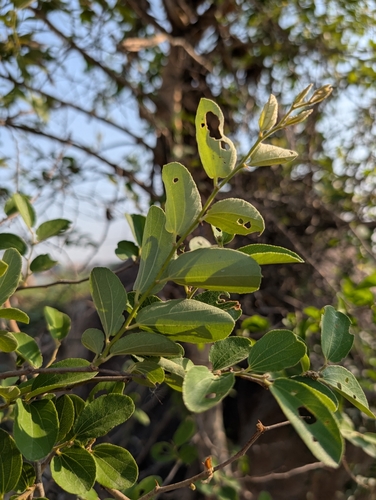
Rhamnus carolinianus is a deciduous Tree growing to 12 m (39ft 4in) at a slow rate. See above for USDA hardiness. It is hardy to UK zone 6. It is in flower in May, and the seeds ripen in September. The species is hermaphrodite (has both male and female organs) and is pollinated by Insects. Suitable for: light (sandy), medium (loamy) and heavy (clay) soils. Suitable pH: mildly acid, neutral and basic (mildly alkaline) soils. It can grow in semi-shade (light woodland) or no shade. It prefers moist soil.
Edible Uses
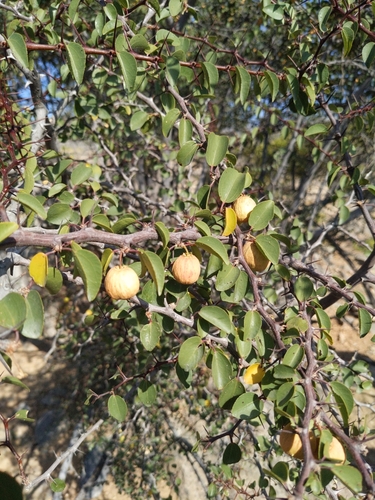
Fruit - raw or cooked. The fruit has a thin rather dry flesh with a sweet and agreeable flavour. The fruit is about 7 - 10mm in diameter and contains 2 - 4 small seeds. Some caution is advised, see the notes above on toxicity.
Medicinal Uses
HepaticA tea made from the bark is emetic and strongly laxative. It is used in the treatment of constipation with nervous or muscular atony of the intestines. An infusion of the wood has been used in the treatment of jaundice.
Known Hazards
Although no specific mention of toxicity has been found for this species, there is the suggestion that some members of this genus could be mildly poisonous.
Distribution
Eastern N. America - Virginia to Florida, west to Texas and Nebraska.
Where It Grows
Coming Soon
Cultivation
Succeeds in any reasonably good soil, whether moderately acid or alkaline. Prefers a moist moderately fertile soil in sun or partial shade. One report suggests that the plant might not be very hardy in Britain, whilst another says that it is in climatic zone 6 and thus tolerates temperatures down to about -15°c. A slow-growing and usually short-lived plant in the wild. Plants are susceptible to 'crown rust' of oats. The species in this genus are notably resistant to honey fungus. This species is closely related to R. purshiana.
Propagation
Seed - best sown as soon as it is ripe in the autumn in a cold frame. Stored seed will require 1 - 2 months stratification at 5°c and should be sown as early in the year as possible in a cold frame. Prick out the seedlings into individual pots when they are large enough to handle, and grow them on in the greenhouse or cold frame for their first winter. Plant them out in late spring or early summer of the following year. Cuttings of half-ripe wood, July/August in a frame. Cuttings of mature wood of the current year's growth, autumn in a frame. Layering in early spring.
Other Uses
Wood. Wood - rather hard, light, close grained, not strong. It weighs 34lb per cubic foot. Too small to be of commercial value.