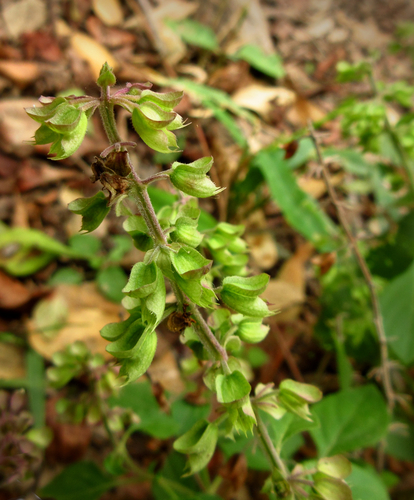
Origanum x majoricum
Cambess.
Hardy Marjoram
Description
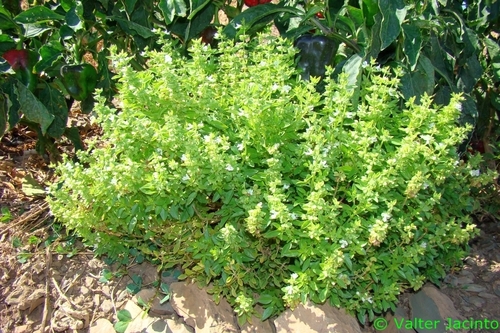
Origanum x majoricum is a PERENNIAL growing to 0.6 m (2ft) by 0.5 m (1ft 8in). See above for USDA hardiness. It is hardy to UK zone 7. It is in flower from June to September, and the seeds ripen from August to September. The species is hermaphrodite (has both male and female organs) and is pollinated by Bees. It is noted for attracting wildlife. Suitable for: light (sandy), medium (loamy) and heavy (clay) soils and prefers well-drained soil. Suitable pH: mildly acid, neutral and basic (mildly alkaline) soils. It can grow in semi-shade (light woodland) or no shade. It prefers dry or moist soil.
Edible Uses
Tea. The following uses are for O. majorana. They almost certainly also apply to this plant. Leaves - raw or cooked. Sweet marjoram is widely used as a flavouring for salad dressings, vegetables, legumes and oils[7, 14, 27, 61, 171, 238]. It has a more delicate flavour than the closely related oregano (Origanum vulgare), and is best when used fresh and only added towards the end of cooking. The aromatic seeds are used as a flavouring in sweets, drinks etc. A herb tea is made from the fresh or dried leaves. The flavour resembles a blend of thyme, rosemary and sage.
Medicinal Uses
Antiseptic Antispasmodic Aromatherapy Carminative Cholagogue Diaphoretic Disinfectant Emmenagogue Expectorant Stimulant Stomachic Tonic. The following uses are for O. majorana. They almost certainly also apply to this plant. The herb is antiseptic, antispasmodic, carminative, cholagogue, diaphoretic, diuretic, emmenagogue, expectorant, stimulant, stomachic and mildly tonic. It is taken internally in the treatment of bronchial complaints, tension headaches, insomnia, anxiety, minor digestive upsets and painful menstruation. It should not be prescribed for pregnant women. Externally, it is used to treat muscular pain, bronchial complaints, arthritis, sprains and stiff joints. The plant is harvested as flowering begins and can be used fresh or dried. Marjoram is often used medicinally in the form of the essential oil, about 400 grams being obtained from 70 kilos of the fresh herb. The oil is used as an external application for sprains, bruises etc. The essential oil is used in aromatherapy. Its keyword is 'Muscle relaxant'.
Distribution
South-western Europe.
Where It Grows
EUROPE: Spain (incl. Baleares), Portugal
Cultivation
Requires a rather dry, warm, well-drained soil, but is not fussy as to soil type, thriving on chalk. Prefers slightly alkaline conditions. Plants are not hardy in all parts of Britain, they tolerate temperatures down to about -5°c, possibly lower if the roots are given a good mulch in the autumn. This species is probably a hybrid between sweet marjoram (O. majorana) and Oregano (O. vulgare). It resembles O. majorana in appearance and aroma, and has the same culinary uses, but is more tolerant of British winters. A good companion plant, improving the flavour of nearby plants. The flowers are very attractive to bees. Members of this genus are rarely if ever troubled by browsing deer.
Propagation
Seed - this species is a sterile hybrid and so does not produce seed. If you wanted to grow it from seed then you would need to hybridise O. vulgare x O. majorana. The resulting seedlings would be rather variable. Division in March or October. Very easy, larger divisions can be planted out direct into their permanent positions. We have found that it is better to pot up the smaller divisions and grow them on in light shade in a cold frame until they are well established before planting them out in late spring or early summer. Basal cuttings of young barren shoots in June. Very easy. Harvest the shoots with plenty of underground stem when they are about 8 - 10cm above the ground. Pot them up into individual pots and keep them in light shade in a cold frame or greenhouse until they are rooting well. Plant them out in the summer.
Other Uses
Disinfectant Dye Essential. The following uses are for O. majorana. They almost certainly also apply to this plant. The leaves and flowers yield 0.3 - 0.4% essential oil by steam distillation. Called 'Oil of Sweet Marjoram', it is used as a food flavouring and in perfumery, soaps, hair products etc. The plant is often used to disinfect bee hives.