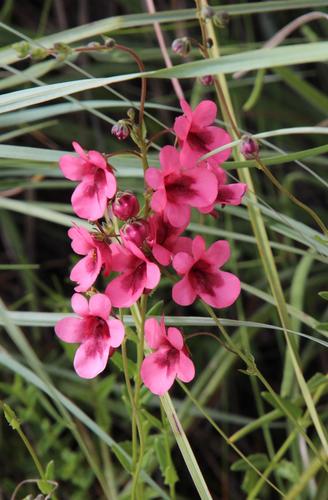
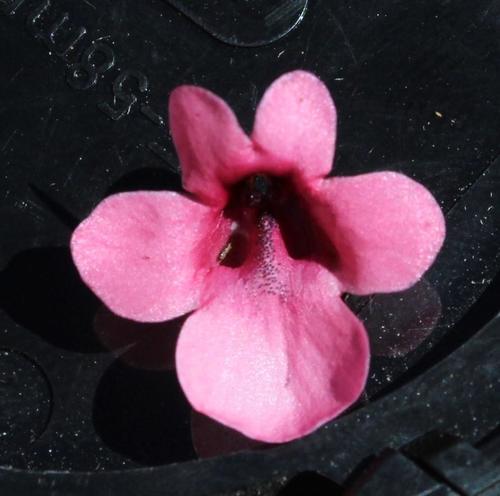
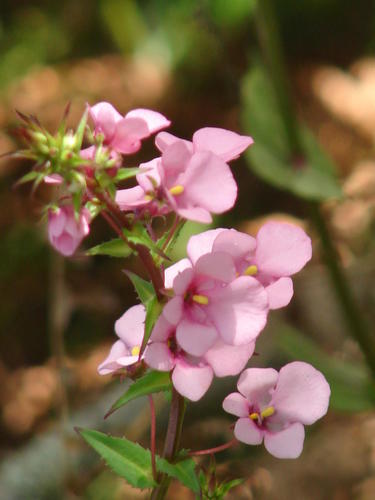
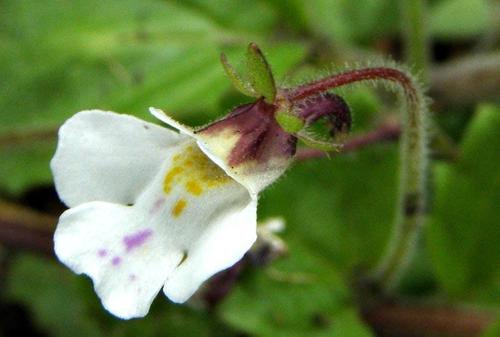
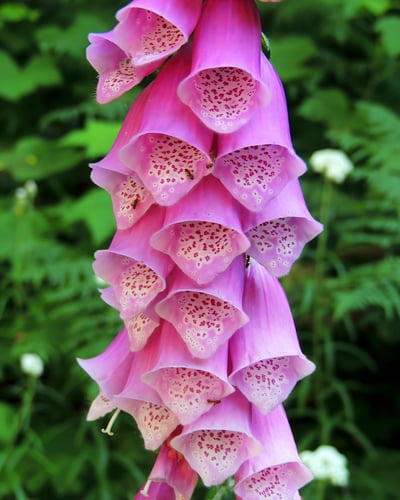
Mimulus geyeri
Torr.
Monkey Flower
gbif· cc-by-nc
Arizona State University Vascular Plant Herbarium (ASU-Plants)
gbif· cc-by
The New York Botanical Garden
gbif· cc0
University of North Texas
Description
Mimulus geyeri is a PERENNIAL growing to 0.6 m (2ft). It is in flower from July to August. The species is hermaphrodite (has both male and female organs) and is pollinated by Insects. Suitable for: light (sandy), medium (loamy) and heavy (clay) soils and can grow in heavy clay soil. Suitable pH: mildly acid, neutral and basic (mildly alkaline) soils and can grow in very alkaline soils. It can grow in semi-shade (light woodland) or no shade. It prefers wet soil and can grow in water.
Edible Uses
Leaves and young shoots - raw. A slightly bitter flavour, they can be used as part of a mixed salad.
Medicinal Uses
Miscellany. None known
Distribution
Western N. America - Manitoba to Michigan and Montana.
Where It Grows
NORTHERN AMERICA: Canada (Québec, Ontario, Saskatchewan, Manitoba), United States (Indiana, Michigan, Iowa, Missouri, South Dakota, Illinois, Colorado, Wyoming, New Mexico, Texas, Arizona, Nevada, Utah), Mexico (Chihuahua, Coahuila de Zaragoza)
Cultivation
We have very little information on this species and do not know if it will be hardy in Britain, though judging by its native range it should succeed outdoors in most parts of the country. The following notes are based on the general needs of the genus. Prefers rather moist places such as damp borders, margins of streams and boggy spots. Grows well in heavy clay soils. Thrives in full sun so long as the soil does not dry out, otherwise it is best grown in partial shade.
Propagation
Seed - sow spring in a greenhouse and only lightly cover the seed. When they are large enough to handle, prick the seedlings out into individual pots and plant them out in the summer. If you have sufficient seed it can also be sown in situ in late spring after the last expected frosts. Division in spring. Very easy, large divisions can be planted out direct into their permanent positions. We have found that it is better to pot up the smaller divisions and grow them on in light shade in a cold frame until they are well established before planting them out in late spring or early summer. Cuttings of softwood, 5cm long in spring or summer.
Other Uses
Miscellany. The plant, growing in the wild, is seen as an indicator of surface water.