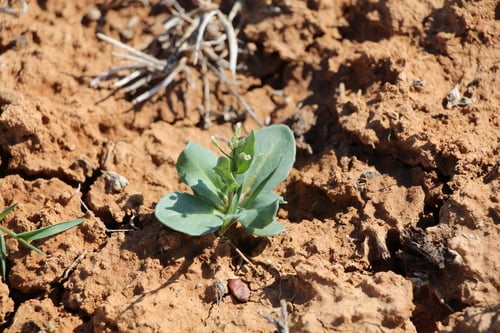
Lepidium densiflorum
Schrad.
Common Pepperweed
iNaturalist· cc-by
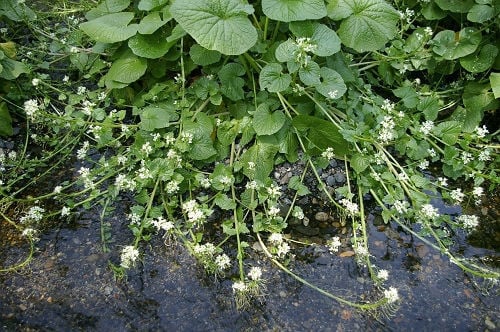
(c) aarongunnar, some rights reserved (CC BY), uploaded by aarongunnar
iNaturalist· cc-by-nc
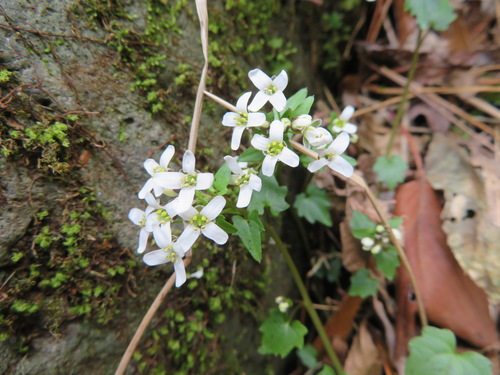
(c) James Mickley, some rights reserved (CC BY-NC), uploaded by James Mickley
iNaturalist· cc-by-nc
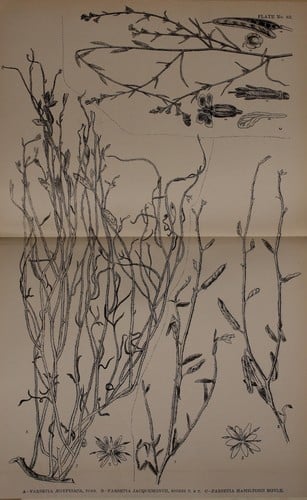
(c) Erika Mitchell, some rights reserved (CC BY-NC), uploaded by Erika Mitchell
Description
Lepidium densiflorum is a ANNUAL/BIENNIAL growing to 0.5 m (1ft 8in). It is in flower from May to July. The species is hermaphrodite (has both male and female organs). Suitable for: light (sandy), medium (loamy) and heavy (clay) soils. Suitable pH: mildly acid, neutral and basic (mildly alkaline) soils. It can grow in semi-shade (light woodland) or no shade. It prefers dry or moist soil.
Edible Uses
Leaves - raw or cooked. A hot cress-like flavour, they are used in spring and early summer, the young leaves are best. Immature seedpods - a hot pungent taste, they are used as a flavouring. Seed - used as a mustard-like flavouring. The pungency of mustard develops when cold water is added to the ground-up seed - an enzyme (myrosin) acts on a glycoside (sinigrin) to produce a sulphur compound. The reaction takes 10 - 15 minutes. Mixing with hot water or vinegar, or adding salt, inhibits the enzyme and produces a mildly-pungent but bitter mustard.
Medicinal Uses
Analgesic Kidney. The leaves have been chewed in the treatment of headaches. An infusion of the plant has been used in the treatment of kidney problems. It has also been used as a dietary aid for a person trying to lose weight.
Distribution
N. America - Maine to British Columbia, south to Virginia, Texas and Nevada. Casual in Britain.
Where It Grows
NORTHERN AMERICA: Canada (Northwest Territories, Yukon, Québec, Nova Scotia, Ontario, Prince Edward Island, New Brunswick, Newfoundland and Labrador, Saskatchewan, Alberta, Manitoba, British Columbia), United States (Alaska, Connecticut, Indiana, Maine, Massachusetts, Michigan, New Hampshire, New Jersey, New York, Ohio, Pennsylvania, Rhode Island, Vermont, West Virginia, Illinois, Iowa, Kansas, Minnesota, Missouri, Nebraska, North Dakota, Oklahoma, South Dakota, Wisconsin, Colorado, Idaho, Montana, Oregon, Washington, Wyoming, Alabama, Arkansas, Delaware, Florida, Georgia, Kentucky, Louisiana, Maryland, Mississippi, North Carolina, South Carolina, Tennessee, Virginia, District of Columbia, New Mexico, Texas, Arizona, California, Nevada, Utah), Mexico (Chihuahua, Nuevo León)
Cultivation
An easily grown plant, it succeeds in most soils.
Propagation
Seed - sow spring or late summer in situ. Germination should take place within 3 weeks.