Aglaia tomentosa
Teijsm. & Binnend.
Woolly langsat tree
iNaturalist· cc-by-nc-sa
(c) filibot.web, some rights reserved (CC BY-NC-SA)
wikimedia· cc-by-sa
Wikimedia Commons - filibot.web
Summary
Source: WikipediaAglaia tomentosa is a species of plant in the mahogany family Meliaceae. It is found in Brunei, India, Indonesia, Laos, Malaysia, the Philippines, Singapore, and Vietnam.
Description
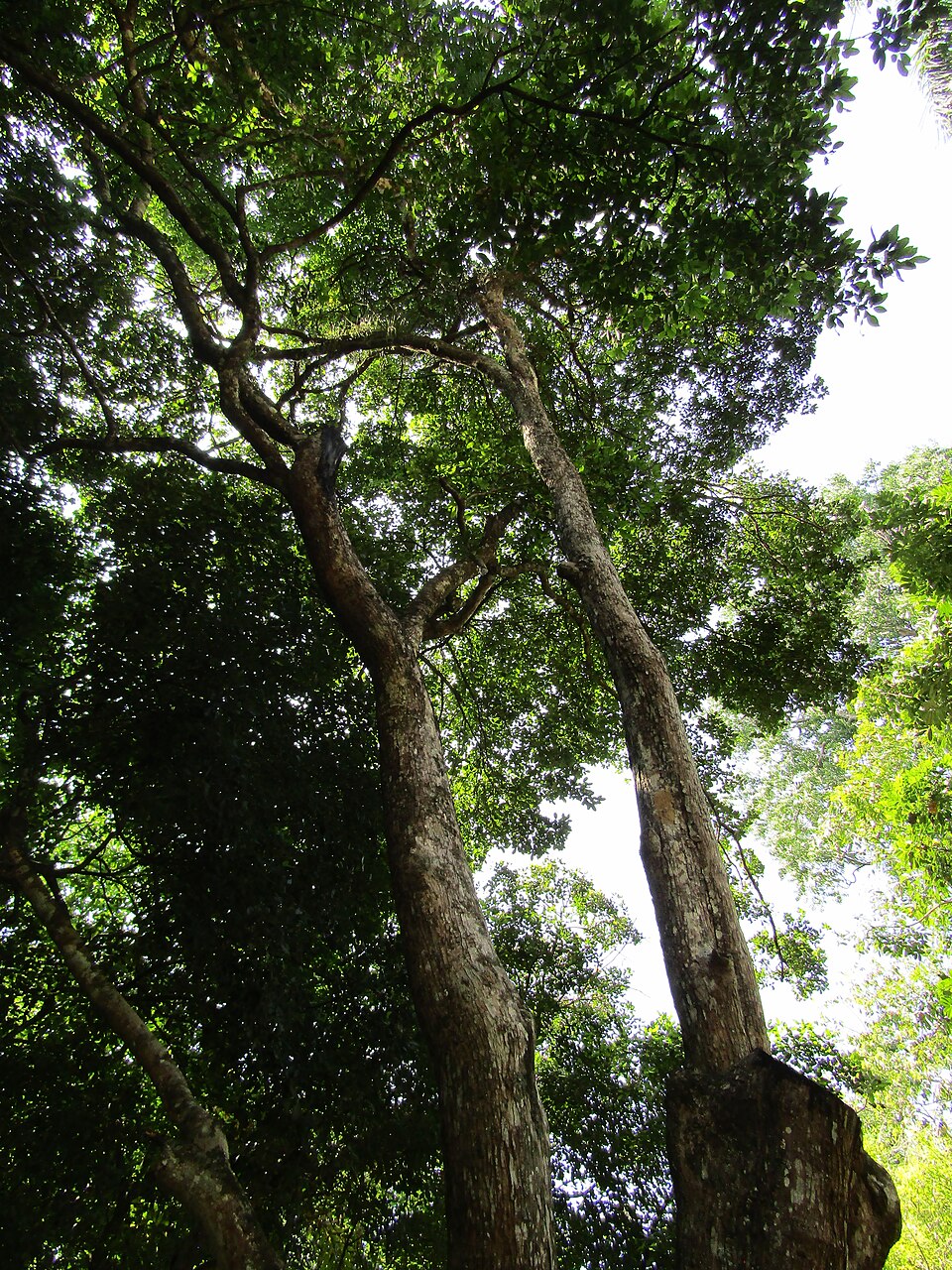
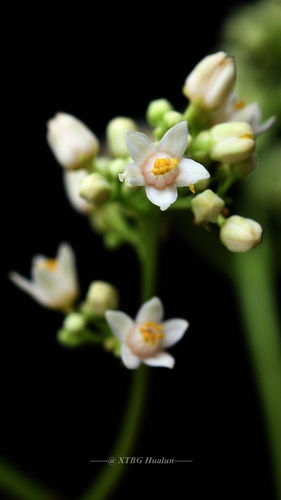
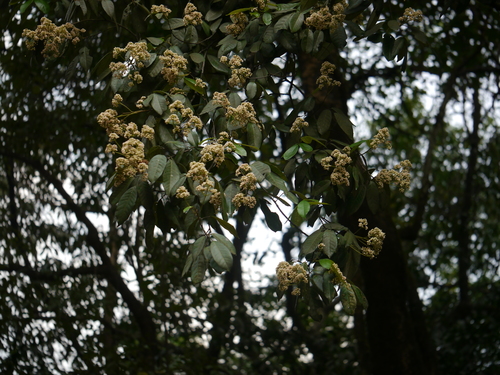
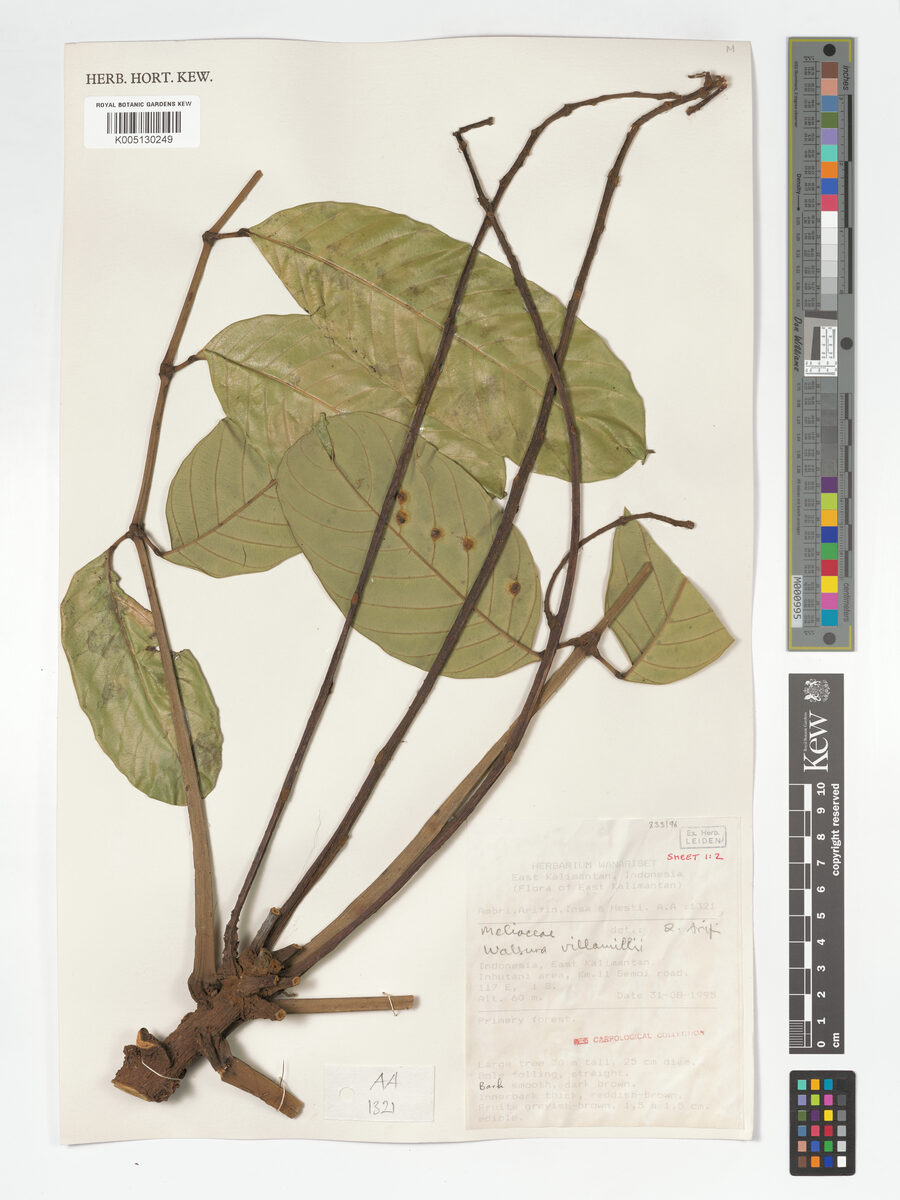
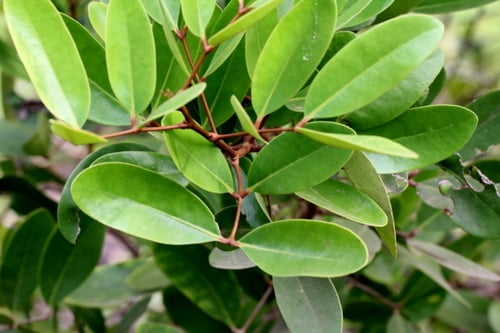
A medium sized tree. It grows 20 m tall. The trunk is 40 cm across. The leaves are alternate and compound and hairy with 5 to 7 leaflets. The leaflets are hairy. The flowers are small and borne in compound flowers clusters. The fruit are red and velvety. It is juicy and about 2 cm across.
Edible Uses
Fruit - raw. The acidic-tasting, gelatinous, translucent covering (aril) around the seed is eaten. It lacks flavour. The fruit is up to 25mm long x 17mm in diameter, containing up to two seeds.
Traditional Uses
The layer around the seed in the fruit is eaten raw.
This uses section is brief — help expand it
Medicinal Uses
The genus 'Aglaia' is the only source of the group of about 50 known representatives of compounds that bear a unique cyclopenta[b]tetrahydrobenzofuran skeleton. These compounds are more commonly called rocaglate or rocaglamide derivatives, or flavaglines, and most have been found to have potent insecticidal properties, antifungal, antiviral, antibacterial or anthelmintic bioactivity. Several of them exhibit pronounced cytotoxic activity against a range of human cancers. Since the first representative in this group was only discovered in 1982, this is one of the few recent examples of a completely new class of plant secondary metabolites of biological promise (see B. G. Wang et al., Biochem. Syst. Ecol. 32: 1223-1226. 2004; L.W. Chaidir et al., J. Nat. Prod. 64: 1216-1220. 2001).
Distribution
It is a tropical plant. They occur from northern Luzon to southern Mindanao. It grows in forests at low altitudes. In Indonesia it grows up to 2,000 m above sea level.
Where It Grows
Asia, Australia, Brunei, India, Indochina, Indonesia, Laos, Malaysia, Pacific, Papua New Guinea, Philippines, PNG, SE Asia, Singapore, Thailand, Vietnam,
Cultivation
Plants can be grown from seeds.
Propagation
Seed - germinates easily if it is removed from the fruit flesh and sown whilst still fresh.
Other Uses
The genus 'Aglaia' is the only source of the group of about 50 known representatives of compounds that bear a unique cyclopenta[b]tetrahydrobenzofuran skeleton. These compounds are more commonly called rocaglate or rocaglamide derivatives, or flavaglines, and most have been found to have potent insecticidal properties, antifungal, antiviral, antibacterial or anthelmintic bioactivity. Several of them exhibit pronounced cytotoxic activity against a range of human cancers. Since the first representative in this group was only discovered in 1982, this is one of the few recent examples of a completely new class of plant secondary metabolites of biological promise (see B. G. Wang et al., Biochem. Syst. Ecol. 32: 1223-1226. 2004; L.W. Chaidir et al., J. Nat. Prod. 64: 1216-1220. 2001). The sapwood is pale brown or pinkish-brown. The wood is used in house building, but is not durable if exposed to the weather.
Notes
There are about 104 Aglaia species. They occur in Asia and the Pacific.
Synonyms
Also Known As
Bayanti, Bunau, Huat ngo, Karamiras, Kumpang penjaru, Lantupak, Mata-mata, Medang bebulu, Nuai fai, Pohon langsat wol, Redan, Sampak tupai, Sang khriat, Segera, Umpong
References (13)
- Bircher, A. G. & Bircher, W. H., 2000, Encyclopedia of Fruit Trees and Edible Flowering Plants in Egypt and the Subtropics. AUC Press. p 14 (As Aglaia glomerata)
- Brown, W.H., 1920, Wild Food Plants of the Philippines. Bureau of Forestry Bulletin No. 21 Manila. p 80
- Burkill, I.H., 1966, A Dictionary of the Economic Products of the Malay Peninsula. Ministry of Agriculture and Cooperatives, Kuala Lumpur, Malaysia. Vol 1 (A-H) p 73
- Coronel, R.E., 1982, Fruit Collections in the Philippines. IBPGR Newsletter p 6 (As Aglaia rufa)
- Dodo,2015, Keanekaragaman dan konservasi Tumbuhan Buah Langka Indonesia. Pusat Konservasi Tumbuhan Kebun Raya – LIPI. Warta Kebun Raya 13(2)
Show all 13 references Hide references
- Milow, P., et al, 2013, Malaysian species of plants with edible fruits or seeds and their evaluation. International Journal of Fruit Science. 14:1, 1-27
- Monsalud, M.R., Tongacan, A.L., Lopez, F.R., & Lagrimas, M.Q., 1966, Edible Wild Plants in Philippine Forests. Philippine Journal of Science. p 493
- Slik, F., www.asianplant.net
- Sukarya, D. G., (Ed.) 2013, 3,500 Plant Species of the Botanic Gardens of Indonesia. LIPI p 114
- Suwardi, A. B., et al, 2020, Wild edible fruits generate substantial income for local people of the Gunung Leuser National Park, Aceh Tamiang Region. Ethnobotany Research & Applications 20:11
- Verheij, E. W. M. and Coronel, R.E., (Eds.), 1991, Plant Resources of South-East Asia. PROSEA No 2. Edible fruits and nuts. Pudoc Wageningen. p 313
- Wongprasert, T. et al, 2011, A Synoptic Account of the Meliaceae of Thailand. Thai For. Bull. 39:210-266
- World Checklist of Useful Plant Species 2020. Royal Botanic Gardens, Kew