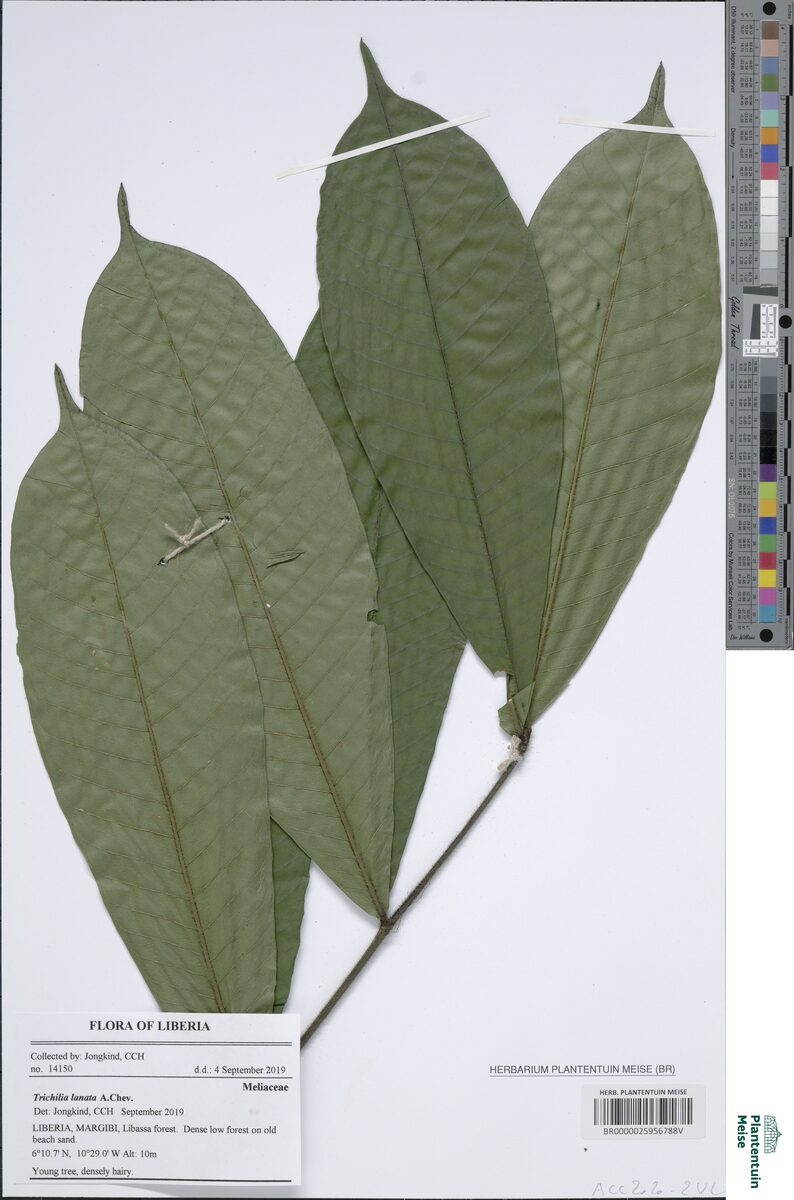
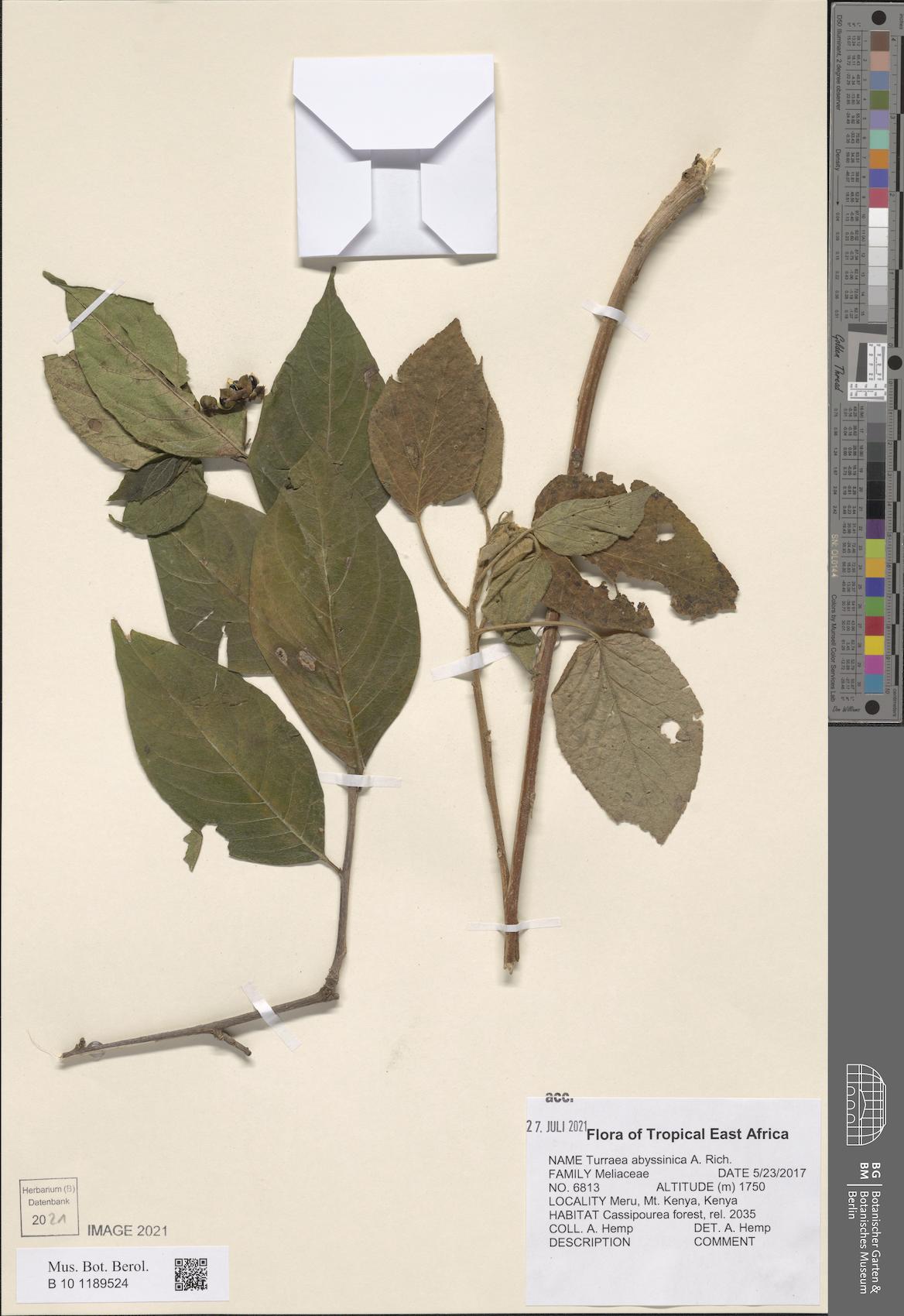
Walsura robusta
Roxb.
Cut-the-tongue tree
iNaturalist· cc-by-nc
(c) eec, some rights reserved (CC BY-NC), uploaded by eec
gbif· cc0
President and Fellows of Harvard College
Summary
Source: WikipediaWalsura robusta is a tree species described by William Roxburgh; it is included in the family Meliaceae. No subspecies are listed in the Catalogue of Life. In Vietnamese its name is lòng tong.
Description
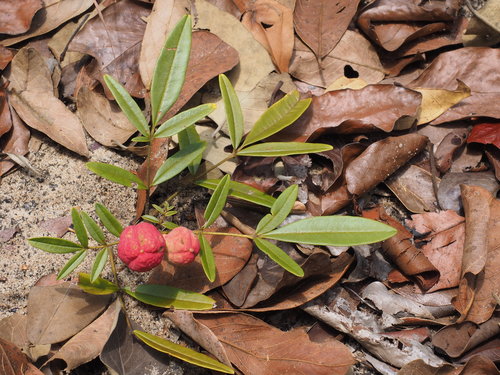
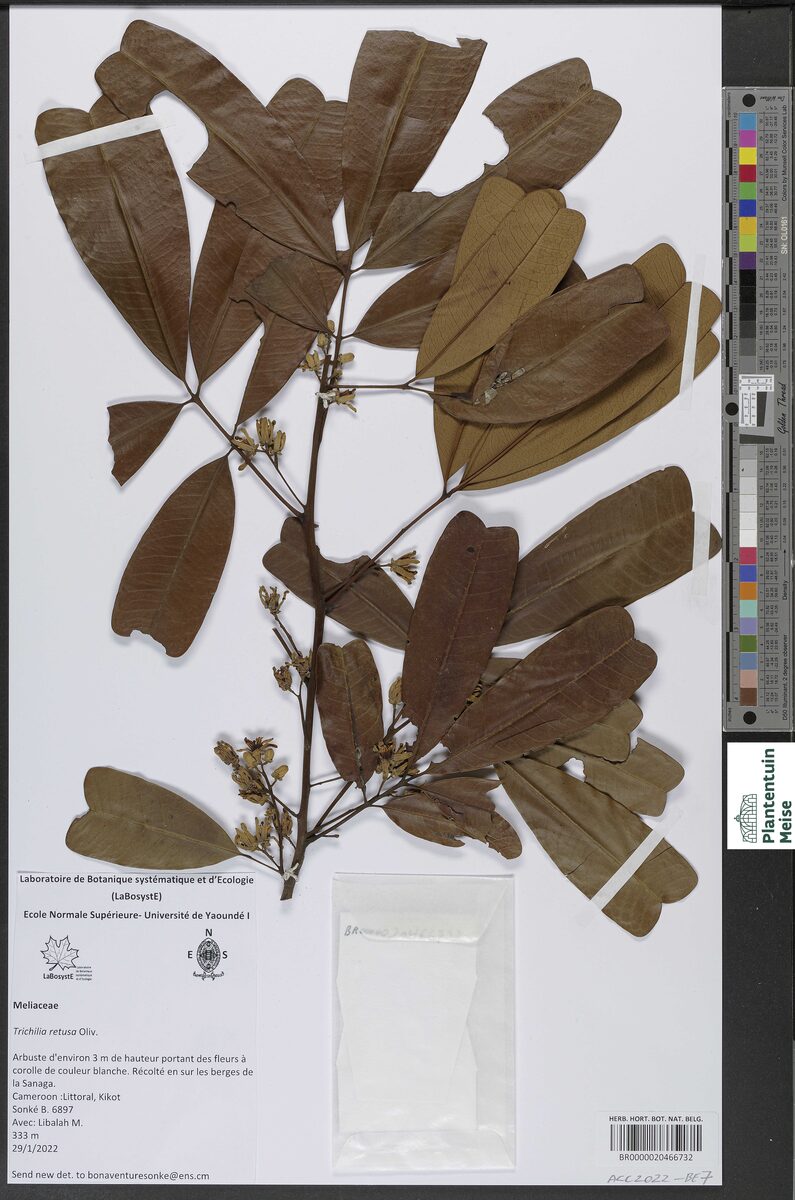
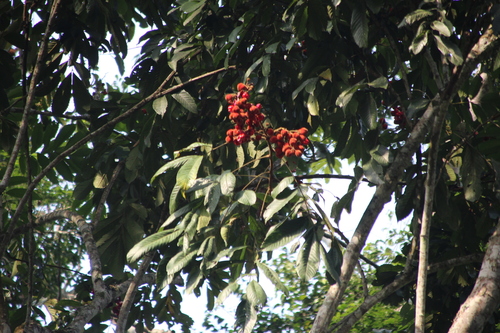
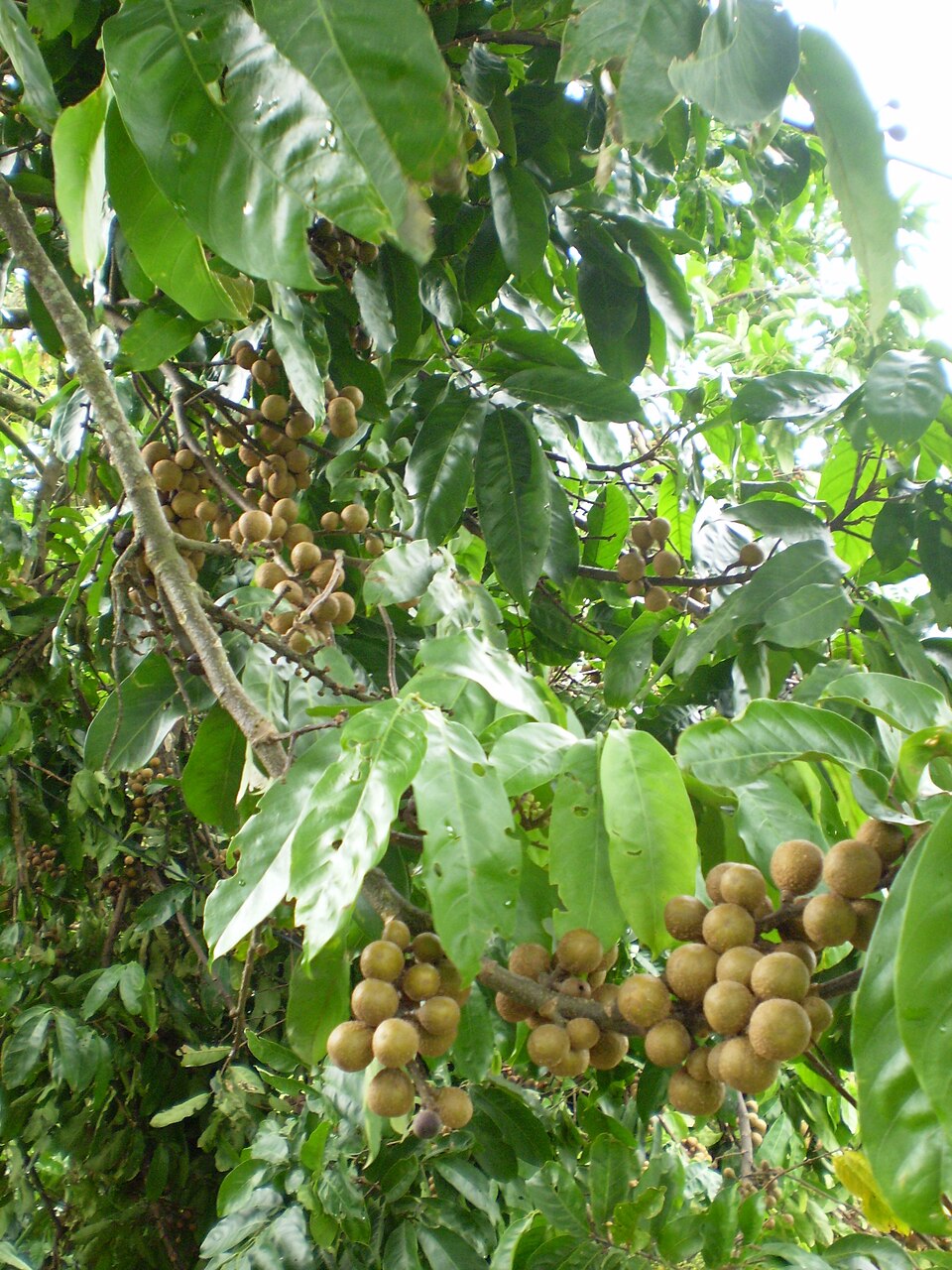
A large tree. It grows 4-25 m high. The leaves have leaflets along the stalk. The leaves are oval and 15-30 cm long. There are 3-5 leaflets. They are narrowly oval and the end one is 7-16 cm long by 3-7 cm wide. The side ones are smaller. The flowers are small and white. They are 4-5 mm long. They arein groups in the axils of leaves or towards the ends of branches. These groups are 5-15 cm long. The fruit are oval and 1-2 cm across. There are 1 or 2 seeds.
Traditional Uses
The ripe fruit are eaten raw.
This uses section is brief — help expand it
Distribution
A tropical plant. In Yunnan in China it grows between 600-1000 m altitude. It grows in seasonal rainforest and in monsoonal rainforest.
Where It Grows
Asia, Bangladesh, Bhutan, China, Himalayas, India, Indochina, Hainan, Laos, Malaysia, Myanmar, Northeastern India, SE Asia, Thailand, Vietnam,
Other Uses
The light red wood is very hard and durable. It is used for construction and has also been used in paper manufacture.
Production
In China plants flower February to March and fruit April to June.
Nutrition
| Part | Moisture | kJ | kcal | Protein | Vit A | Vit C | Iron | Zinc |
|---|---|---|---|---|---|---|---|---|
| Fruit | 83.2 | — | — | — | — | 6.3 | — | — |
Also Known As
Dieng-soh-phlang, Gyobo, Kot Sit Shu, Lali, Mogchouphong, Per-te, Thengrali, Yailonan
References (8)
- Altschul, S.V.R., 1973, Drugs and Foods from Little-known Plants. Notes in Harvard University Herbaria. Harvard Univ. Press. Massachusetts. no. 2033
- Ambasta, S.P. (Ed.), 2000, The Useful Plants of India. CSIR India. p 686
- Burkill, I.H., 1966, A Dictionary of the Economic Products of the Malay Peninsula. Ministry of Agriculture and Cooperatives, Kuala Lumpur, Malaysia. Vol 2 (I-Z) p 2293
- Hu, Shiu-ying, 2005, Food Plants of China. The Chinese University Press. p 508
- Jin, Chen et al, 1999, Ethnobotanical studies on Wild Edible Fruits in Southern Yunnan: Folk Names: Nutritional Value and Uses. Economic Botany 53(1) pp 2-14
Show all 8 references Hide references
- Kar, A., et al, 2013, Wild Edible Plant Resources used by the Mizos of Mizoram, India. Kathmandu University Journal of Science, Engineering and Technology. Vol. 9, No. 1, July, 2013, 106-126
- Reis, S. V. and Lipp, F. L., 1982, New Plant Sources for Drugs and Foods from the New York Botanical Garden herbarium. Harvard. p 149
- Wongprasert, T. et al, 2011, A Synoptic Account of the Meliaceae of Thailand. Thai For. Bull. 39:210-266