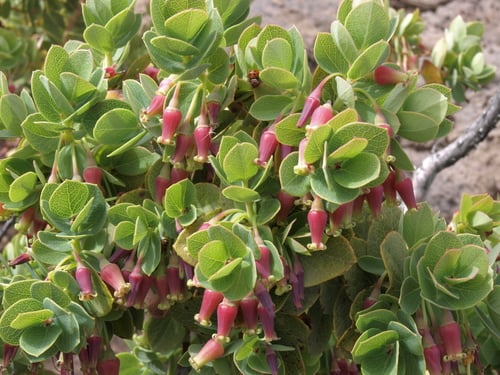
Vaccinium leschenaultii
Wight
Indian cranberry
iNaturalist· cc-by
(c) madhavan a.p, some rights reserved (CC BY)
iNaturalist· cc-by
(c) madhavan a.p, some rights reserved (CC BY)
iNaturalist· cc-by
(c) madhavan a.p, some rights reserved (CC BY)
Description
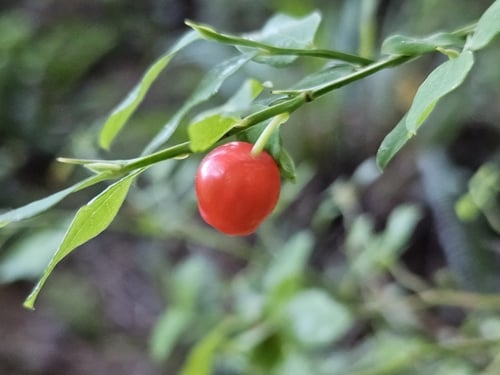
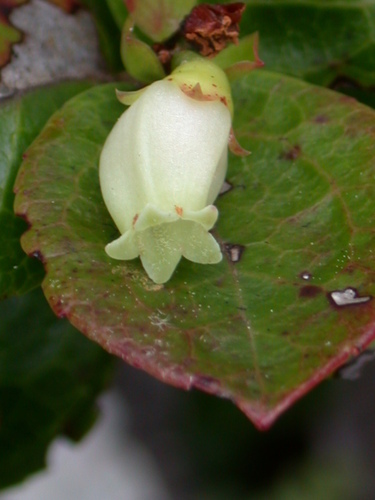
A small tree. It grows 7 m tall. The bark is brown and has irregular scales. The young branches are angular and hairy. The leaves are simple and alternate. The leaf blade is 5-7 cm long by 3 cm wide. The flowers are in the axils of leaves or near the ends of branches. They are pink. The fruit is a smooth round berry with many seeds. It is red.
Edible Uses
The sweet fruit is eaten fresh and used for jams, tarts, and cakes.
Traditional Uses
The fruit are sweet and edible. They are also used for jams, tarts and cakes.
This uses section is brief — help expand it
Distribution
A tropical plant. It grows in evergreen forests between 1,600-2,000 m above sea level.
Where It Grows
Asia, India, Myanmar, SE Asia, Sri Lanka,
Dangerous Lookalikes
This plant can be confused with the following toxic species. Always verify identification carefully before consuming any wild plant.
Deadly Nightshade
Atropa belladonna
Joan Simon from Barcelona, España
Indian cranberry
Vaccinium leschenaultii
(c) madhavan a.p, some rights reserved (CC BY)
Deadly Nightshade: Tall herbaceous plant (1-2m), single shiny black cherry-sized berries, star-shaped calyx, large oval leaves, sweet but dangerous taste.
Indian cranberry: Low woody shrub, berries in clusters with crown/remnant calyx ring, sweet taste.
Synonyms
Also Known As
Anduvan, Kalavu, Katavu, Kelaaram, Kilapalam, Neilgherries
References (8)
- Ambasta, S.P. (Ed.), 2000, The Useful Plants of India. CSIR India. p 666 (As Vaccinium symplocifolium)
- Chandrashekara, U. M., 2009, Tree species yielding edible fruit in the coffee-based homegardens of Kerala, India: their diversity, uses and management. Food Sec. 1:361-370
- Dobriyal, M. J. R. & Dobriyal, R., 2014, Non Wood Forest Produce an Option for Ethnic Food and Nutritional Security in India. Int. J. of Usuf. Mngt. 15(1):17-37 (As Vaccinium symplocifolium)
- Hedrick, U.P., 1919, (Ed.), Sturtevant's edible plants of the world. p 666
- Reis, S. V. and Lipp, F. L., 1982, New Plant Sources for Drugs and Foods from the New York Botanical Garden herbarium. Harvard. p 230 (As Vaccinium symplocifolium)
Show all 8 references Hide references
- Sasi, R. et al, 2011, Wild edible plant Diversity of Kotagiri Hills - a Part of Nilgiri Biosphere Reserve, Southern India. Journal of Research in Biology. Vol. 1 No. 2, pp 80-87
- Sasi, R. & Rajendran, A., 2012, Diversity of Wild Fruits in Nilgiri Hills of the Southern Western Ghats - Ethnobotanical Aspects. IJABPT, 3(1) p 82-87
- Singh, H.B., Arora R.K.,1978, Wild edible Plants of India. Indian Council of Agricultural Research, New Delhi. p 73 (As Vaccinium symplocifolium)