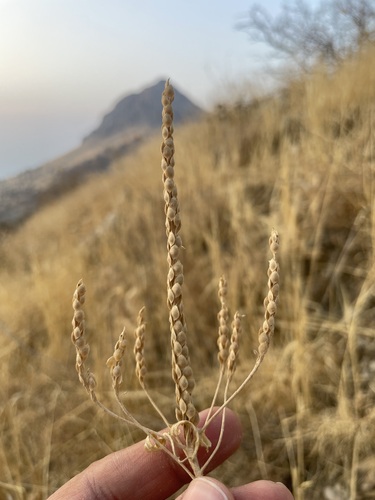
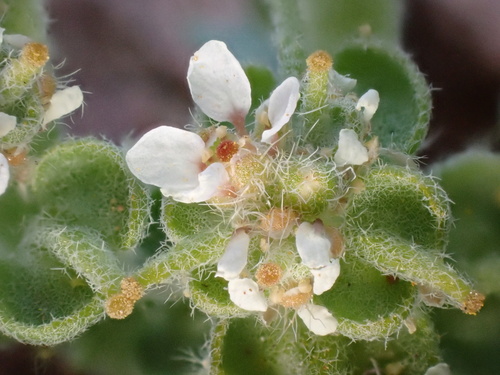
Brassica rapa trilocularis - (Roxb.)Hanelt.
(Roxb.)Hanelt.
Indian Colza
No photos yet for Brassica rapa trilocularis - (Roxb.)Hanelt.
Sign in to contribute a photoDescription
Brassica rapa trilocularis is a BIENNIAL growing to 0.9 m (3ft). See above for USDA hardiness. It is hardy to UK zone 7 and is not frost tender. The species is hermaphrodite (has both male and female organs) and is pollinated by Bees. The plant is self-fertile. It is noted for attracting wildlife. Suitable for: light (sandy), medium (loamy) and heavy (clay) soils and prefers well-drained soil. Suitable pH: mildly acid, neutral and basic (mildly alkaline) soils. It can grow in semi-shade (light woodland) or no shade. It prefers moist soil.
Edible Uses
Oil. Leaves - raw or cooked. Used as a vegetable or fermented and stored for winter use. A bit on the coarse side, though the young leaves can be added in moderation to salads whilst older leaves make an acceptable vegetable. An edible oil is obtained from the seeds. It is used for cooking.
Distribution
A cultivated form of B. rapa.
Where It Grows
(Brassica rapa) Albania, Algeria, Bulgaria, Eritrea, Ethiopia, Greece, Iran, Iraq, Italy, Kriti, Lebanon-Syria, Libya, Morocco, North Caucasus, Oman, Palestine, Saudi Arabia, Transcaucasus, Tunisia, Turkey, Yugoslavia.
Cultivation
Succeeds in full sun in a well-drained fertile preferably alkaline soil. Prefers a light sandy soil and dislikes a heavy soil. Prefers cool moist growing conditions. Succeeds in any reasonable soil. Tolerates a pH in the range 4.3 to 8.3. Indian colza is cultivated mainly in India and Nepal for its oil-rich seeds.
Propagation
Seed - sow in situ April to September. Some varieties can also be sown in a cold greenhouse in late autumn, winter or early spring to provide leaves overwinter and in late spring.
Other Uses
Lighting Oil Oil. The oil from the seed is used for lighting. The seed husks are used in plastering house walls.