Avena ludoviciana
Durand.
Oats
gbif· cc-by
GBIF
gbif· cc-by-sa
GBIF
gbif· cc-by-sa
GBIF
Description
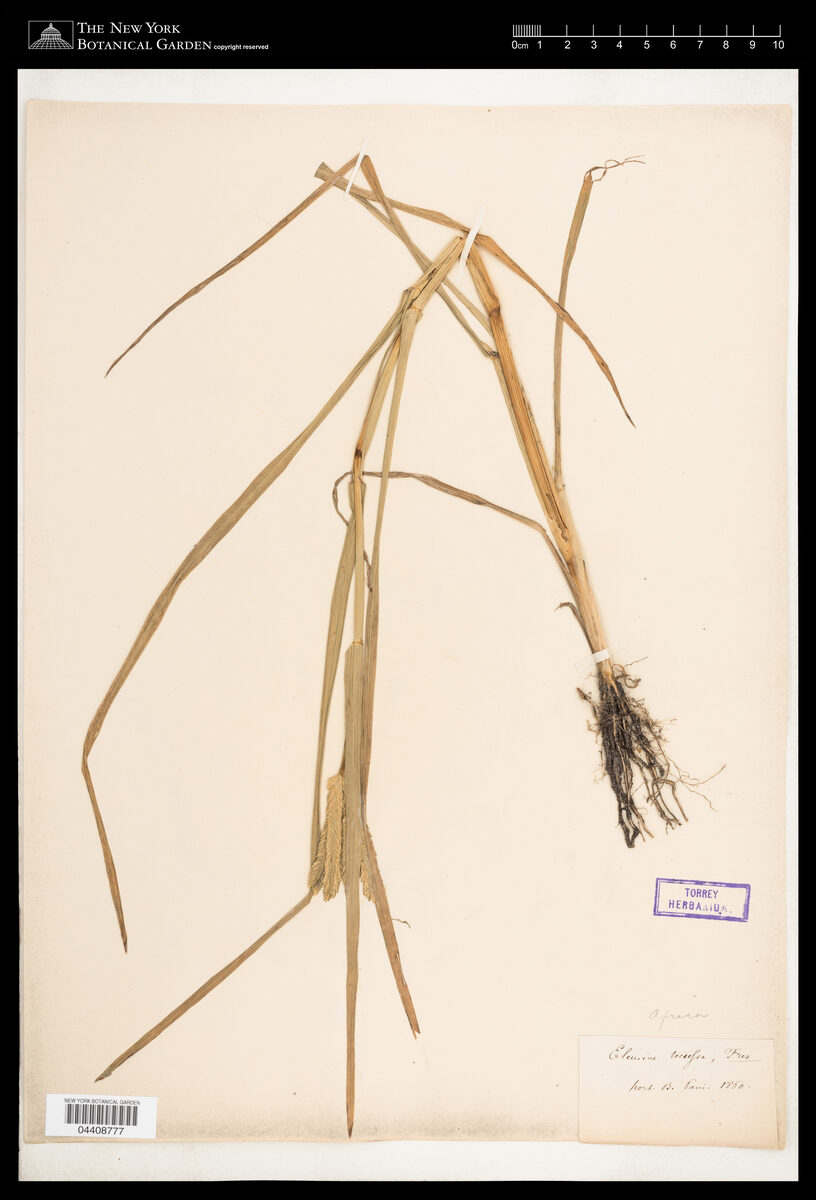
Avena ludoviciana is a ANNUAL. It is not frost tender. It is in flower from June to July, and the seeds ripen from August to October. The species is hermaphrodite (has both male and female organs) and is pollinated by Wind. Suitable for: light (sandy), medium (loamy) and heavy (clay) soils, prefers well-drained soil and can grow in heavy clay soil. Suitable pH: mildly acid, neutral and basic (mildly alkaline) soils. It cannot grow in the shade. It prefers dry or moist soil and can tolerate drought.
Edible Uses
Coffee. Seed - cooked. The seed ripens in the latter half of summer and, when harvested and dried, can store for several years. It has a floury texture and a mild, somewhat creamy flavour. It can be used as a staple food crop in either savoury or sweet dishes. The seed can be cooked whole, though it is more commonly ground into a flour and used as a cereal in all the ways that oats are used, especially as a porridge but also to make biscuits, sourdough bread etc. The seed can also be sprouted and eaten raw or cooked in salads, stews etc. The roasted seed is a coffee substitute.
Distribution
Europe - Mediterranean, to S.W. Asia. An introduced weed in Britain.
Where It Grows
TEMPERATE ASIA: Saudi Arabia, Afghanistan, Cyprus, Egypt (Sinai), Iran, Iraq, Israel, Jordan, Lebanon, Syria, Turkey, Armenia, Azerbaijan, Georgia, Kyrgyzstan, Tajikistan, Turkmenistan, Uzbekistan TROPICAL ASIA: India (northwest), Pakistan EUROPE: Switzerland, Czech Republic, Estonia, Lithuania, Russian Federation (Volgogradskaja oblast), Ukraine (Krym), Bulgaria, Greece (incl. Crete), Croatia, Italy (incl. Sardinia, Sicily), Serbia, Slovenia, Spain (incl. Baleares), France (incl. Corsica), Portugal AFRICA: Spain (Canarias), Portugal (Madeira Islands), Algeria, Egypt, Libya, Morocco, Tunisia, Ethiopia (north)
Cultivation
Succeeds in any moderately fertile soil in full sun. Prefers a poor dry soil. This species is a weed of cultivated land, its seeds are somewhat smaller than the cultivated oats and the yields are rather lower. Oats are in general easily grown plants but, especially when grown on a small scale, the seed is often completely eaten out by birds. Some sort of netting seems to be the best answer on a garden scale.
Propagation
Seed - sow in situ in early spring or in the autumn. Only just cover the seed. Germination should take place within 2 weeks.
Other Uses
Fibre Mulch Paper Thatching. The straw has a wide range of uses such as for bio-mass, fibre, mulch, paper-making and thatching. Some caution is advised in its use as a mulch since oat straw can infest strawberries with stem and bulb eelworm.