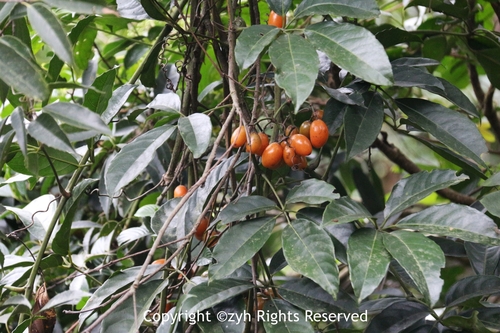
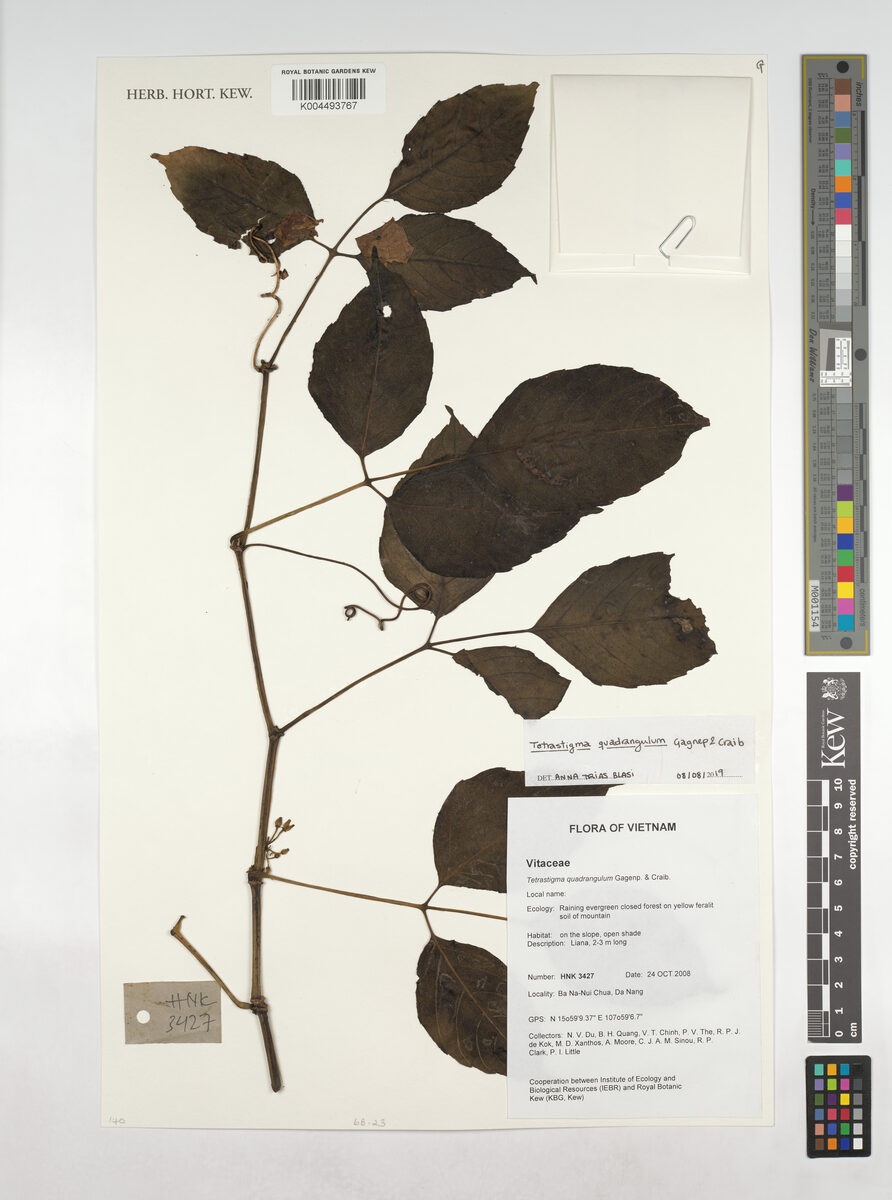
Vitis aestivalis argentifolia - (Munson.)Fernald.
(Munson.)Fernald.
Summer Grape
gbif· cc-by-nc
Wisconsin State Herbarium, Vascular Plants (WIS-)
gbif· cc-by-nc
Wisconsin State Herbarium, Vascular Plants (WIS-)
gbif· cc0
East Tennessee State University, John C. Warden Herbarium (ETSU-)
Description
Vitis aestivalis argentifolia is a deciduous Climber growing to 25 m (82ft 0in) at a fast rate. See above for USDA hardiness. It is hardy to UK zone 3. It is in flower from June to July, and the seeds ripen from September to October. The species is hermaphrodite (has both male and female organs) and is pollinated by Insects. Suitable for: light (sandy), medium (loamy) and heavy (clay) soils and prefers well-drained soil. Suitable pH: mildly acid, neutral and basic (mildly alkaline) soils. It can grow in semi-shade (light woodland) or no shade. It prefers dry or moist soil.
Edible Uses
Fruit - raw, cooked in jellies, jams, pies etc or dried for later use. Sweet and agreeably flavoured. The taste is best after a frost.The dried fruits are eaten as snacks or used in baked goods. The fruit is about 8mm in diameter. Leaves - cooked. Young leaves are wrapped around other foods and then baked, they impart a pleasant flavour. A sweet watery sap is obtained from the stem. Used as a refreshing drink. Young tendrils - raw or cooked.
Distribution
Southern and Eastern N. America - Ontario to Alabama. Locally naturalized in Europe.
Where It Grows
Coming Soon
Cultivation
Prefers a deep rich moist well-drained moderately fertile loam. Grows best in a calcareous soil. Succeeds in sun or partial shade though a warm sunny position is required for the fruit to ripen. Plants climb by means of tendrils. The flowers are sweetly scented with the aroma of mignonette. Any pruning should be carried out in winter when the plants are dormant otherwise they bleed profusely. This sub-species has a more northerly and inland range than the type and might therefore be more suitable for fruit production in Britain (particularly the northern provenances). Plants in this genus are notably susceptible to honey fungus.
Propagation
Seed - best sown in a cold frame as soon as it is ripe. Six weeks cold stratification improves the germination rate, and so stored seed is best sown in a cold frame as soon as it is obtained. Germination should take place in the first spring, but sometimes takes another 12 months. Prick out the seedlings into individual pots when they are large enough to handle and grow them on in a cold frame for their first winter. Plant out in early summer. Cuttings of mature wood of the current seasons growth, December/January in a frame. These cuttings can be of wood 15 - 30cm long or they can be of short sections of the stem about 5cm long with just one bud at the top of the section. In this case a thin, narrow strip of the bark about 3cm long is removed from the bottom half of the side of the stem. This will encourage callusing and the formation of roots. Due to the size of these cuttings they need to be kept in a more protected environment than the longer cuttings. Layering.
Other Uses
DyeA yellow dye is obtained from the fresh or dried leaves.