Rubus acaulis
Michx.
Dwarf Raspberry
gbif· cc-by-sa
GBIF
gbif· cc-by-sa
GBIF
gbif· cc-by-sa
GBIF
Description
Rubus acaulis is a PERENNIAL growing to 0.1 m (0ft 4in) by 0.5 m (1ft 8in). See above for USDA hardiness. It is hardy to UK zone 1. The species is hermaphrodite (has both male and female organs) and is pollinated by Insects. Suitable for: light (sandy), medium (loamy) and heavy (clay) soils and prefers well-drained soil. Suitable pH: mildly acid, neutral and basic (mildly alkaline) soils. It can grow in semi-shade (light woodland) or no shade. It prefers moist soil.
Edible Uses
Fruit - raw or cooked. Richly flavoured, it is similar to R. arcticus but with smaller and more numerous drupelets.
Medicinal Uses
Astringent. The leaves are astringent and have been used in the treatment of diarrhoea.
Distribution
Northern N. America - Labrador to Alaska, south to Colorado and southern British Columbia.
Where It Grows
NORTHERN AMERICA: Canada (Northwest Territories (west), Yukon, Québec, Ontario, Newfoundland and Labrador, Saskatchewan, Alberta, Manitoba, British Columbia), United States (Alaska, Michigan (Schoolcraft Co.), Minnesota (north), Colorado (north-central), Montana (west), Wyoming (north-central))
Cultivation
We have very little information on this species and do not know if it will be hardy in Britain, though judging by its native range it should succeed outdoors in most parts of this country. It is closely related to R. arcticus, and is included in that species by some botanists. The following notes are based on the general needs of the genus. Easily grown in a good well-drained loamy soil in sun or semi-shade.
Propagation
Seed - requires stratification and is best sown in early autumn in a cold frame. Stored seed requires one month stratification at about 3°c and is best sown as early as possible in the year. Prick out the seedlings when they are large enough to handle and grow on in a cold frame. Plant them out into their permanent positions in late spring of the following year. Division in early spring or just before leaf-fall in the autumn.
Other Uses
DyeA purple to dull blue dye is obtained from the fruit.
Synonyms
More from Rosaceae
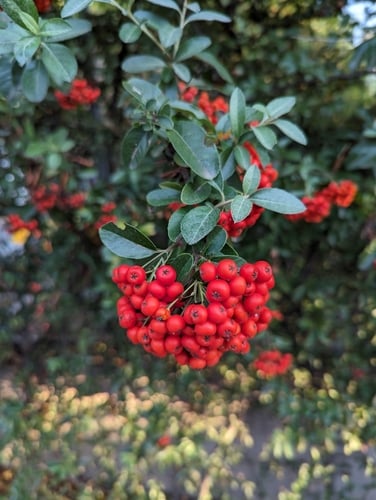
Pyracantha coccinea
Everlasting Thorn, Coral Tree, Scarlet firethorn
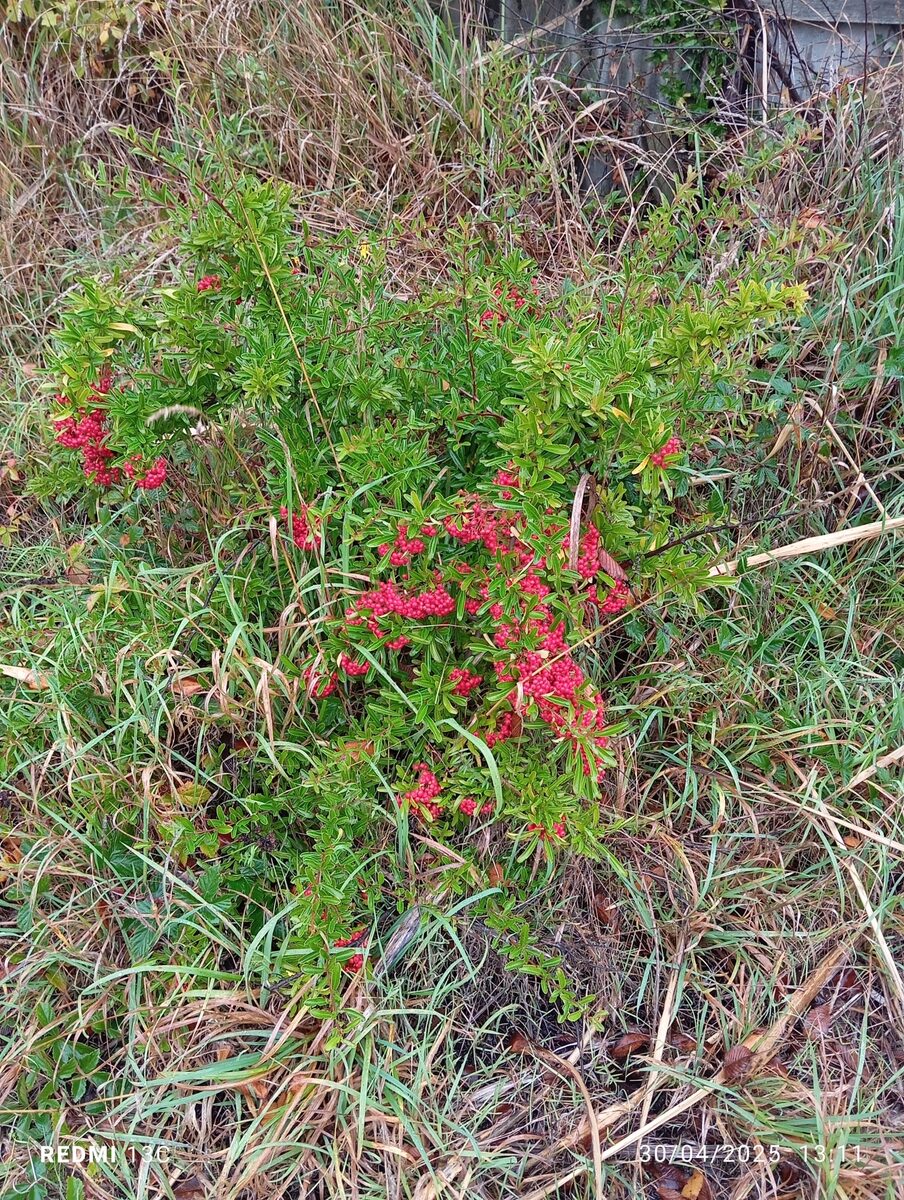
Pyracantha crenato-serrata - (Hance.)Rehder.
Pyracantha crenatoserrata
Chinese Firethorn
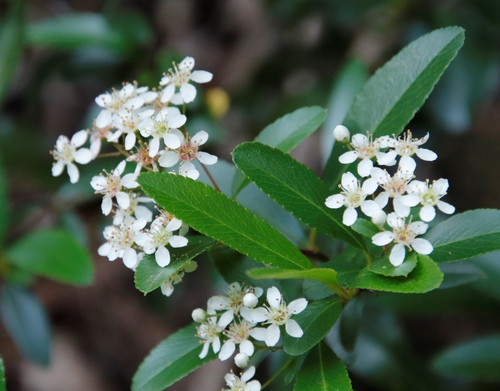
Pyracantha crenulata
Nepal Firethorn, Nepalese white thorn
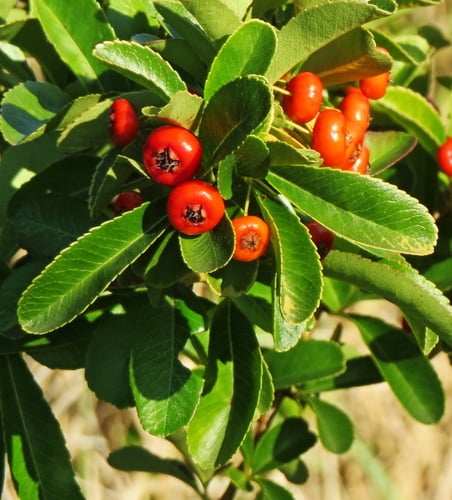
Pyracantha fortuneana
Chinese fire-thorn, Torch fruit
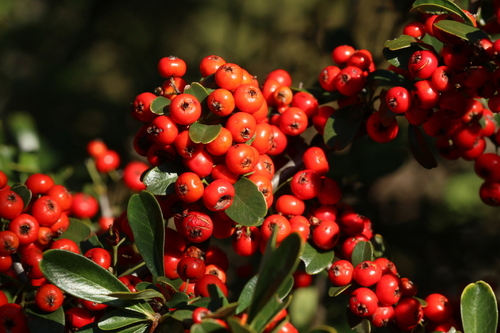
Pyracantha koidzumii
Formosa Firethorn, Taiwan firethorn, Koidzumi's firethorn