Opuntia ficus-indica - (L.)Mill.
(L.)Mill.
Prickly Pear, Barbary fig
gbif· cc-by-nc
faluke
gbif· cc-by-nc
Louis Rimmer
gbif· cc-by-nc
Stamatis Zogaris
Description
Opuntia ficus-indica is an evergreen Perennial growing to 5 m (16ft) by 5 m (16ft) at a medium rate. See above for USDA hardiness. It is hardy to UK zone 9 and is not frost tender. It is in leaf all year, in flower from June to September. The species is hermaphrodite (has both male and female organs) and is pollinated by Insects. The plant is self-fertile. It is noted for attracting wildlife. Suitable for: light (sandy) and medium (loamy) soils and prefers well-drained soil. Suitable pH: mildly acid, neutral and basic (mildly alkaline) soils. It cannot grow in the shade. It prefers dry soil and can tolerate drought. The plant can tolerates strong winds but not maritime exposure.
Edible Uses
Gum. Fruit - raw, cooked or dried for later use. Sweet and gelatinous. Very refreshing, they are somewhat like a watermelon in flavour. The fruits are up to 10cm long and 9cm wide. Be careful of the plants irritant hairs, see the notes above on toxicity. Pads - cooked and used like French beans. Watery and very mucilaginous. Flowers - raw. Seed - ground into a meal. An edible gum is obtained from the stem.
Medicinal Uses
Antispasmodic Diuretic Emollient. The flowers and stems are antispasmodic, diuretic and emollient. The split stems have been bound around injured limbs as a first aid measure. The flowers are astringent and are used to reduce bleeding and treat problems of the gastro-intestinal tract, especially diarrhoea, colitis and irritable bowel syndrome. The flowers are also used in the treatment of an enlarged prostate gland.
Known Hazards
The plant has numerous minutely barbed glochids (hairs) that are easily dislodged when the plant is touched and they then become stuck to the skin where they are difficult to see and remove. They can cause considerable discomfort.
Distribution
Original habitat is obscure.
Where It Grows
Mexico Southwest.
Cultivation
Requires a sandy or very well-drained soil. Prefers a pH in the range 6 to 7.5. Plants must be kept fairly dry in the winter but they like a reasonable supply of water in the growing season. A position at the base of a south-facing wall or somewhere that can be protected from winter rain is best for this plant. Requires warmth and plenty of sun. Plants tolerate considerable neglect. Cultivated in many warm temperate and subtropical areas for its edible fruits and its use as a stock-proof barrier, it is not very cold-tolerant and is unlikely to survive the winter outdoors in Britain. There are some named varieties, one at least of which is free from spines and irritant hairs. Many Opuntia species are self-fertile, though cross-pollination can improve fruit set and quality. The fruits (tunas) are typically harvested in late summer to autumn, around late summer to early fall, depending on the species and climate. Opuntia species usually flower in late spring to early summer. Opuntia species generally grow moderately fast, with many species capable of producing new pads and fruit within the first year of planting, especially in favorable conditions.
Propagation
Seed - sow early spring in a very well-drained compost in a greenhouse. When they are large enough to handle, prick the seedlings out into individual pots and grow them on in the greenhouse for at least their first two winters. Plant them out into their permanent positions in late spring or early summer, after the last expected frosts. Give the plants some protection from winter wet. Make sure you have some reserve plants in case those outdoors do not overwinter. Cuttings of leaf pads at any time in the growing season. Remove a pad from the plant and then leave it in a dry sunny place for a couple of days to ensure that the base is thoroughly dry and has begun to callous. Pot up into a sandy compost. Very easy, rooting quickly.
Other Uses
It is used as a masticatory or mixed with oil to make candles. The juice of the boiled stem segments is very sticky. It is added to plaster, whitewash etc to make it adhere better to walls.
More from Cactaceae
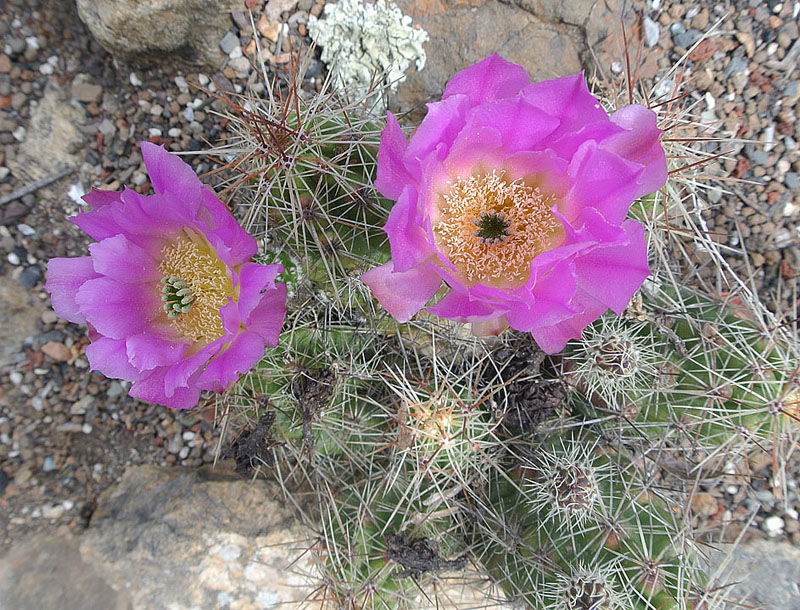
Echinocactus sp.
Bisnaga
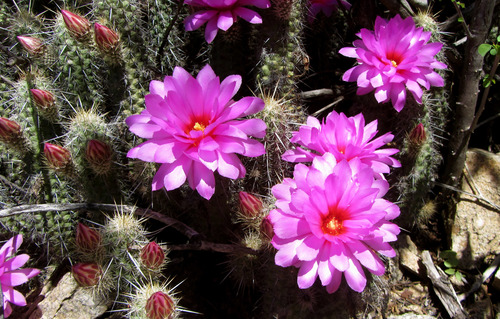
Echinocereus brandegeei
Strawberry cactus
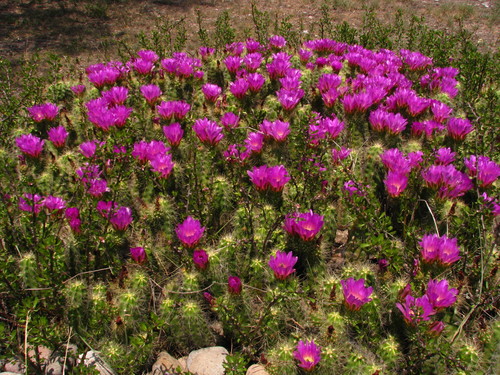
Echinocereus cinerascens
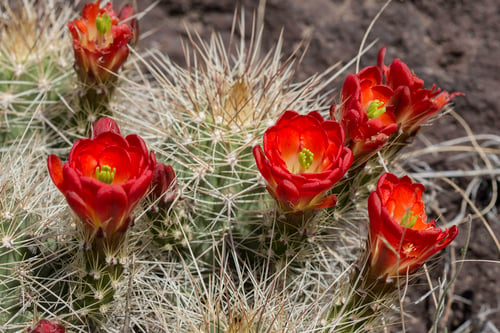
Echinocereus coccineus
Arizona hedgehog, California hedgehog, Cream-flowered hedgehog, Golden rainbow hedgehog, Mexican claret-cup cactus, White-spined claret-cup cactus
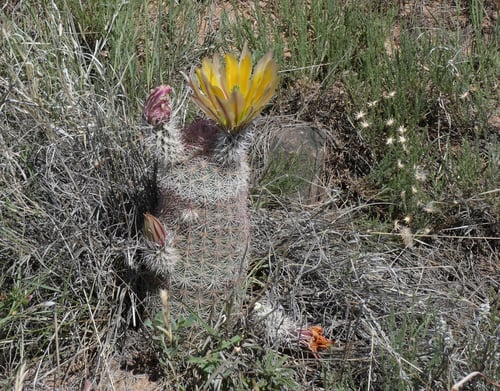
Echinocereus dasyacanthus
Golden rainbow hedgehog cactus, Texas rainbow cactus, Texas rainbow hedgehog, Yellow-flowered pitaya, Chuhuahua
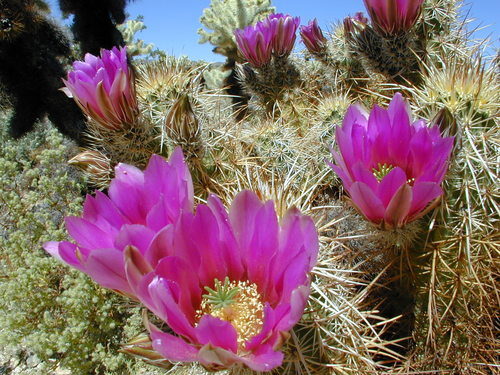
Echinocereus engelmannii
Strawberry hedgehog cactus