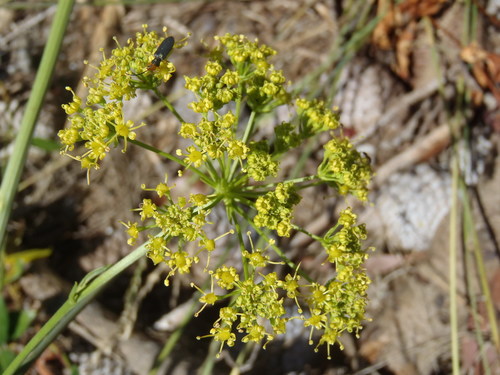
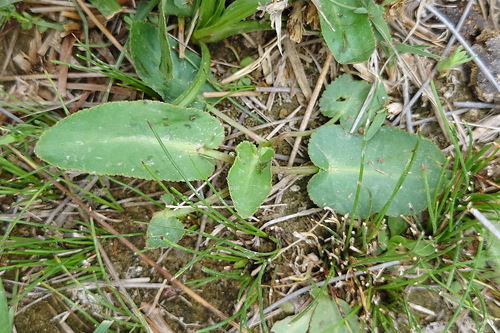
Oenanthe javanica - (Blume.)DC.
(Blume.)DC.
Water Dropwort, Java waterdropwort, Stolon waterdropwort
gbif· cc-by-nc
王麗雪
gbif· cc-by
黃美滿
gbif· cc-by
黃美滿
Description
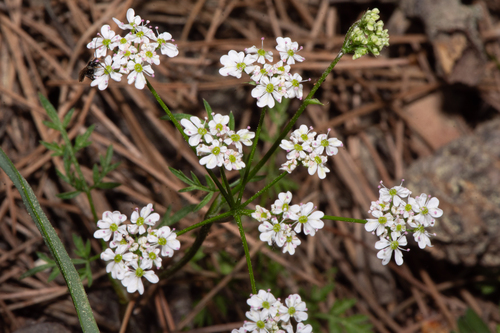
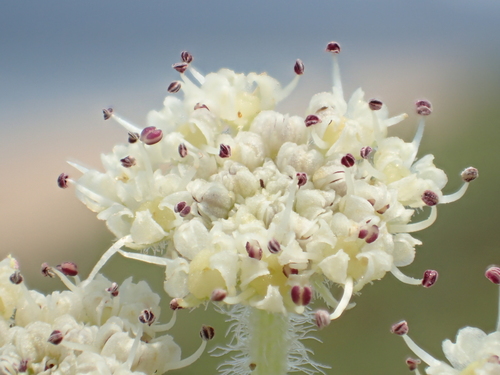
Oenanthe javanica is a PERENNIAL growing to 1 m (3ft 3in). See above for USDA hardiness. It is hardy to UK zone 5. It is in flower from June to August, and the seeds ripen from August to October. The species is hermaphrodite (has both male and female organs) and is pollinated by Insects. The plant is self-fertile. Suitable for: light (sandy), medium (loamy) and heavy (clay) soils. Suitable pH: mildly acid, neutral and basic (mildly alkaline) soils. It cannot grow in the shade. It prefers wet soil and can grow in water.
Edible Uses
Condiment. Young leaves and stems - raw or cooked. The leaves are also used as a seasoning in soups etc. The flavour is reminiscent of carrots or parsley. The young shoots that sprout from the root in winter are best. A major vegetable in many parts of the Orient, the leaves are a rich source of vitamins and minerals (Analysis available). Root - cooked. Highly esteemed in Japan, the roots can grow up to 30cm long in water. Some caution is advised, see the notes above on toxicity. Seed is said to be edible.
Medicinal Uses
Depurative Febrifuge Styptic. The whole plant is depurative, febrifuge and styptic. A decoction is used in the treatment of epidemic influenza, fever and discomfort, jaundice, haematuria and metrorrhagia. The seed contains 3.5% essential oil. This is effective at large dilutions against pathogenic fungi.
Known Hazards
Although no specific mention of toxicity has been seen for this species, it belongs to a genus that contains a number of very poisonous plants and so some caution is advised. It is said to contain the alleged 'psychotroph' myristicine.
Distribution
E. Asia - China, Japan, Korea to Australia.
Where It Grows
TEMPERATE ASIA: Russian Federation (Chita), Mongolia, Russian Federation (Primorye, Sakhalin), China, Korea, Japan (Hokkaidô, Honshu, Kyushu, Ryukyu Islands, Shikoku), Taiwan TROPICAL ASIA: Bangladesh, India, Nepal, Pakistan, Papua New Guinea, Laos, Myanmar, Thailand, Vietnam, Indonesia, Malaysia, Philippines AUSTRALASIA: Australia (Queensland)
Cultivation
Requires a wet fertile soil or shallow water and a sunny position. This plant is quite possibly not hardy in Britain, gives a hardiness zone of 10, which means that it is not frost tolerant. However say that it grows in all areas of China and lowland Japan and this should include areas that do experience frosts and snow. Another report says that many forms of this species are not frost-hardy, though some forms have hardy roots. The sub-species O. javanica rosthornii is found at elevations up to 4000 metres in China and is sometimes also found in drier habitats such as grassland at forest margins - this form should be hardier than the species. There is also a lot of confusion over the correct name for this species. Some reports give O. stolonifera. DC. or O. stolonifera. Wall as the correct name whilst other reports say that these names are synonyms of O. javanica. says that O. stolonifera japonica. (Miq.)Maxim. is a synonym of O. javanica. The Flora of China treats this as a highly variable single species under the name O. javanica and recognizes at least one sub-species. This species is occasionally cultivated for its edible root or for its edible leaves according to another report, there are some named varieties. There are two main forms of this species, a red form has edible shoots whilst a white form is grown for its medicinal root. In Japan this plant and six other herbs are customarily boiled in rice gruel on January 7th. The cultivar 'Su Zhou' is medium early and has few fibres plus an excellent taste.
Propagation
Seed - sow spring in a cold frame. Germination is erratic. When they are large enough to handle, prick the seedlings out into individual pots and plant them out in the summer. Division in spring. Large divisions can be planted out direct into their permanent positions. We have found that it is better to pot up the smaller divisions and grow them on in light shade in a cold frame until they are well established before planting them out in late spring or early summer. Layering. Stem tip cuttings. Any part of the stem roots easily.
Other Uses
Essential. Spreading rapidly by means of suckers, it makes a good ground cover plant for wet situations. The variegated cultivar 'Flamingo' has been especially recommended.