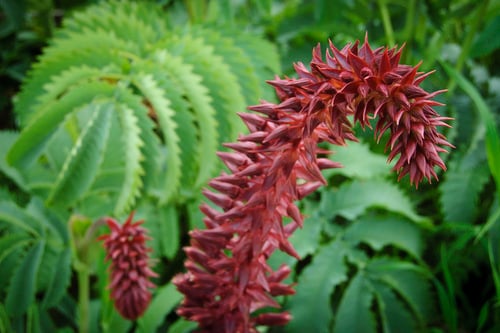
Melianthus minor
L.
Honey Flower
gbif· cc-by
GBIF
gbif· cc-by
Meise Botanic Garden
gbif· cc0
Conveyor Belt
Description
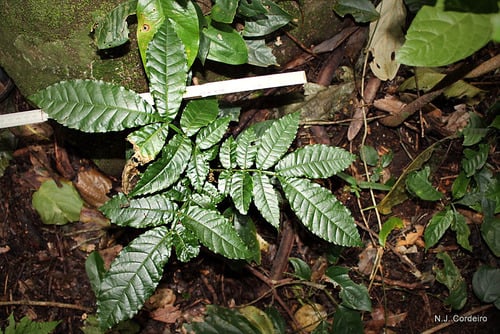
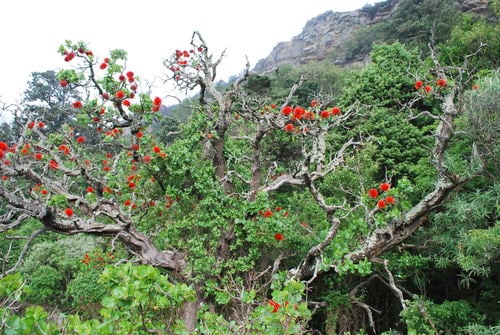
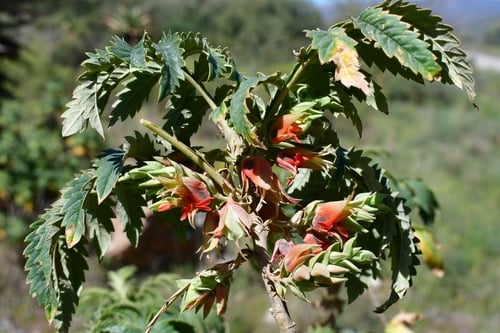
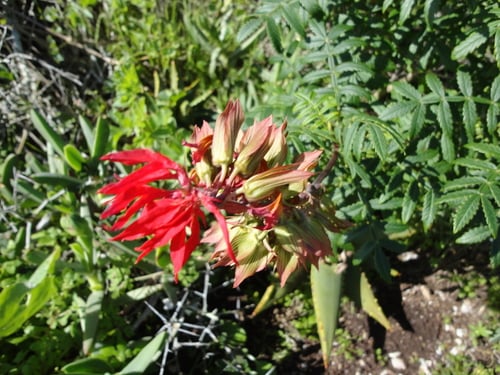
Melianthus minor is an evergreen Shrub growing to 2 m (6ft 7in) at a medium rate. See above for USDA hardiness. It is hardy to UK zone 8. It is in leaf all year, in flower from July to August. The species is hermaphrodite (has both male and female organs) and is pollinated by Bees. Suitable for: light (sandy), medium (loamy) and heavy (clay) soils, prefers well-drained soil and can grow in nutritionally poor soil. Suitable pH: mildly acid, neutral and basic (mildly alkaline) soils. It can grow in semi-shade (light woodland) or no shade. It prefers moist soil. The plant can tolerates strong winds but not maritime exposure.
Edible Uses
Sweetener. The flowers are very rich in nectar, this is collected and eaten.
Known Hazards
The root is poisonous.
Distribution
S. Africa and India.
Where It Grows
AFRICA: Lesotho, Namibia, South Africa (Cape Province, Free State)
Cultivation
Requires a well-drained moisture retentive soil in full sun or light shade. Prefers a rich loamy soil. Fertile soils give good foliage effects but the plant flowers better on a poor soil. Closely related to M. major, but smaller in all parts. A very ornamental plant it is only hardy in the milder areas of Britain, flowering freely in Cornwall. In colder parts of the country it can be grown as a herbaceous perennial, dying down in winter but regrowing from the base in the spring. In these areas the rootstock must be well mulched. The top growth is possibly hardy for short periods down to -10°c, whilst the rootstock is possibly hardy to -15°c if it is well mulched. Plants are often used in sub-tropical bedding schemes. Members of this genus are rarely if ever troubled by browsing deer.
Propagation
Seed - sow spring in a warm greenhouse. Prick out the seedlings into individual pots when they are large enough to handle. Grow on the seedlings for at least their first winter in a greenhouse and plant out in late spring or early summer after the last expected frosts. Cuttings of greenwood stem tips in a frame in summer. Suckers in spring. They can be planted out immediately or potted up and kept in a frame for their first winter.