Melianthus major
Linn.
Honey-flower
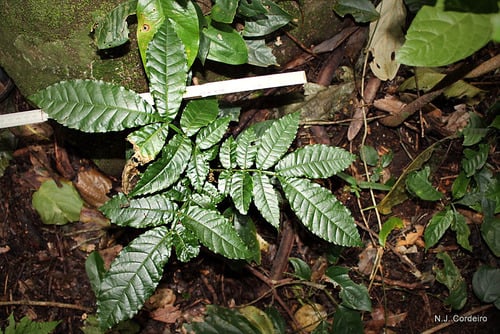
iNaturalist· cc-by-nc
(c) Oswald Kurten, some rights reserved (CC BY-NC), uploaded by Oswald Kurten
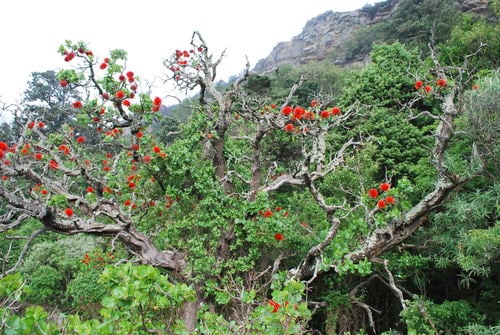
iNaturalist· cc-by-sa
(c) Tony Rebelo, some rights reserved (CC BY-SA)
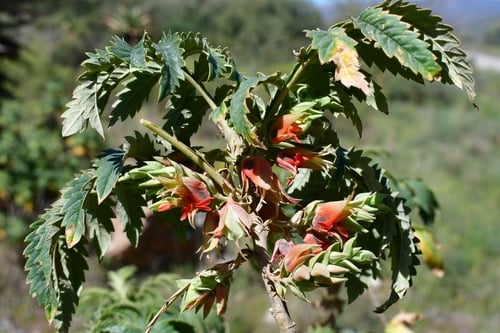
iNaturalist· cc-by-sa
(c) Tony Rebelo, some rights reserved (CC BY-SA)
Summary
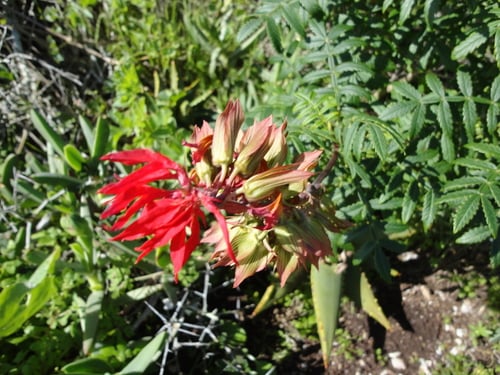
Source: WikipediaMelianthus major, the giant honey flower or kruidjie-roer-my-nie (Afrikaans for 'herb-touch-me-not'), is a species of flowering plant in the family Francoaceae. It is an evergreen suckering shrub, endemic to South Africa and naturalised in India, Australia and New Zealand. It grows to 2–3 m (7–10 ft) tall by 1–3 m (3–10 ft) wide, with pinnate blue-green leaves 30–50 cm (12–20 in) long, which have a distinctive musky odour. Dark red, nectar-laden flower spikes, 30–80 cm (12–31 in) in length, appear in spring, followed by green pods. All parts of the plants are poisonous. The Latin binomial Melianthus major literally means "large honey flower". The plant is also sometimes called honeybush (along with many other plants). In cultivation this plant requires a sheltered location and may also need a protective winter mulch in temperate regions. It has gained the Royal Horticultural Society's Award of Garden Merit.
Description
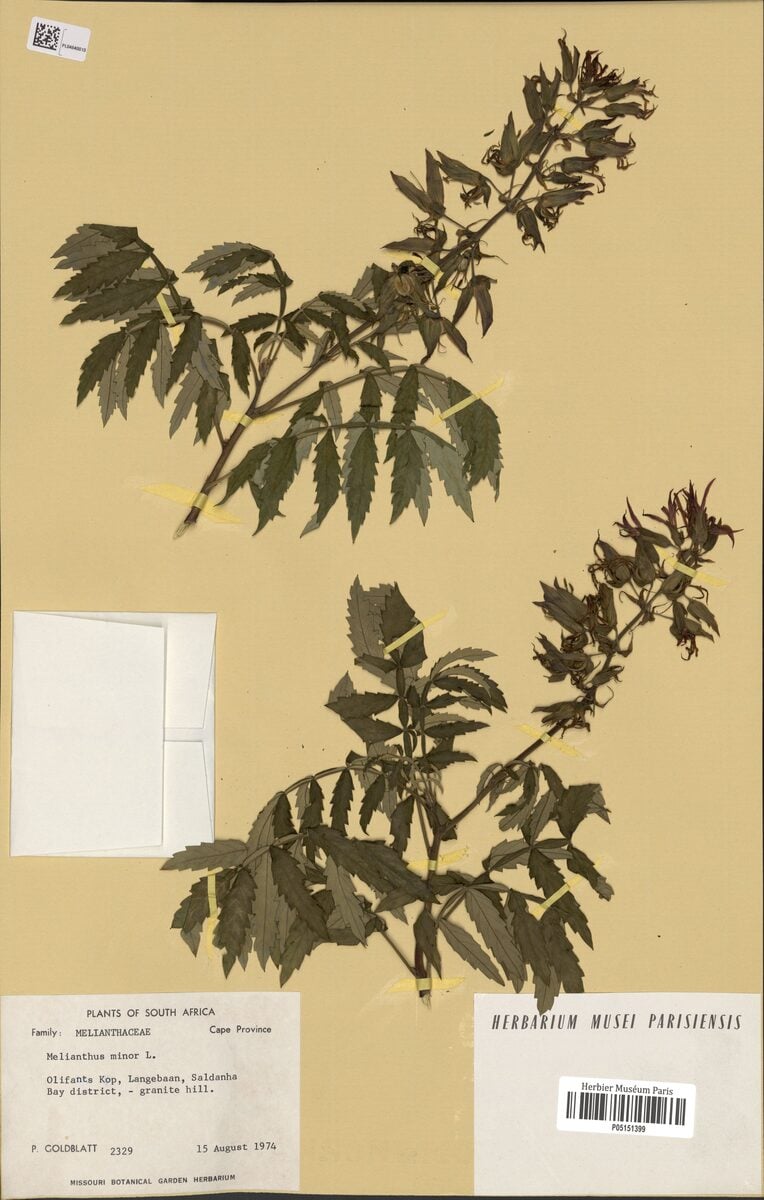
A shrub. It grows 1.8-3 m high. It has hollow thick stems. They grow from ground level with a few side branches. The leaves are large and have leaflets along the stalk. The leaves are 50 cm long and with 17 oval leaflets. The flowers are dark brown. They are in long, erect stalks. The fruit are black.
Edible Uses
The honey-like nectar from the flowers is eaten. It is deliciously sweet, and a small amount goes a long way — which is fortunate, as the plant does not produce much nectar in the British climate.
Traditional Uses
The honey-like nectar of the flower is collected and eaten.
This uses section is brief — help expand it
Medicinal Uses
The root is poisonous and emetic but is used as a remedy against snake bites.
Known Hazards
The root is poisonous.
Distribution
It grows in warm temperate places. It can grow in sun or light shade. It can tolerate drought. It is native to hilly grasslands of South Africa. It suits hardiness zones 8-11.
Where It Grows
Africa, Australia, East Africa, Europe, France, South Africa*, Southern Africa, St Helena, Tasmania, Zambia,
Cultivation
Requires a well-drained moisture retentive soil in full sun or light shade. Prefers a rich loamy soil. Fertile soils give good foliage effects but the plant flowers better on a poor soil. A very ornamental plant it is only hardy in the milder areas of Britain, flowering freely in Cornwall. In colder parts of the country it can be grown as a herbaceous perennial, dying down in winter but regrowing from the base in the spring. In these areas the rootstock must be well mulched. The top growth is possibly hardy for short periods down to -10°c, whilst the rootstock is possibly hardy to -15°c if it is well mulched. The flowers have a honey-like scent. The bruised leaves have a strong aroma somewhat like peanut butter. Plants are often used in sub-tropical bedding schemes. Members of this genus are rarely if ever troubled by browsing deer.
Propagation
Sow seed in spring in a warm greenhouse. Prick seedlings out into individual pots when large enough to handle and grow on for at least their first winter under glass before planting out in late spring or early summer after the last expected frosts. Greenwood stem tip cuttings can be taken in a frame in summer. Suckers can be separated in spring and either planted out immediately or potted up and overwintered in a frame before planting out.
Other Uses
A violet dye is obtained from the flowers.
Notes
There are 6 Melianthus species. They occur in South Africa.
References (9)
- Cundall, P., (ed.), 2004, Gardening Australia: flora: the gardener's bible. ABC Books. p 886
- Etherington, K., & Imwold, D., (Eds), 2001, Botanica's Trees & Shrubs. The illustrated A-Z of over 8500 trees and shrubs. Random House, Australia. p 475
- Facciola, S., 1998, Cornucopia 2: a Source Book of Edible Plants. Kampong Publications, p 150
- Hedrick, U.P., 1919, (Ed.), Sturtevant's edible plants of the world. p 408
- Hibbert, M., 2002, The Aussie Plant Finder 2002, Florilegium. p 195
Show all 9 references Hide references
- http://plants.newplant.co.za/
- Paczkowska, G. & Chapman, A.R., 2000, The Western Australian Flora. A Descriptive Catalogue. Western Australian Herbarium. p 295
- Ryan, S., 2008, Dicksonia. Rare Plants Manual. Hyland House. p 41
- Sp. pl. 2:639. 1753