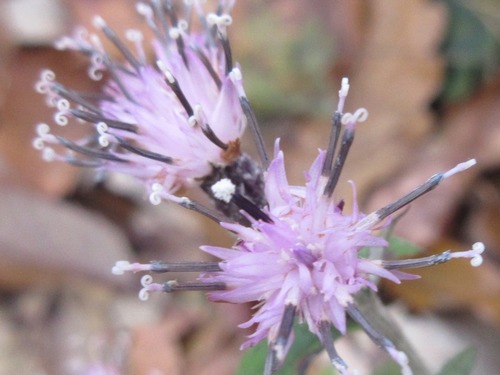
Conyza sumatrensis
(Retz.) E. Walker
Tall fleabane
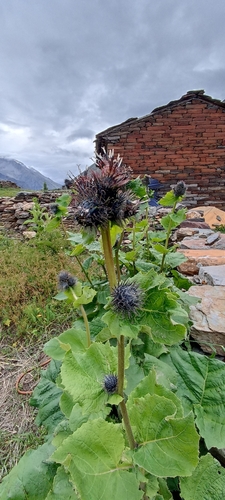
iNaturalist· cc-by-nc
(c) Богданович Светлана, some rights reserved (CC BY-NC)
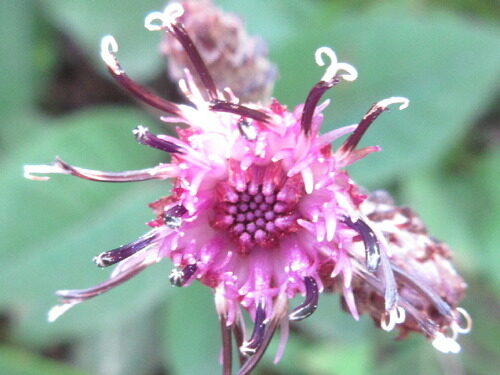
iNaturalist· cc-by-nc
(c) Богданович Светлана, some rights reserved (CC BY-NC)
iNaturalist· cc-by-nc
(c) Богданович Светлана, some rights reserved (CC BY-NC)
Description
A stiff erect herb. It grows for 1 or 2 years. It grows 1-2 m tall. The whole plant has grey hairs. The stem is grooved and angular. The leaves are long and narrow. They are 5-16 cm long by 0.5-1.7 cm wide. The leaves are narrowed at the base. The lower leaves have coarse teeth. The branched flower arrangement is 30-60 cm long. It forms a fairly dense arrangement. The heads are like a cylinder and 7-9 mm long and pale yellow. There are dirty grey bristles. Possibly now Erigeron floribundus
Edible Uses
The leaves have been recorded as eaten.
Traditional Uses
The leaves have been recorded as eaten.
This uses section is brief — help expand it
Distribution
A tropical plant. It grows in warm temperate and subtropical regions. In Argentina it grows from sea level to 3,500 m above sea level.
Where It Grows
Africa, Argentina, Asia, Australia, Benin, Botswana, Brazil, Central Africa, Chile, Congo DR, East Africa, Eswatini, Fiji, India, Indonesia*, Malaysia, Mozambique, Myanmar, Norfolk Island, Pacific, Papua New Guinea, PNG, Paraguay, SE Asia, South Africa, Southern Africa, South America, Swaziland, Tasmania, Thailand, Tonga, Uganda, Uruguay, West Africa, Zimbabwe,
Notes
There are about 50 Conyza species.
Synonyms
Also Known As
Fumu di kiula, Kayala
References (15)
- Burkill, I.H., 1966, A Dictionary of the Economic Products of the Malay Peninsula. Ministry of Agriculture and Cooperatives, Kuala Lumpur, Malaysia. Vol 1 (A-H) p 952 (As Erigeron sumatrensis)
- Cooper, W. and Cooper, W., 2004, Fruits of the Australian Tropical Rainforest. Nokomis Editions, Victoria, Australia. p 80
- Flora of Australia Volume 49, Oceanic Islands 1, Australian Government Publishing Service, Canberra. (1994) p 380
- Franklin, J., Keppel, G., & Whistler, W., 2008, The vegetation and flora of Lakeba, Nayau and Aiwa Islands, Central Lau Group, Fiji. Micronesica 40(1/2): 169–225, 2008
- Glover, et al, 1969, (As Conyza albida)
Show all 15 references Hide references
- Henty, E.E., & Pritchard, G.S., 1973, Weeds of New Guinea and their control. Botany Bulletin No 7, Division of Botany, Lae, PNG. p 77 (As Erigeron sumatrensis)
- J. Jap. Bot. 46:72. 1971
- Latham, P., 2004, Useful Plants of Bas-Congo province. Salvation Army & DFID p 92
- Leon-Lobos, P., et al, 2022, Patterns of Traditional and Modern Uses of Wild Edible Native Plants of Chile: Challenges and Future Perspectives. Plants (Basel) v 11 (6) Table S1
- Martin, F.W. & Ruberte, R.M., 1979, Edible Leaves of the Tropics. Antillian College Press, Mayaguez, Puerto Rico. p 185 (As Erigeron sumatrensis)
- Peekel, P.G., 1984, (Translation E.E.Henty), Flora of the Bismarck Archipelago for Naturalists, Division of Botany, Lae, PNG. p 557, 556 (As Erigeron sumatrensis)
- Peters, C. R., O'Brien, E. M., and Drummond, R.B., 1992, Edible Wild plants of Sub-saharan Africa. Kew. p 89 (As Conyza albida)
- Swaziland's Flora Database http://www.sntc.org.sz/flora (As Conyza albida)
- Yuncker, T.G., 1959, Plants of Tonga, Bernice P. Bishop Museum, Hawaii, Bulletin 220. p 267 (As Erigeron sumatrensis)
- Zon, A. P. M. van der, Grubben, G.J.H., 1976, Les legumes-feuilles spontanes et cultives du Sud-Dahomey, Communication 65, Royal Tropical Institute, Amsterdam, p 62 (As Erigeron floribundus)