Juniperus monosperma - (Engelm)Sarg.
(Engelm)Sarg.
One-Seed Juniper
gbif· cc-by-nc
Sequoia Janirella Wrens
gbif· cc-by-nc
bcamacho
gbif· cc-by-nc
bcamacho
Description
Juniperus monosperma is an evergreen Tree growing to 18 m (59ft 1in) at a medium rate. See above for USDA hardiness. It is hardy to UK zone 4. It is in leaf all year, in flower in April, and the seeds ripen in October. The species is dioecious (individual flowers are either male or female, but only one sex is to be found on any one plant so both male and female plants must be grown if seed is required). and is pollinated by Wind. The plant is not self-fertile. It is noted for attracting wildlife. Suitable for: light (sandy), medium (loamy) and heavy (clay) soils and prefers well-drained soil. Suitable pH: mildly acid, neutral and basic (mildly alkaline) soils and can grow in very alkaline soils. It cannot grow in the shade. It prefers dry or moist soil and can tolerate drought.
Edible Uses
Gum. Fruit - raw or cooked. Soft, juicy and pulpy, but with a thin flesh. It can be dried and ground into a powder and then be baked, or can be used as a seasoning in stews etc. The fruits were only used when other foods were in short supply. The cones are about 5 - 8mm in diameter and ripen in their first year. Inner bark - raw or cooked. It was chewed in times of food shortage for the little nourishment it supplied. The gum is chewed as a delicacy. No further details are given.
Medicinal Uses
Antiphlogistic Birthing aid Diuretic Dysentery Febrifuge Laxative Odontalgic Pectoral Poultice Stomachic. One-seed juniper was commonly employed medicinally by a number of native North American Indian tribes, who used it to treat a variety of complaints. It is little, if at all, used in modern herbalism. The leaves are febrifuge, laxative and pectoral. An infusion is used in the treatment of stomach complaints, constipation, coughs and colds. An infusion was also used by pregnant women prior to childbirth in order to relax the muscles. A poultice of the heated twigs can be bound over a bruise or sprain in order to reduce the swelling. An infusion of the staminate cones has been used as a stomach tonic and in the treatment of dysentery. The chewed bark has been applied externally to help heal spider bites. It is also highly prized as a dressing on burns. The fruits are strongly diuretic. A gum from the plant has been used as a temporary filling in a decayed tooth.
Distribution
South-western N. America - along the Rocky Mountains from Wyoming to Mexico.
Where It Grows
NORTHERN AMERICA: United States (Oklahoma, Colorado, New Mexico, Texas, Arizona)
Cultivation
Succeeds in dry soils. Succeeds in most soils, including chalk, if they are well drained, preferring a neutral or slightly alkaline soil. Trees are fairly fast growing for a Juniper, and are also long-lived in their native habitats. They grow better in dry areas with hot summers, western Britain is generally to cool and wet for this species to thrive. Plants are resistant to honey fungus. This species is closely related to J. occidentalis. The seed matures in 1 year. Some fruit is produced most years, but heavy crops only occur every 2 - 3 years. Dioecious. Male and female plants must be grown if seed is required. In garden design, as well as the above-ground architecture of a plant, root structure considerations help in choosing plants that work together for their optimal soil requirements including nutrients and water. Juniper berries (the fleshy cones) are typically harvested in late summer to early autumn depending on the species. Junipers produce male cones in spring, while the female cones develop into berries over the summer. Growth rates vary by species, but many Junipers are considered slow to moderate growers, typically reaching maturity in 5 to 15 years, depending on environmental conditions and species.
Propagation
The seed requires a period of cold stratification. The seed has a hard seedcoat and can be very slow to germinate, requiring a cold period followed by a warm period and then another cold spell, each of 2 - 3 months duration. Soaking the seed for 3 - 6 seconds in boiling water may speed up the germination process. The seed is best sown as soon as it is ripe in a cold frame. Some might germinate in the following spring, though most will take another year. Another possibility is to harvest the seed 'green' (when the embryo has fully formed but before the seedcoat has hardened). The seedlings can be potted up into individual pots when they are large enough to handle. Grow on in pots until large enough, then plant out in early summer. When stored dry, the seed can remain viable for several years. Cuttings of mature wood, 5 - 10cm with a heel, September/October in a cold frame. Plant out in the following autumn. Layering in September/October. Takes 12 months.
Other Uses
Beads Dye Fibre Fuel Gum Lighting Mordant Tinder Wood Agroforestry uses: Junipers can be used as windbreaks or hedges and are often employed in erosion control due to their extensive root systems. They also provide habitat and shelter for wildlife. Thin strips of the fibrous bark are used for making sleeping mats etc. It has also been used as a lining in shoes to absorb moisture and to keep the feet warmer. When rubbed fine, the bark can be used to make children's clothing. The bark is employed as a tinder and is also made into a slow match or can be shredded, bound into bundles and used as a torch to give light in the house. The crushed bark was twisted into a rope, tied at intervals with yucca (Yucca species), and wrapped into a coil. The free end was set on fire and kept smouldering by blowing on it at intervals. Fire could be carried in this fashion for several hours. The dried seeds have been used as beads or as the 'rattle' in rattles. A green dye is obtained from the bark and berries. A yellow dye is obtained from the whole plant. Ashes from the whole plant have been used as a mordant to fix the colour of dyes. Wood - moderately hard, somewhat heavy, slightly fragrant. When seasoned properly it is very durable and is used mainly for fencing and fuel. As a fuel it burns steadily and evenly.
More from Cupressaceae
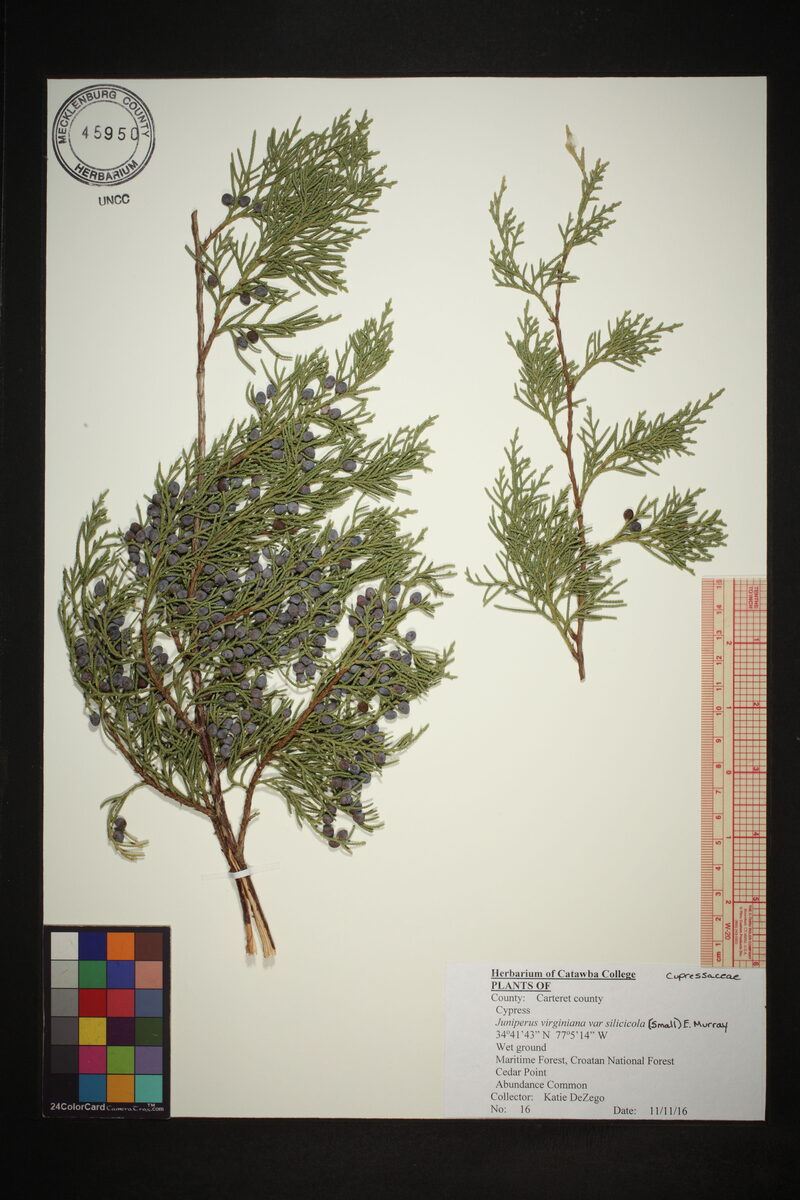
Juniperus silicicola - (Small.)L.H.Bailey.
Southern Redcedar, Juniper, Southern Red Cedar
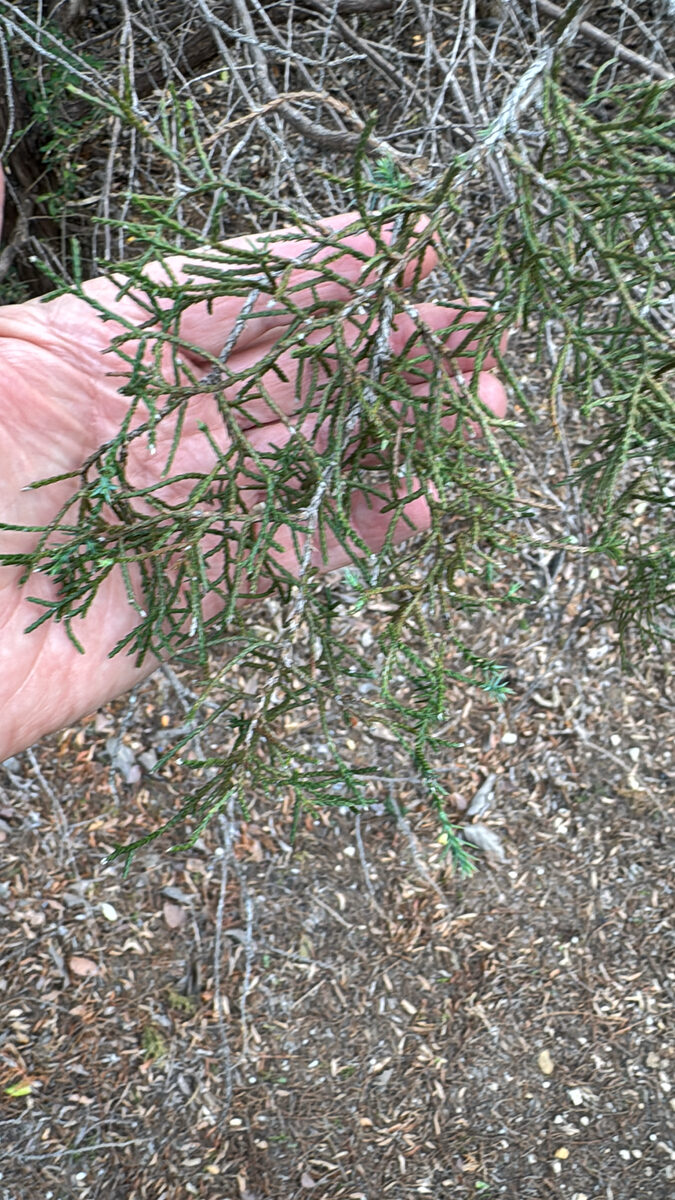
Juniperus tetragona
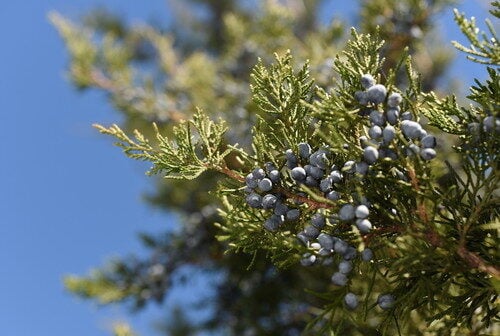
Juniperus virginiana
Pencil Cedar, Eastern redcedar, Southern redcedar, Silver Cedar, Burk Eastern Red Cedar, Silver East
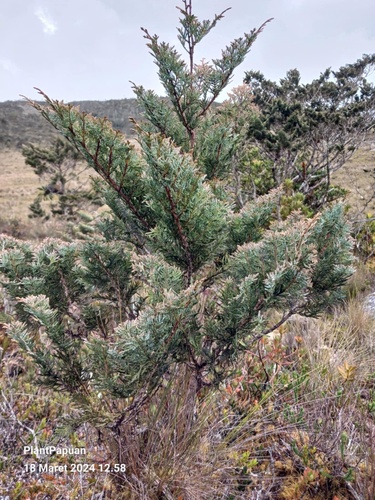
Papuacedrus papuana
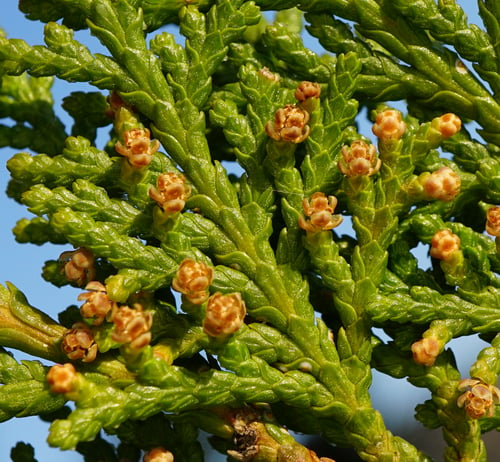
Platycladus orientalis
Oriental cedar
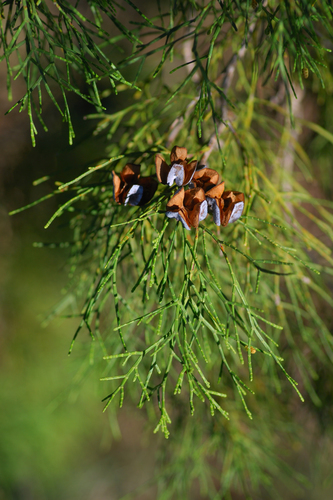
Tetraclinis articulata
Arartree