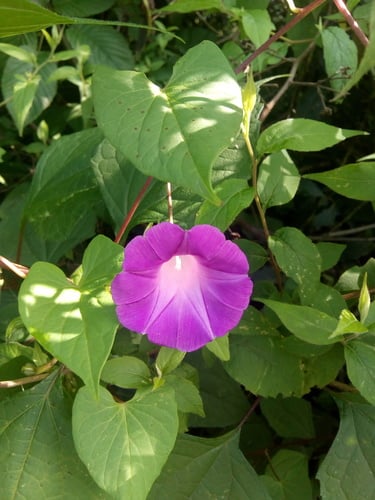
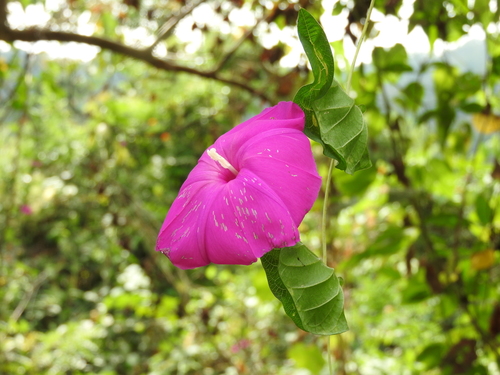
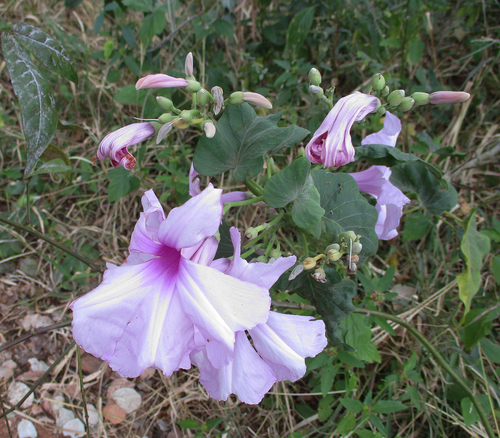
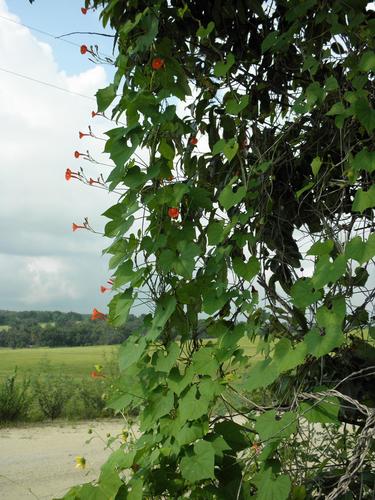
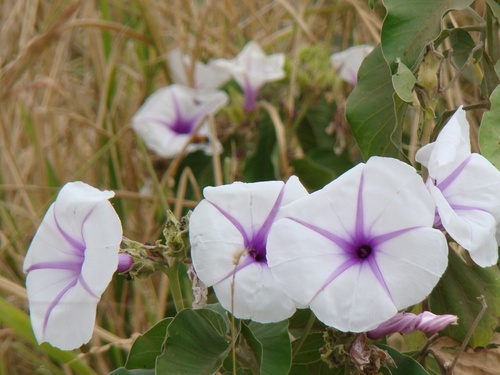
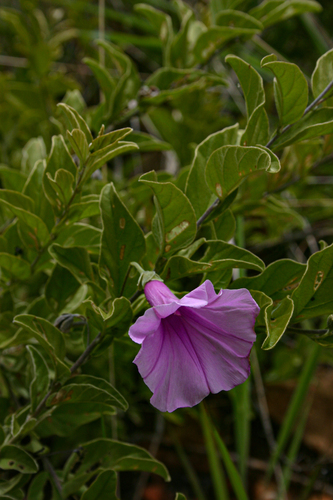
Ipomoea pandurata - (L.)G.Mey.
(L.)G.Mey.
Wild Potato Vine, Man of the earth
gbif· cc-by-nc
nickmckee
gbif· cc-by-nc
Ethan
gbif· cc-by-nc
odobenine
Description
Ipomoea pandurata is a PERENNIAL CLIMBER growing to 3.5 m (11ft 6in) at a fast rate. See above for USDA hardiness. It is hardy to UK zone 7. It is in flower from June to August. The species is hermaphrodite (has both male and female organs). Suitable for: light (sandy), medium (loamy) and heavy (clay) soils and prefers well-drained soil. Suitable pH: mildly acid, neutral and basic (mildly alkaline) soils. It cannot grow in the shade. It prefers moist soil.
Edible Uses
Root - cooked. The young ones are best, they become very acrid as they get old. The roots can be up to 75cm long and 12cm in diameter and can weigh 7 kilos. Roots weighing 10 kilos or more are not unknown. They are best if given a long roasting. Roasted roots taste like sweet potato but with some bitterness.
Medicinal Uses
Cathartic Diuretic ExpectorantA poultice of the root is applied to aching joints in the treatment of rheumatism. A tea made from the dried root is diuretic, expectorant and laxative. It has been used in the treatment of strangury and calculus diseases, abdominal pains etc. It also slightly influences the lungs, liver and kidneys without excessive diuresis or catharsis. Caution should be employed because the plant can be strongly laxative.
Known Hazards
There is a report that the root could be poisonous.
Distribution
Eastern N. America - Connecticut to Florida, west to Texas, Kansas and Michigan.
Where It Grows
NORTHERN AMERICA: Canada, Ontario (south), United States, Indiana, Ohio, Pennsylvania (south), Illinois (south), Kansas (east), Missouri, Oklahoma, Alabama, Arkansas, Florida (north & central), Georgia, Kentucky, Louisiana, Maryland, Mississippi, North Carolina, South Carolina, Tennessee, Virginia, Texas (east),
Cultivation
Requires a rich well-drained loam in a warm sunny position. The hardiest member of the genus, it tolerates frozen soil and should survive winter temperatures down to at least -10°c. A climbing plant, supporting itself by twining around the branches of other plants. A very ornamental plant. This species has become a troublesome weed in many warm countries and is difficult to eradicate because of its deep root. Growth habit is a single or multiple shooting vine from a crown. Herbaceous.
Propagation
Pre-soak the seed for 12 hours in warm water, or scarify the seed, and sow in individual pots in a greenhouse in early spring. The seed usually germinates in 1 - 3 weeks at 22°c. Plants are extremely resentful of root disturbance, even when they are quite small, and should be potted up almost as soon as they germinate. Grow them on in the greenhouse for at least their first winter then plant them out into their permanent positions in late spring or early summer, after the last expected frosts. Cuttings of side shoots in a peaty soil. Layering.
Other Uses
RepellentAn infusion of the plant has been used for soaking sweet potatoes in order to keep away bugs and moles.