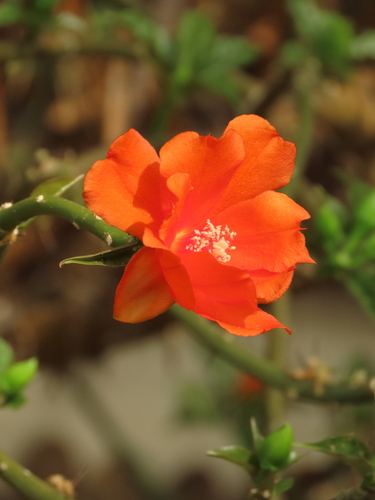
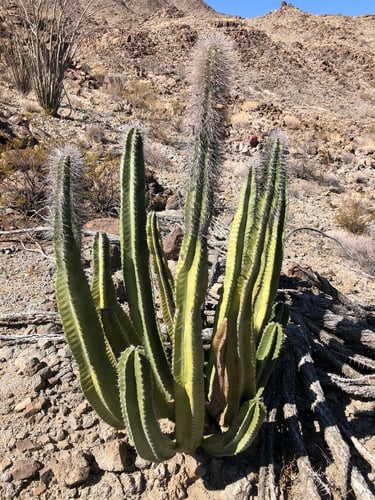
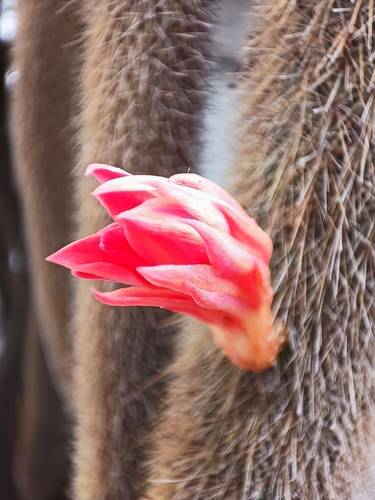
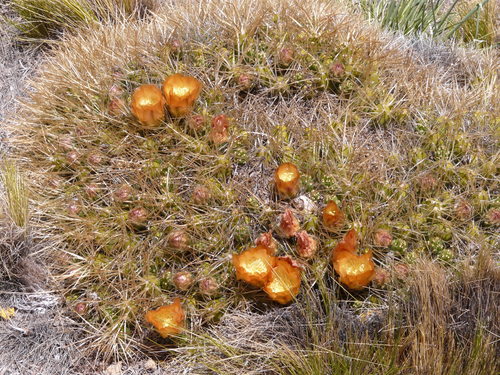
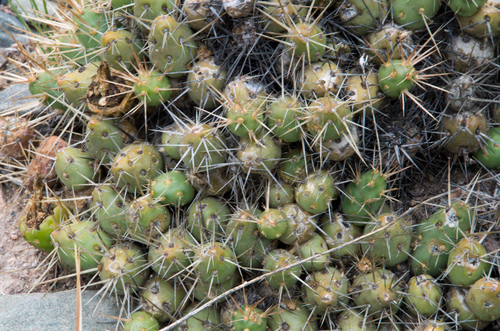
Cereus hildmannianus
K.Schum.
Hildmania cactus, Hedge cactus
iNaturalist· cc-by
(c) RAP, some rights reserved (CC BY), uploaded by RAP
iNaturalist· cc-by-nc
(c) Jaiane, some rights reserved (CC BY-NC), uploaded by Jaiane
iNaturalist· cc-by
(c) Nicolas Olejnik, some rights reserved (CC BY), uploaded by Nicolas Olejnik
Description
Cereus hildmannianus is an evergreen Tree growing to 9 m (29ft) by 4.5 m (14ft) at a slow rate. See above for USDA hardiness. It is hardy to UK zone 9. The flowers are pollinated by Bees. The plant is self-fertile. It is noted for attracting wildlife. Suitable for: light (sandy) and medium (loamy) soils and prefers well-drained soil. Suitable pH: mildly acid and neutral soils. It cannot grow in the shade. It prefers dry or moist soil and can tolerate drought.
Edible Uses
Fruit - raw. The tasty fruit has a sweet, fleshy pulp. The fruit peel is sometimes candied. The orangish-yellow fruit is up to 12cm long and 10cm wide. The young stems are sometimes eaten.
Medicinal Uses
The plant (part not specified) is antiscorbutic and bechic. The juice of the plant is used externally, mainly in the treatment of burns; in cataplasms it hastens the healing of wounds and chronic ulcers. The juice is also used in the treatment of snakebites.
Distribution
S. America - Argentina, Uruguay. Paraguay, Bolivia, southern, eastern and central Brazil.
Where It Grows
SOUTHERN AMERICA: Brazil, Mato Grosso do Sul, Minas Gerais, Paraná, Rio de Janeiro, Rio Grande do Sul, Santa Catarina, São Paulo, Bolivia (southeast), Argentina, Buenos Aires, Entre Ríos, Paraguay, Uruguay,
Cultivation
Plants are quite hardy when conditions are fairly dry, able to tolerate occasional temperatures as low as -10c. Requires a sunny position and a well-drained soil. Prefers a pH lower than 6. Established plants are very drought-tolerant. There are reports that the plant has escaped from cultivation and become invasive in Hawaii. Newly planted trees are slow to establish and grow away. Good in pots. The fruit is usually harvested in late summer to early fall, depending on the climate and species. Cereus species generally flower in late spring to summer depending on environmental conditions. Cereus species are relatively slow to moderate growers, typically taking several years to reach maturity and begin flowering, but can grow faster in optimal conditions.
Propagation
Seed - best sown as soon as it is ripe. Sow the seed in a semi-shaded position, spreading the seed on the surface and watering it into the soil. Germination rates are usually low with the seed sprouting within 30 - 50 days. Cuttings. One of the easiest cactus to propagate by cuttings.
Other Uses
Containers Hedge Pioneer Wood. Agroforestry Uses: The plant is a pioneer of open ground in its native area and could be a suitable, if slow-growing, a pioneer for semi-arid areas generally. The plant can be used for erosion control, as a hedge, or for ornamental purposes. Its edible fruits can provide food sources for both humans and wildlife. Other Uses: The wood is regular-grained, very light and coarse-textured. It is very susceptible to wood-eating organisms. It can only be used to make light boxes and models such as model aeroplanes. A potted plant.
Synonyms
Also Known As
Kaktus hildmannia, Mandacaru, Tuna, Tunam, Urumbeva, Hedge Cactus, Queen of the Night, Andes Organ Pipe, Peruvian Apple, Spiny Tree Cactus.