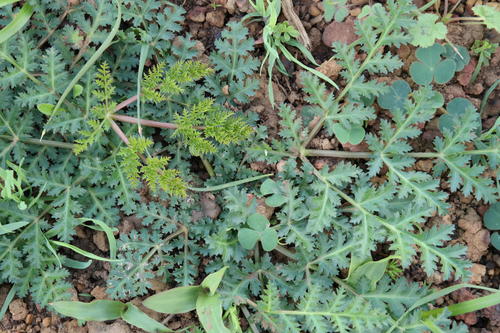
Bupleurum longiradiatum
Turcz.
iNaturalist· cc-by-nc
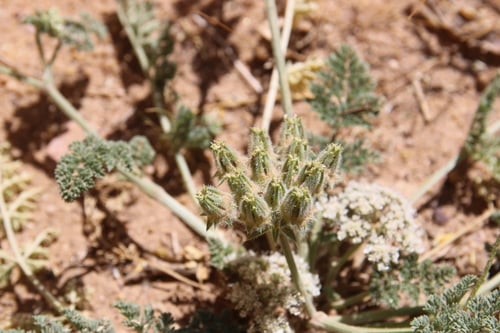
(c) Aleksandr Ebel, some rights reserved (CC BY-NC)
iNaturalist· cc-by-nc
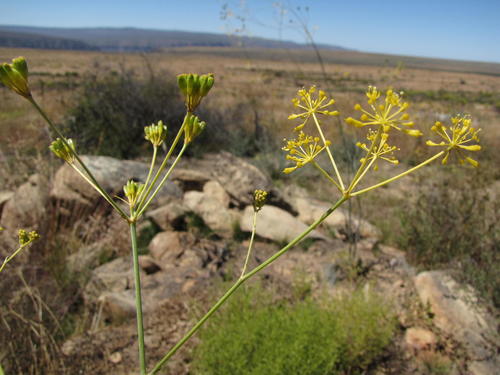
(c) Aleksandr Ebel, some rights reserved (CC BY-NC)
iNaturalist· cc-by-nc
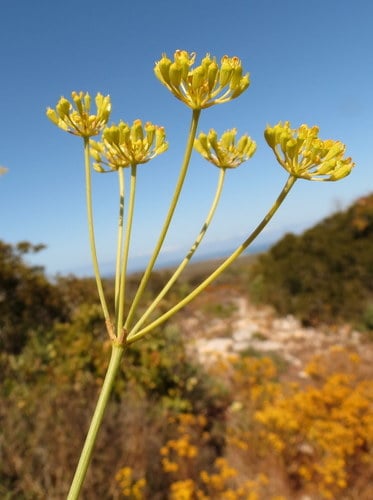
(c) Vladimir Yu. Arkhipov, some rights reserved (CC BY-NC)
Summary
Source: WikipediaPerennial herb reaching 1 m tall with a branching habit. Flowers from August to October with seeds ripening in the same period. Hermaphrodite flowers pollinated by insects and self-fertile. Grows in light sandy, medium loamy, and heavy clay soils with good drainage. Tolerates mildly acidic to mildly alkaline pH. Requires full sun and prefers consistently moist soil.
Description
A herb. It grows 80-150 cm tall. It keeps growing from year to year. It has a thick rhizome. There is a single stem that is branched. There are several leaves. The leaf stalks at the base are 8-12 cm long. The leaves are narrowly oval and 8-17 cm long by 3-5 cm wide.
Edible Uses
Edible Parts: Leaves Edible Uses: Young leaves - cooked.
Medicinal Uses
Emmenagogue Malaria Miscellany The seed is used in the treatment of amenorrhoea, catarrh, deafness, diarrhoea, dysmenorrhoea, dyspepsia, fever, flatulence, hepatitis, inflammation, malaria, vertigo and uteral prolapse. Some caution is advised - see notes above on toxicity.
Known Hazards
This is one of a few toxic species in the genus that should not be used for medicinal purposes as a substitute for chai hu.
Distribution
It is a temperate plant. In north China is grows on shady river banks between 200-900 m above sea level.
Where It Grows
Asia, China, Japan, Korea, Russia, Siberia,
Cultivation
We have very little information on this species and do not know if it will be hardy in Britain, though judging by its native range it should succeed outdoors in many parts of this country. The following notes are based on the general needs of the genus. Succeeds in most soils if they are well drained.
Propagation
Seed - sow spring in the greenhouse. The seed usually germinates in 2 - 8 weeks at 15°c. When large enough to handle, prick the seedlings out into individual pots and grow them on in the greenhouse for at least their first winter, planting them out into their permanent positions in late spring or early summer, after the last expected frosts. Division might be possible in the spring.
Other Uses
Miscellany None known Special Uses
Notes
There are about 100 Bupleurum species.
References (1)
- Plants for a Future database, The Field, Penpol, Lostwithiel, Cornwall, PL22 0NG, UK. http://www.scs.leeds.ac.uk/pfaf/